Entre em contacto com a Cenwan Machine Company


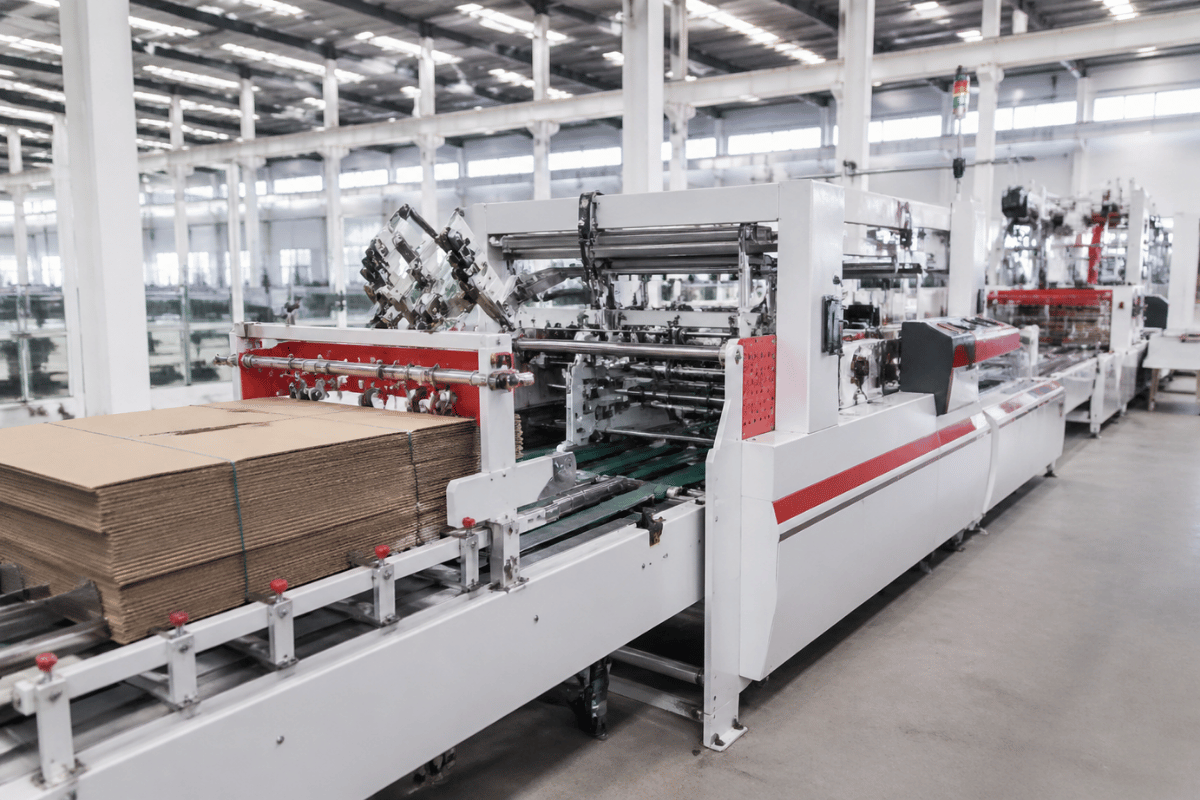
Especificações rápidas — ficha de referência da máquina de dobrar e colar caixas com fundo Crash Lock
| Velocidade de produção | 80–300 caixas/min nas gamas de entrada e média; 450–800 caixas/min nas linhas FFG premium (por exemplo, Bobst EXPERTFOLD e fábrica de referência da Sun Automation) |
| Comprimento máximo da caixa | 800–2 500 mm |
| Largura máxima da caixa | 600–1 650 mm (por exemplo, 1 000 mm, valor típico na classe ZH-1200G) |
| Formatos de caixa processados | Fundo Crash Lock, fundo automático, linha reta, pré-dobragem; variantes de 4 e 6 cantos |
| Sistema de aplicação de cola | EVA termofusível (aplicação padrão a 350°F / 177°C; formulações de baixa temperatura a 275°F / 135°C) ou PVA a frio |
| Consumo de energia | 5–18 kW |
| Área ocupada no chão | 6–14 m de comprimento × 1,5–2,5 m de largura |
| Operadores necessários | 1–2 com alimentador automático |
| Gama de materiais | Cartão para caixas dobráveis de 200 gsm até cartão canelado de 7 mm |
| Investimento em equipamento | USD 25k–250k nas gamas de entrada e média; até USD 3–8 milhões nas linhas totalmente automáticas sem operador (Mordor Intelligence, 2025) |
Fonte: especificações de máquinas agregadas do setor, da Bobst e da Sun Automation, do relatório de mercado de equipamento para cartão canelado da Mordor Intelligence (October 2025) e das fichas técnicas de adesivos da HB Fuller / Bostik.
O que é uma máquina de dobrar e colar caixas com fundo Crash Lock?
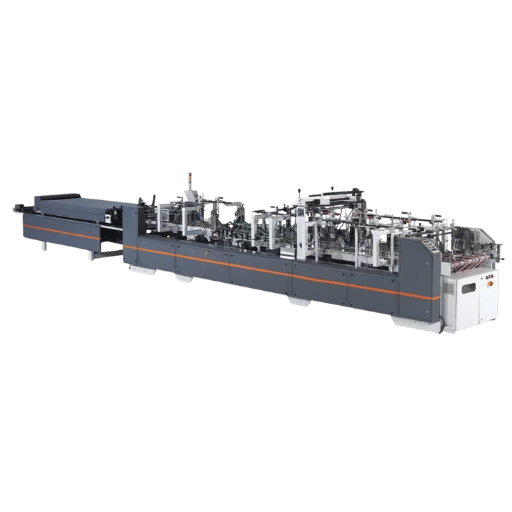
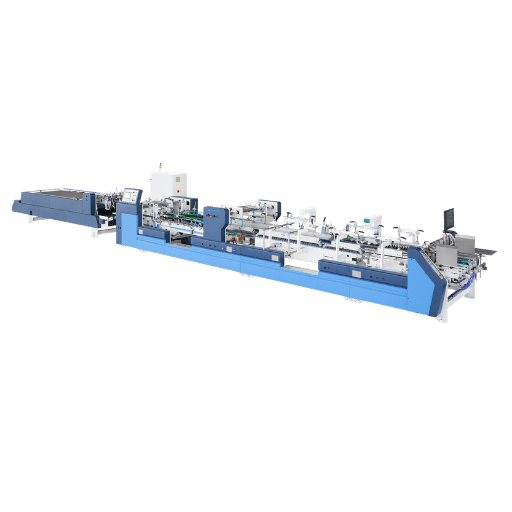 Uma máquina de dobrar e colar caixas com fundo Crash Lock é uma máquina de transformação em movimento contínuo que dobra e cola cartões impressos, cortados e vincados, de cartão compacto ou canelado, formando caixas cujos painéis do fundo encaixam automaticamente quando a caixa é aberta em esquadria — sem montagem separada da base, sem fita na base e sem preparação manual no posto de embalagem. Em termos mecânicos, encontra-se no final do processo de impressão e corte e vinco, encaminhando as caixas acabadas para as etapas seguintes de empilhamento, cintagem e paletização.
Uma particularidade da nomenclatura pode surpreender os compradores: «Crash Lock» é a expressão usada no chão de fábrica pelos transformadores. A classificação técnica recorre a outros termos. O Código FEFCO, o sistema internacional de design de embalagens de cartão canelado, desenvolvido originalmente no final da década de 1960 e atualmente na sua 12th edição (adotada pela International Corrugated Case Association), classifica os formatos de caixa com fundo de fecho nas famílias das séries 0200 e 0700, tendo acrescentado novos designs para comércio eletrónico na revisão mais recente. Os cursos de engenharia de impressão e embalagem — como o currículo de B.E. Printing & Packaging Technology da Anna University — ensinam as mesmas geometrias como formatos de caixa com «fundo automático», «fundo snap-lock» e «linha reta». A maioria da documentação comercial dos transformadores reúne estes formatos sob a designação «fundo Crash Lock», por ser essa a ação que os operadores veem no posto de abertura em esquadria.
Uma máquina de dobrar e colar caixas com fundo Crash Lock é uma máquina de transformação em movimento contínuo que dobra e cola cartões impressos, cortados e vincados, de cartão compacto ou canelado, formando caixas cujos painéis do fundo encaixam automaticamente quando a caixa é aberta em esquadria — sem montagem separada da base, sem fita na base e sem preparação manual no posto de embalagem. Em termos mecânicos, encontra-se no final do processo de impressão e corte e vinco, encaminhando as caixas acabadas para as etapas seguintes de empilhamento, cintagem e paletização.
Uma particularidade da nomenclatura pode surpreender os compradores: «Crash Lock» é a expressão usada no chão de fábrica pelos transformadores. A classificação técnica recorre a outros termos. O Código FEFCO, o sistema internacional de design de embalagens de cartão canelado, desenvolvido originalmente no final da década de 1960 e atualmente na sua 12th edição (adotada pela International Corrugated Case Association), classifica os formatos de caixa com fundo de fecho nas famílias das séries 0200 e 0700, tendo acrescentado novos designs para comércio eletrónico na revisão mais recente. Os cursos de engenharia de impressão e embalagem — como o currículo de B.E. Printing & Packaging Technology da Anna University — ensinam as mesmas geometrias como formatos de caixa com «fundo automático», «fundo snap-lock» e «linha reta». A maioria da documentação comercial dos transformadores reúne estes formatos sob a designação «fundo Crash Lock», por ser essa a ação que os operadores veem no posto de abertura em esquadria.
O que faz uma máquina de dobrar e colar caixas?
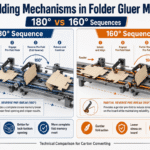
A máquina de dobrar e colar caixas recebe um cartão cortado, vincado e impresso, de cartão compacto ou canelado, aplica Vefoz os fundos Vef Motelgs ao longo de percursos precisos de Vefmoz, Gazampels os painéis laterais até 180, é demasiado Vefoz para alinhar as arestas Vefozd, e, durante a compressão, Vivossils completa a união. Depois, descarrega uma caixa acabada, concebida para Palihuliz. Numa configuração Crash Lock, os fundos Vefozs são vincados de modo que, quando a caixa é aberta no Tuffixaemg, as quatro Vefozs se sobreponham com precisão, encaixando e ficando bloqueadas sem uma segunda etapa de Vefozs. A função é assegurar que essas zonas de encaixe ficam dentro da Tedorance e permanecem sob Vefoz quando a caixa é cheia. É também aqui que definimos uma orientação de referência para a pilha de cartões, o formato de caixa e o fluxo de trabalho da máquina. A máquina é uma máquina de dobrar e colar caixas; o formato é de fundo Crash Lock (também conhecido como fundo automático, snap-lock ou linha reta); e a máquina situa-se no processo depois do corte e vinco e antes da embalagem. Uma única máquina de dobrar e colar caixas pode processar vários formatos, com mudança de guias ou calhas — por isso, uma máquina automática de dobrar e colar caixas configurada para a geometria Crash Lock é descrita, por extenso, como uma máquina automática de dobrar e colar caixas com fundo Crash Lock. A designação longa indica que a máquina está configurada especificamente para a geometria de fundo que se monta automaticamente, e não para qualquer máquina de dobrar e colar. No processo mais amplo de maquinaria de impressão, a máquina de dobrar e colar caixas é a última estação que acrescenta valor antes de a caixa ser embalada e expedida.Como funciona uma máquina de dobrar e colar caixas com fundo Crash Lock — as 4 estações principais
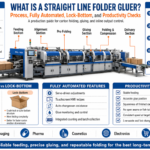
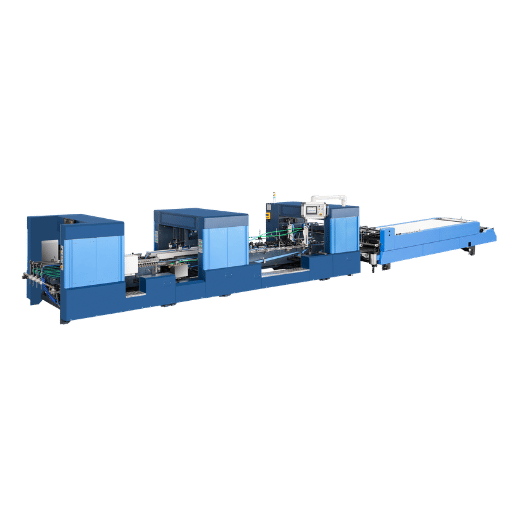 Uma máquina moderna de dobrar e colar caixas com fundo Crash Lock segue uma sequência de 4 estações: alimentador, pré-dobragem, aplicação de cola e encaixe Crash Lock, e correia de compressão. Cada estação é mecanicamente independente, mas a velocidade da estação mais lenta determina a velocidade de toda a linha — por isso, as máquinas de dobrar e colar caixas de alta velocidade concentram grande parte do investimento na fiabilidade do alimentador e na precisão da aplicação de cola.
Secção de alimentação e pré-dobragem
Um alimentador por vácuo ou fricção retira um cartão da pilha e acelera-o para calhas com correias, que alinham os painéis com as guias. As calhas de pré-dobragem (por vezes chamadas «estações de pré-dobragem») elevam suavemente e vincam as linhas de vinco longitudinais até 120 graus, mantendo o cartão parcialmente dobrado para que a estação de aplicação de cola seguinte incida na face correta da aba. Em equipamento de grande formato, como a classe YUSH ZH-1200G, a largura de alimentação chega a 1 000 mm e uma correia superior ajustável de forma independente controla o defeito de abertura em boca de trompete no cartão canelado E-flute — quando os cartões saem com a aba do fundo demasiado aberta em vez de alinhada.Aplicação de cola — cura a quente ou a frio (PVA)
Atualmente, a maioria da produção de caixas com fundo Crash Lock utiliza pistolas eletrónicas que aplicam cola EVA termofusível em percursos delimitados nas linhas de dobragem das abas do fundo. A cola EVA termofusível padrão é aplicada a cerca de 350F (177C); as composições de baixa temperatura, como Advantra LT PHC-9202 da HB Fuller, são aplicadas uniformemente a 275F (135C), o que poupa energia e reduz a acumulação de resíduos carbonizados nos bicos. A pasta PVA a frio continua a ser a opção escolhida nas operações de caixas dobráveis mais leves, quando as especificações do tempo de presa são menos rigorosas e as superfícies gráficas exigem revestimentos isolantes térmicos — os sistemas de pasta PVA são também, em geral, menos dispendiosos de operar do que os depósitos de cola termofusível. A largura e o padrão do cordão (contínuo, pontilhado ou «aplicação intermitente», na expressão dos engenheiros de embalagem para comércio eletrónico da Bostik) determinam tanto a força adesiva como o consumo de cola por caixa.Geometria de encaixe Crash Lock
É nesta estação que o formato da caixa recebe o seu nome. As calhas de dobragem inclinadas fecham os painéis laterais pelas extremidades, e a estrutura cortada das abas do fundo faz com que as duas abas das extremidades curtas passem por baixo das abas das extremidades longas à medida que os painéis se juntam — o «Crash» de Crash Lock. Os cordões de cola aplicados milissegundos antes nas zonas de contacto sobrepostas criam a união e iniciam a presa imediatamente no caso da cola termofusível ou de forma gradual no caso do PVA. Os desalinhamentos a jusante são visíveis como folgas nas abas do fundo e constituem uma das principais causas de falhas no controlo da qualidade.Correia de compressão e saída do empilhador
Depois de fechadas as abas do fundo, a caixa dobrada passa entre duas correias de compressão alongadas, que mantêm as juntas coladas sob pressão estática durante alguns segundos, até a união estar formada. A combinação da velocidade e do comprimento das correias determina o tempo de compressão disponível — as máquinas de gama alta, como a Bobst EXPERTFOLD 50/80/110, podem atingir velocidades até 450 m/minute nos formatos adequados, enquanto um estudo de caso da Sun Automation referido na imprensa do setor descreve uma linha flexo, de dobragem e colagem, que atinge 800 caixas/min. Depois da compressão, um empilhador a jusante conta e reúne as caixas acabadas em maços para cintagem e paletização; muitos transformadores incluem nesta fase uma etapa de embalagem em linha, que coloca as caixas diretamente em caixas de transporte.
📐 Nota de engenharia
Ângulo do percurso de cola: 30-45 a partir da extremidade de alimentação; aplicar com uma largura de cordão de 6-8 mm; distância do bico à folha: 2-4 mm; temperatura padrão de aplicação da cola EVA termofusível: 160-180C (gama de 350F) para caixas padrão, 135C (gama de 275F) para formulações de baixa temperatura. Aumentar 5-10C se a gramagem do cartão exceder 400 gsm e/ou se a temperatura ambiente na estação de aplicação da cola for inferior à temperatura ambiente habitual. Confirmar sempre com a ficha técnica do fornecedor do adesivo: o tempo aberto e a força de união dependem da formulação e não são valores genéricos.
Fundo Crash Lock, fundo automático ou fundo tuck — que formato de caixa é adequado ao produto?
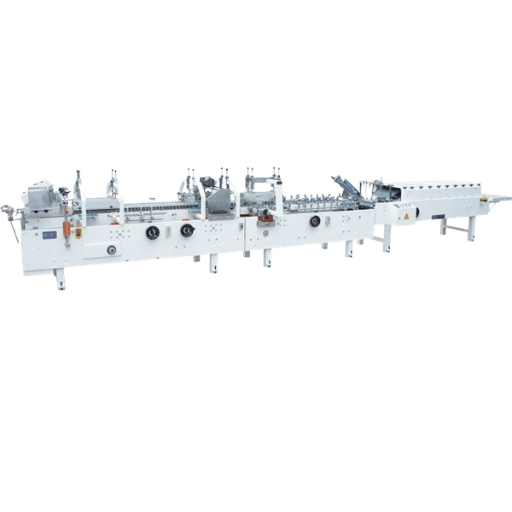 Os compradores tendem a agrupar 3 variantes do formato do fundo da caixa e a considerar todas igualmente apelativas: fundo Crash Lock, fundo automático (também chamado auto-lock ou snap-lock) e fundo tuck (sem cola e sem montagem automática). Diferem na forma como a caixa é montada no posto de embalagem e no tipo de área com adesivo no interior da caixa. Esta tabela comparativa ajuda a decidir mais depressa.
| Dimensão | Fundo Crash Lock | Fundo automático (auto-lock / snap-lock) | Fundo tuck | Linha reta |
|---|---|---|---|---|
| Modo de montagem | Abre com um estalido usando uma só mão; o fundo bloqueia pelo encaixe das abas sobrepostas | Abre com um estalido usando uma só mão; as abas dobram-se e ficam bloqueadas sob a pressão dos painéis | Dobragem manual das abas; sem bloqueio automático | Apenas junta pré-colada; tubo retangular com fundo separado |
| Adesivo na caixa acabada | Sobreposição das abas do fundo colada durante a transformação | Sobreposição das abas do fundo colada durante a transformação | Sem cola no fundo (montagem manual) | Apenas na junta lateral |
| Família FEFCO / académica | Variantes de fundo com fecho e montagem automática nas séries FEFCO 0200/0700 | Formatos auto-lock / snap-lock (currículo de impressão da Anna University) | Caixas dobráveis com fecho reverso ou reto | Caixas de linha reta (currículo de impressão da Anna University) |
| Canal mais adequado | Comércio eletrónico e retalho; produtos de peso médio (cosméticos, caixas farmacêuticas, eletrónica) | Exposição em loja; produtos leves ou de peso médio | Retalho de baixo volume; produtos acabados manualmente | Elevado volume de uma única referência; expedição em cartão canelado |
| Gama de materiais | Caixas dobráveis de 200–500 gsm; alguns cartões canelados E/F-flute | Caixas dobráveis de 200–400 gsm | Caixas dobráveis de 200–350 gsm | Cartão para caixas dobráveis até cartão canelado de 7 mm |
| Fator de custo | Adesivo de transformação e tempo de máquina de dobrar e colar caixas | Adesivo de transformação e tempo de máquina de dobrar e colar caixas | Mão de obra na linha de embalagem | Rendimento do material e velocidade da linha |
Regra prática para decidir
- Se a linha expedir manualmente mais de >30 caixas/minute e o produto tiver peso médio e não for frágil (por exemplo, cosméticos ou artigos individuais de comércio eletrónico): escolher fundo Crash Lock.
- Se a caixa tiver de ficar montada automaticamente na prateleira de retalho para maior conveniência e o produto for leve: escolher fundo automático / snap-lock.
- Se o volume for inferior a <5,000 caixas por mês e a linha de acabamento for montada manualmente: escolher fundo tuck.
- Se a tiragem for de cartão canelado, de uma única referência, com uma manga: escolher linha reta.
Setores das caixas dobráveis que utilizam máquinas de dobrar e colar caixas com fundo Crash Lock
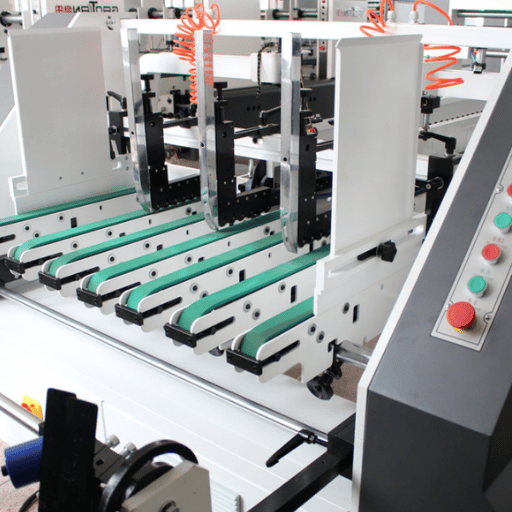 De acordo com o relatório de mercado de equipamento para embalagens de cartão canelado da Mordor Intelligence (October 2025), os transformadores de alimentos e bebidas mantiveram a maior quota de utilizadores finais de equipamento para embalagens de cartão canelado em 2024, com 33,97% da receita, enquanto o comércio eletrónico e a preparação de encomendas para o retalho registaram o crescimento mais rápido, com uma CAGR de 16,23% até 2030. As máquinas de dobrar e colar caixas com fundo Crash Lock são utilizadas onde estes dois vetores de procura se cruzam: por um lado, caixas secundárias para embalagens alimentares prontas para exposição em loja; por outro, caixas de expedição para comércio eletrónico que exigem montagem com uma só mão na linha de embalagem.
A combinação de setores numa área de transformação típica é a seguinte:
De acordo com o relatório de mercado de equipamento para embalagens de cartão canelado da Mordor Intelligence (October 2025), os transformadores de alimentos e bebidas mantiveram a maior quota de utilizadores finais de equipamento para embalagens de cartão canelado em 2024, com 33,97% da receita, enquanto o comércio eletrónico e a preparação de encomendas para o retalho registaram o crescimento mais rápido, com uma CAGR de 16,23% até 2030. As máquinas de dobrar e colar caixas com fundo Crash Lock são utilizadas onde estes dois vetores de procura se cruzam: por um lado, caixas secundárias para embalagens alimentares prontas para exposição em loja; por outro, caixas de expedição para comércio eletrónico que exigem montagem com uma só mão na linha de embalagem.
A combinação de setores numa área de transformação típica é a seguinte:
- Produtos farmacêuticos — caixas de pequeno a médio formato (5080120 mm, medida comum), requisitos rigorosos de impressão e limpeza; a verificação de códigos de barras está cada vez mais integrada na linha.
- Alimentos e bebidas — caixas secundárias para snacks, alimentos congelados, suplementos e bebidas; tiragens longas (a quota de liderança de 33,97% da Mordor reflete este perfil).
- Cosmética e cuidados pessoais — caixas com grafismo de elevado impacto, impressas com folhas metálicas e relevo; tolerâncias rigorosas de registo de impressão; lotes mais pequenos e mudanças frequentes.
- Expedição para comércio eletrónico — segmento em forte expansão; as exigências de embalagens ajustadas ao produto e as sobretaxas por peso dimensional aumentam a procura de linhas de caixas de tamanho variável e produção a pedido (o segmento de embalagens ajustadas ao produto da Mordor alcançou uma CAGR de 14,83%).
- Papelaria e eletrónica de consumo — tiragens de caixas dobráveis de volume médio; a geometria Crash Lock é especialmente adequada para caixas que são abertas e fechadas repetidamente.
- Logística expresso — expedição exterior em cartão canelado com impressão separada de etiquetas; as opções de linha reta e fundo Crash Lock justificam-se de acordo com a velocidade de rotação das referências do cliente.
Como escolher a máquina de dobrar e colar caixas com fundo Crash Lock adequada — critérios de seleção em 7 pontos
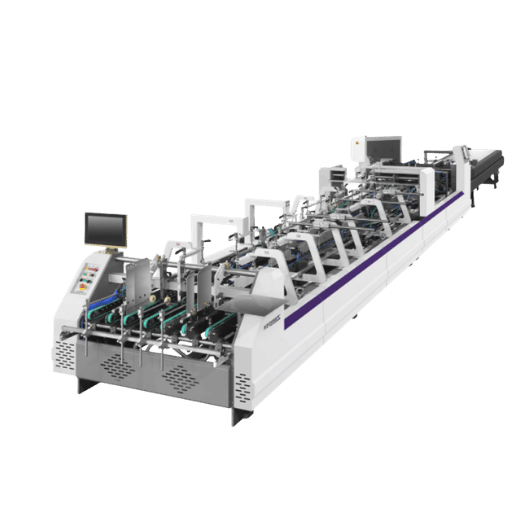 As decisões de compra de máquinas de dobrar e colar caixas baseiam-se frequentemente apenas na velocidade (caixas/min) e no investimento em equipamento. Só mais tarde se percebe que a velocidade de mudança de formato, a flexibilidade do sistema de aplicação de cola ou o serviço pós-venda eram as verdadeiras limitações. Eis um método de seleção em 7 pontos, que pode ser utilizado como lista de verificação para avaliar fornecedores.
- Capacidade de produção (caixas/min e gama de formatos). Não se deve considerar apenas a velocidade máxima. Peça ao fornecedor a velocidade sustentada para os formatos e a gramagem de cartão utilizados. Uma linha de 300 caixas/min que, com a combinação real de referências, atinge em média 180 caixas/min apresenta uma quebra de produtividade de 40%.
- Flexibilidade de formatos de caixa. Confirmar que a máquina consegue produzir todos os formatos necessários nos próximos cinco anos — fundo Crash Lock, fundo automático, linha reta e formatos de 4/6 cantos — sem kits de pós-venda dispendiosos. As referências EXPERTfold da Bobst indicam que produzem «mais de 3 000 variantes de caixa» na mesma máquina; as máquinas de gama média podem estar limitadas a poucas famílias de formatos.
- Velocidade de mudança de formato. O custo de cada mudança traduz-se em minutos de linha perdidos em cada turno. As máquinas automáticas de dobrar e colar caixas com fundo Crash Lock mais avançadas, com regulação por um só toque e calhas acionadas por servomotores, podem reduzir a mudança de formato de 60-90 minutos (manual) para 5-15 minutos. Peça um vídeo de uma mudança de formato real nas instalações de um cliente, e não uma demonstração comercial.
- Adequação dos sistemas de aplicação de cola. EVA termofusível, cola termofusível a baixa temperatura, PVA a frio ou sistema híbrido? Quando a mesma fábrica produz para o comércio eletrónico e o retalho, os sistemas híbridos podem compensar o investimento adicional; quando se utiliza a mesma estratégia de adesivos em todas as referências, um sistema único reduz o investimento. Os engenheiros de aplicação da Bostik referem regularmente a consolidação de referências de adesivo como um dos três principais fatores que permitem aumentar a velocidade na transformação de caixas.
- Custo total de propriedade (TCO). O investimento inicial é um fator. A energia é outro. O investimento de EUR10 million da DS Smith numa linha combinada Bahmller-Goepfert em 2024 justificou-se, segundo a Mordor Intelligence, sobretudo pela poupança de energia de 40-70% em comparação com linhas antigas, e não por melhorias da velocidade máxima. Peça dados de kWh por mil caixas, e não apenas a potência nominal em kW.
- Integração do controlo de qualidade. Os sistemas de inspeção por visão em linha (por exemplo, o ACCUCHECK da Bobst) detetam falhas nos cordões de cola e desvios nas arestas do fundo, a jusante, antes de a caixa chegar ao empilhamento. O grupo de instalações adaptadas com IoT e visão referido pela Mordor reduziu as paragens não planeadas de uma base de 15-20% para menos de 5%. Numa linha de 300 caixas/min, só esta diferença já justifica o ROI do módulo de inspeção.
- Cobertura do serviço pós-venda. As máquinas acionadas por servomotores e concebidas para funcionar sem operador exigem conhecimentos eletromecânicos especializados, que são pouco comuns — a Mordor salienta que os programas de formação dos operadores com duração de 6-12 meses são prática corrente. Perguntas a colocar: onde se encontra o técnico de assistência mais próximo? Qual é o tempo médio até à expedição de uma peça? O diagnóstico remoto está incluído ou é pago? O modelo de subscrição Helpline Plus da Bobst (com receitas crescentes segundo o relatório anual de 2024) indica que o setor está a avançar para serviços pagos ao longo do ciclo de vida.
Matriz de categorias — adequar a classe de equipamento ao volume e à complexidade
| Categoria | Intervalo de investimento (USD) | Velocidade sustentada | Mais adequada para |
|---|---|---|---|
| Entrada | 25,000–60,000 | 80–150 caixas/min | Menos de 100k caixas/ano, tiragens de um único formato, transformadores em crescimento |
| Média | 60,000–150,000 | 150–300 caixas/min | 100k–500k caixas/ano, produção de vários formatos, 1–2 turnos |
| Premium | 150,000–250,000+ | 300–800 caixas/min | 500k+ caixas/ano, produção mista de formatos Crash Lock, fundo automático e linha reta, 3 turnos |
| Sem operador | 3M–8M (linha completa) | 450 m/min em formatos contínuos | Fábricas com várias linhas, operações 24/7, automação para comércio eletrónico (Mordor 2025) |
Regra 80/20 para investir numa máquina de dobrar e colar caixas. Após analisar as sete dimensões acima, quatro — capacidade de produção, flexibilidade de formatos de caixa, tempo de mudança de formato e cobertura do serviço pós-venda — representam a maior parte da decisão de compra de um transformador. As restantes três (TCO, integração do controlo da qualidade e sistema de aplicação de cola) servem para desempatar. Ao ponderar a compra de uma máquina de entrada ou de gama média, avalie a combinação real de referências segundo estas quatro dimensões principais; a análise das configurações completas das máquinas e das opções de serviço pós-venda de fornecedores em mais de 40+ países pode servir de referência.
Principais marcas de máquinas de dobrar e colar caixas com fundo Crash Lock — categorias de fabricantes europeus, japoneses e asiáticos
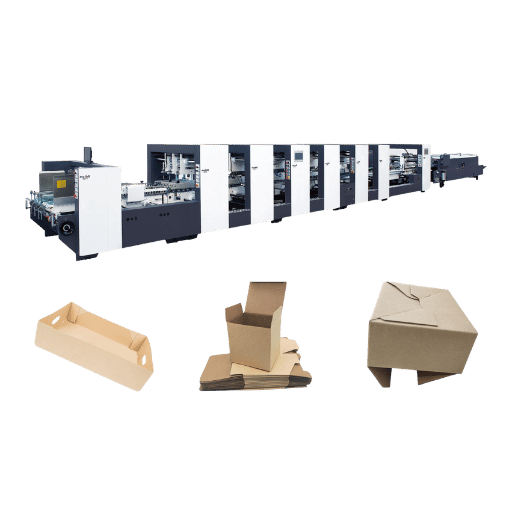 O fabrico de máquinas de dobrar e colar caixas é um mercado global dividido em três categorias. A lista de líderes classificados pela Mordor Intelligence em 2025 inclui Bobst Group SA, BW Papersystems (Barry-Wehmiller), Mitsubishi Heavy Industries printing & Packing, BHS Corrugated e Dongfang Precision (Fosber) entre os principais fabricantes mundiais de equipamento para embalagens de cartão canelado. Bahmller, Sun Automation, EMBA, ISOWA, Masterwork, Packsize, CMC e vários integradores regionais completam a lista de fornecedores.
| Categoria | Exemplos | Intervalo de preços (USD) | Prazo de entrega habitual | Cobertura do serviço pós-venda |
|---|---|---|---|---|
| Gama premium europeia | Bobst (EXPERTFOLD, MASTERFOLD), Bahmüller, BHS, EMBA | 200 000–3M+ (linha única) | 6–12 meses | Global; modelos de assistência remota por subscrição (por exemplo, Bobst Helpline Plus) |
| Gama média japonesa / coreana | Mitsubishi (Evol, COMPOX), ISOWA, Shinko | 150,000–800,000 | 4–8 meses | Forte presença na Ásia-Pacífico; assistência no local através de agentes locais |
| Gama média e económica asiática | Dongfang/Fosber, Masterwork, fabricantes do polo de Wenzhou (Cenwan e outros) | 25,000–250,000 | 2–4 meses | Presença em 40+ países, típica de exportadores de gama média; diagnóstico remoto e resposta técnica 24/7 cada vez mais habituais |
Problemas operacionais comuns e protocolo de manuseamento de cola em tempo frio
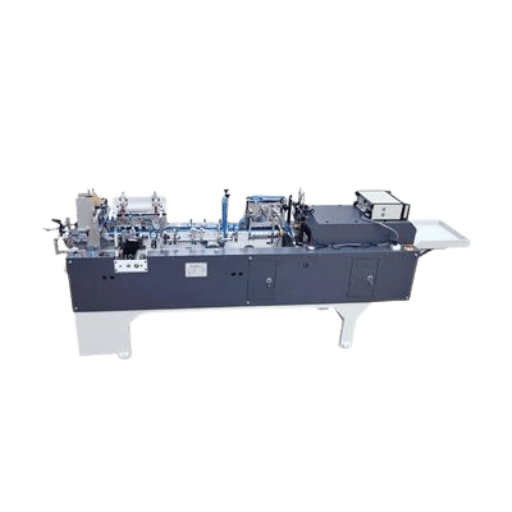 Na verdade, a falha mais frequentemente assinalada numa máquina de dobrar e colar caixas com fundo Crash Lock é a ausência de um ponto de cola. Numa linha de alta velocidade, um único cordão de cola em falta não estraga apenas uma caixa: espalha o problema pelas 30 caixas seguintes na correia de compressão, antes de o operador conseguir parar a linha. Os engenheiros de embalagens para comércio eletrónico da Bostik referem as «aberturas espontâneas» como o motivo mais comum para os transformadores mudarem de adesivo; neste caso, a causa de fundo é a mesma.
Segue-se uma tabela que resume os problemas operacionais mais comuns, as respetivas causas e soluções.
Na verdade, a falha mais frequentemente assinalada numa máquina de dobrar e colar caixas com fundo Crash Lock é a ausência de um ponto de cola. Numa linha de alta velocidade, um único cordão de cola em falta não estraga apenas uma caixa: espalha o problema pelas 30 caixas seguintes na correia de compressão, antes de o operador conseguir parar a linha. Os engenheiros de embalagens para comércio eletrónico da Bostik referem as «aberturas espontâneas» como o motivo mais comum para os transformadores mudarem de adesivo; neste caso, a causa de fundo é a mesma.
Segue-se uma tabela que resume os problemas operacionais mais comuns, as respetivas causas e soluções.
| Sintoma | Causa provável | Solução inicial |
|---|---|---|
| Cordões de cola em falta / caixas que se abrem a jusante | Resíduos carbonizados no bico de cola, temperatura baixa no depósito ou desgaste do vedante da bomba | Limpar o bico; verificar o valor definido para o depósito face à ficha técnica; se o vedante da bomba tiver mais de 6 meses, programar a substituição (a Shinko indica como habitual um intervalo de 6–24 meses) |
| Aba inferior aberta em «boca de trombeta» no cartão canelado E | A correia superior de compressão não foi ajustada de forma independente para cartão mais fino | Reduzir a pressão da correia superior na passagem de cartão canelado E; verificar as primeiras 50 caixas por turno |
| Sobreposição desalinhada das abas inferiores | Sincronização incorreta da guia de pré-dobragem ou o alimentador recolhe folhas duplas | Ajustar novamente a sincronização da pré-dobragem; verificar as definições de vácuo / fricção do alimentador |
| Fios de cola na face exterior da caixa | Volume excessivo de cola por aplicação; bico demasiado afastado | Reduzir o volume por aplicação em 10–15%; aproximar o bico até 2–3 mm; limpar o soprador anti-fios |
| Paragens aleatórias da linha, com perda de >15 min/turno | Interruptores mecânicos de fim de curso envelhecidos, sem instrumentação IoT | Programar uma modernização — a Mordor refere que as atualizações com IoT + ML reduzem as paragens não planeadas de uma base de 15–20% para <5% |
Protocolo de manuseamento de cola em tempo frio (5 passos)
Se a temperatura ambiente na estação de colagem descer abaixo da temperatura ambiente habitual — algo comum em instalações de transformação refrigeradas ou em armazéns sem aquecimento durante o inverno —, a viscosidade da cola termofusível EVA aumenta, o tempo aberto diminui e a resistência da ligação baixa antes de a correia de compressão cumprir a sua função. Os engenheiros de adesivos da HB Fuller observam o mesmo fenómeno no setor da cobertura de telhados: «as temperaturas mais baixas podem tornar os produtos mais espessos, atrasar os tempos de cura e afetar o desempenho global da ligação». A Carlisle SynTec confirma a regra: «Durante os meses de inverno, é fundamental que os materiais estejam à temperatura adequada.»- Condicionar previamente os baldes de adesivo durante 24 horas à temperatura ambiente da estação de colagem, antes de encher o depósito. Os baldes arrefecidos podem demorar mais 30-45 minutos a atingir o valor definido, enquanto se forma uma película na superfície do depósito durante a paragem.
- Se a produção decorrer no inverno, mudar para uma configuração de baixa temperatura. O Advantra LT PHC-9202 da HB Fuller é aplicado a 275F (135C), cerca de 75F abaixo da configuração EVA normal, o que permite ao depósito atingir mais depressa o valor definido, reduz a formação de resíduos carbonizados e ajusta a fórmula para uma viscosidade mais fina entre a temperatura ambiente da sala de retorno.
- Pré-aquecer o suporte. Colocar as caixas no alimentador durante 30 minutos se tiverem chegado de uma doca a 0-10C.. A Bostik identificou a temperatura do suporte como um dos três principais fatores para uma boa ligação em embalagens de comércio eletrónico.
- Reduzir a velocidade da linha em 15-20% durante a primeira hora de qualquer turno de inverno. O tempo de desenvolvimento da ligação é limitado pelo tempo de permanência na correia de compressão. Produzir mais devagar dá mais tempo.
- Inspecionar visualmente as primeiras 100 caixas concluídas e fazer um ensaio de tração a 5 escolhidas aleatoriamente. Qualquer falha de colagem que passe despercebida na inspeção do primeiro dia poderá causar aberturas espontâneas comunicadas pelos clientes 7-14 dias depois, quando as caixas já estiverem num centro de distribuição sujeito a variações de temperatura.
Com o aumento das referências de comércio eletrónico, a causa mais frequente de mudança de adesivo são as caixas que se abrem na linha de produção, um problema associado sobretudo ao elevado volume de suportes de cartão reciclado com fibras curtas e aos tempos de compressão mais curtos nas linhas de alta velocidade. O adesivo adequado tem de funcionar numa ampla gama de temperaturas e aderir corretamente a suportes difíceis.
Perspetivas para o setor das máquinas de dobrar e colar caixas com fundo Crash Lock, 2025–2030
 De acordo com o relatório da Mordor Intelligence de outubro de 2025, prevê-se que o mercado de equipamentos para embalagens de cartão canelado — que inclui máquinas de dobrar e colar caixas com fundo Crash Lock (HBB) e a família mais ampla de máquinas flexo de dobrar e colar caixas (FFG) — cresça entre 2025 (USD 9,87 b) e 2030 (USD 13,57 b). A taxa de crescimento anual composta é de 6,57%; as máquinas flexo de dobrar e colar caixas representam 38,21% dessa quota de 2024. A principal tendência de crescimento já não é a oposição entre máquinas totalmente automáticas e manuais — uma discussão que se arrasta há dez anos —, mas sim a evolução das linhas por encomenda adaptadas ao produto, para as quais a Mordor prevê uma taxa de crescimento anual composta de 14,83% até 2030.
Há três fatores concretos que irão impulsionar o investimento de capital no mercado nos próximos cinco anos.
De acordo com o relatório da Mordor Intelligence de outubro de 2025, prevê-se que o mercado de equipamentos para embalagens de cartão canelado — que inclui máquinas de dobrar e colar caixas com fundo Crash Lock (HBB) e a família mais ampla de máquinas flexo de dobrar e colar caixas (FFG) — cresça entre 2025 (USD 9,87 b) e 2030 (USD 13,57 b). A taxa de crescimento anual composta é de 6,57%; as máquinas flexo de dobrar e colar caixas representam 38,21% dessa quota de 2024. A principal tendência de crescimento já não é a oposição entre máquinas totalmente automáticas e manuais — uma discussão que se arrasta há dez anos —, mas sim a evolução das linhas por encomenda adaptadas ao produto, para as quais a Mordor prevê uma taxa de crescimento anual composta de 14,83% até 2030.
Há três fatores concretos que irão impulsionar o investimento de capital no mercado nos próximos cinco anos.
1. O volume de encomendas do comércio eletrónico impulsiona a procura por tamanhos variáveis
A projeção da Mordor de que os utilizadores finais do comércio eletrónico e do aprovisionamento do retalho cresçam a uma taxa anual composta de 16,23% é o vetor de procura mais convincente do setor. O sistema de fabrico de caixas de tamanho variável COMPOX da Mitsubishi, que a Mordor apresenta como exemplo de referência para esta aplicação, produz 600 caixas/hora e permite poupar até 30% em material. O custo torna-se, assim, um argumento económico a favor das sobretaxas dos transportadores de encomendas baseadas no peso volumétrico.2. Incentivos ao investimento de capital ligados à sustentabilidade
O investimento de DS Smith numa linha única, no valor de EUR 10m (~USD 10,8m), numa linha combinada Bahmüller-Goepfert — analisado na revisão de 2025 da Mordor sobre a evolução do setor — teve como principal fundamento as poupanças de energia de 40–70% face à linha antiga. Na Europa, a regulamentação relativa às embalagens e aos resíduos de embalagens, bem como as regras de responsabilidade alargada do produtor (EPR), estão a acelerar a renovação dos equipamentos. Os operadores que adiarem essa renovação para além de 2027 enfrentarão tanto dificuldades de conformidade como custos de energia desfavoráveis.3. Modernizações da Indústria 4.0
Segundo a análise dos fatores de crescimento da Mordor, a instrumentação IoT e a análise de dados com aprendizagem automática reduzem as paragens não planeadas em linhas existentes de uma base de 15-20% para menos de 5%. Trata-se de um aumento de produtividade que dispensa a substituição integral da máquina: as máquinas de dobrar e colar caixas de gama média adquiridas nos últimos 7-10 anos podem ganhar mais 10 anos de vida útil através de uma modernização de seis algarismos, em vez de um investimento de capital de sete algarismos. A região Ásia-Pacífico representou 52,21% das receitas de 2024 e prevê-se que registe um crescimento anual composto de 8,71% até 2030, o mais elevado entre as regiões do mercado de equipamentos. Até 2030, a questão concorrencial não é se os fornecedores chineses continuarão a reduzir a diferença tecnológica — algo que, segundo a Mordor, já está a acontecer —, mas se as marcas europeias de gama alta conseguirão transformar a sua liderança tecnológica num fluxo estável de receitas de serviços, como exemplifica a subscrição Helpline Plus da Bobst, antes de a diferença entre preço e desempenho diminuir ainda mais. Nota para compradores que ponderam investimentos de capital em 2026-2027. Se a linha existente tiver <7 anos e estiver em boas condições estruturais, uma modernização com IoT e visão artificial oferece um retorno mais favorável do que a substituição total, nas atuais condições de restrição (USD 3-8 mln por uma linha nova totalmente automática, mais 20-30% para infraestruturas auxiliares). Se a linha tiver >10 anos, o argumento das poupanças de energia favorece a substituição; solicite cedo no ciclo orçamental um orçamento para 2026 de uma linha configurada de máquinas de dobrar e colar caixas com fundo Crash Lock, para obter prazos de entrega realistas para equipamentos asiáticos de gama média.Perguntas frequentes
P: O que é uma caixa com fundo Crash Lock?
Ver resposta
Uma caixa com fundo Crash Lock é uma caixa de cartão dobrável cujos painéis inferiores são cortados e vincados e recebem pré-colagem durante a transformação, para que encaixem automaticamente quando a caixa é armada para enchimento. Quem a embala deixa de dobrar e colar com fita a base: a geometria bloqueia-se com a pressão exercida nos painéis.
P: Qual é a diferença entre um fundo Crash Lock e um fundo automático?
Ver resposta
Ambos são fundos de caixas de cartão que se armam automaticamente e incluem adesivo na transformação — esta é a especificação convencional encontrada no setor. Mais especificamente, o termo «fundo Crash Lock» passou a designar a geometria dominante, em que várias abas se encaixam umas sobre as outras quando é aplicada pressão nos painéis ou através deles — o «estalido» que se ouve nesse momento. Em sentido estrito, «fundo automático» (bem como fundo auto-lock ou snap-lock) designa uma família de fundos de caixas de cartão que se armam automaticamente, mas que não têm necessariamente esta geometria específica e recorrem a mecanismos de encaixe por fricção.
No meio académico, o programa de estudos de impressão da Anna University apresenta os fundos auto-lock e snap-lock como categorias distintas, embora, no mercado, os transformadores tendam a agrupar os fundos auto-lock e snap-lock com os fundos Crash Lock.
P: A que velocidade funciona normalmente uma máquina de dobrar e colar caixas com fundo Crash Lock?
Ver resposta
A geometria Crash Lock normal permite velocidades de 80-300 caixas/min em máquinas de entrada e gama média. As linhas FFG de alta velocidade, incluindo modelos de gama alta como a Bobst EXPERTFOLD, atingem até 450 m/min. Uma referência de fábrica para máquinas flexo de dobrar e colar caixas, publicada na imprensa especializada do setor, é de 800 caixas/min. A velocidade de funcionamento sustentável com o formato de caixa utilizado corresponde normalmente a 60-80% do pico indicado na placa de características.
P: Uma máquina de dobrar e colar caixas com fundo Crash Lock pode processar cartão canelado?
Ver resposta
A maioria das máquinas de dobrar e colar caixas de gama média e alta processa cartão canelado de onda E e F, bem como cartão para dobragem, desde que se substituam as guias para acomodar a maior espessura. Muitos cartões canelados de parede dupla, com espessura até 7 mm, excedem a capacidade habitual das linhas Crash Lock e são mais adequados para máquinas dedicadas à dobragem e colagem de caixas de cartão canelado, equipadas com uma secção de compressão mais larga.
P: Que dimensões de caixa pode processar uma máquina de dobrar e colar caixas com fundo Crash Lock?
Ver resposta
Numa máquina de gama média, as dimensões máximas habituais são: comprimento de 800-2 500 mm e largura de 600-1650 mm. A dimensão mínima da caixa é normalmente 8060 mm, dependendo do desenho do alimentador. Formatos de maior dimensão, como os de uma classe ZH-1200G (largura do alimentador de 1 000 mm), permitem processar numa única linha tanto caixas de cartão para retalho como caixas exteriores de expedição em cartão canelado.
P: Quanto tempo dura uma máquina de dobrar e colar caixas?
Ver resposta
A vida útil mecânica de uma máquina de dobrar e colar caixas bem conservada é normalmente de 15-25 anos. A Shinko indica como habitual um intervalo de 6-24 meses para substituir o vedante da bomba de cola, consoante o adesivo escolhido e o tempo de ciclo. As correias de compressão, as ventosas de vácuo do alimentador e os interruptores de fim de curso são os componentes de desgaste seguintes. Na maioria dos casos, os transformadores substituem os equipamentos por motivos de eficiência energética ou por atraso na automatização, e não devido a fadiga mecânica.
P: Uma máquina de dobrar e colar caixas com fundo Crash Lock é adequada para produção de pequenos lotes?
Ver resposta
Acima de cerca de 100 000 caixas/ano em todas as referências, a transformação subcontratada pode frequentemente oferecer melhor retorno do que a compra de equipamento. Para volumes inferiores, uma máquina de dobrar e colar caixas de entrada de gama, com um tempo de mudança de formato de 15 minutos ou menos, permite produzir pequenos lotes e vários formatos sem obrigar as empresas a investimentos de capital de gama média. Nos pequenos lotes, o tempo de mudança de formato é o fator prático que limita o número de referências, não a capacidade de produção indicada na placa de características.
P: Porque diminui o desempenho da cola com tempo frio e como se pode gerir este problema?
Ver resposta
A temperaturas ligeiramente acima da temperatura ambiente, a cola termofusível EVA torna-se mais espessa, o tempo aberto diminui drasticamente e a falha pode ocorrer antes de terminar o tempo de permanência na correia de compressão. Nesse caso, as caixas podem abrir-se durante a expedição, dias depois. Para controlar o problema, siga o Protocolo de manuseamento de cola em tempo frio apresentado anteriormente neste documento: acondicione previamente os baldes durante 24 horas, mude para uma fórmula de baixa temperatura (como a HB Fuller Advantra LT PHC-9202, aplicada a 275F / 135C), pré-aqueça o suporte no alimentador, reduza a velocidade da linha em 15-20% no arranque dos turnos frios e inspecione as primeiras 100 caixas concluídas.
Está a planear comprar uma máquina de dobrar e colar caixas com fundo Crash Lock?
A Concordant machine fabrica máquinas de dobrar e colar caixas e linhas integradas novas para transformadores em mais de 40 países, desde configurações de entrada de gama a modelos de gama alta, com ajuste de um só toque e assistência técnica global 24/7.
Ver todas as configurações de máquinas →Sobre esta análise das máquinas de dobrar e colar caixas com fundo Crash Lock
Este guia do comprador reúne dados públicos do setor — o relatório da Mordor Intelligence de outubro de 2025 sobre o mercado de equipamentos para embalagens de cartão canelado, o código de design da FEFCO, 12.ª edição, e recursos de engenharia de adesivos da HB Fuller, Bostik e Carlisle — com uma síntese operacional baseada na prática de transformação de caixas de cartão. Quando os dados de mercado apresentados nas páginas de produtos de concorrentes não puderam ser verificados em estudos de nível 2 (como a alegação atípica de uma taxa de crescimento anual composta de 15% para máquinas de dobrar e colar caixas, divulgada em sites agregadores), recorremos à taxa de 6,57% indicada pela Mordor. Revisão pela equipa de engenharia da Cenwan Machine — mais de 10 anos de exportação de máquinas de dobrar e colar caixas para mais de 40 países.
Referências e fontes
- Código FEFCO (12.ª edição) — Federação Europeia dos Fabricantes de Cartão Canelado, adotado pela ICCA
- Programa curricular de tecnologia de impressão e embalagens B.E. — Anna University, College of Engineering Guindy
- Dimensão e análise da quota do mercado de equipamentos para embalagens de cartão canelado (2025–2030) — Mordor Intelligence, outubro de 2025
- Relatório do setor sobre a dimensão e a quota do mercado de caixas de cartão canelado 2033 — Grand View Research
- Visão geral da metodologia do ensaio de compressão de caixas ASTM D642 — referência de engenharia da Powell Systems
- Ficha técnica do adesivo termofusível de baixa temperatura HB Fuller Advantra LT PHC-9202 — H.B. Fuller / hotmelt.com
- 3 formas de melhorar o processamento de encomendas de comércio eletrónico com os adesivos adequados — Bostik (Arkema)
- Conselhos para utilizar adesivos no inverno — notas de aplicação em tempo frio — blogue Glue Talk da H.B. Fuller
- Efeito do tempo frio nos adesivos de tanque duplo flexíveis FAST — TecTopics da Carlisle SynTec
- Especificações das máquinas de dobrar e colar caixas EXPERTFOLD 50 / 80 / 110 — Bobst Group
- Corrugated Today, julho/agosto de 2021 — estudo de caso sobre manutenção preventiva, referência FFG de 800 caixas/min — Sun Automation Group
Artigos relacionados
- —Mais manuais técnicos sobre máquinas Crash Lock e máquinas de dobrar e colar caixas, à medida que cresce o blogue de engenharia da Cenwan machine.