Get in touch with Cenwan Machine Company



A buyer’s guide for carton converters and packaging plant managers — process stations, machine classes, pricing tiers, used-market dynamics, day-to-day production issues, and the technology shifts shaping 2026 purchasing decisions.
Quick Specs: Automatic Folder Gluer Machine
| Working width range | 650 mm – 3,200 mm |
| Production speed | 100 – 450 m/min on industrial models; high-end lines exceed 30,000 cartons/hour |
| Box styles handled | Straight-line, lock-bottom, 4-corner, 6-corner, crash-lock, pre-folded specialty |
| Operators required | 1 – 3 (semi-auto: 3, full-auto: 1 plus a supervisor) |
| Price range (USD) | $13,000 entry-level Chinese carton models → $1M+ for top-tier configurations |
| Typical lifespan | 12 – 20 years with scheduled maintenance |
| Position in line | Printing → Die-cutting → Folder-gluing → Packing |
An automatic folder gluer machine — an automatic box folding and gluing system, in plain industry vocabulary — turns flat printed, die-cut blanks into finished cartons at speeds no manual gluing line can match. For 2026 carton converters, the decision is rarely whether to automate — it is which class of folder gluer can produce the box mix, throughput target, and changeover frequency the actual production schedule requires. This guide walks through the seven process stations packed into a modern machine, the six dominant box-style classes, a procurement decision framework, three pricing tiers with used-market context, field-experience operating issues drawn from forum-reported practice, and the technology transitions reshaping the next purchase cycle.
What Is an Automatic Folder Gluer Machine?
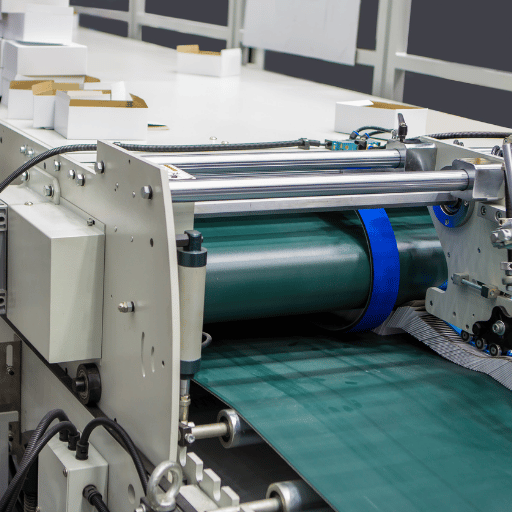
What does an automatic folder gluer do? An automatic folder gluer is a finishing-line machine that folds flat, printed, die-cut paperboard or corrugated blanks along their pre-creased lines and applies adhesive to the mating flap to produce finished cartons. It sits between the die-cutter and the packing station — the third major step after printing and die-cutting in the carton converting flow that anchors the modern packaging industry.
Global folder gluer machine market value reached approximately USD 678.4 million in 2025 and is forecast to expand at a CAGR of around 6.8% through 2033, according to Global Market Insights. This tracks downstream folding-carton demand, which Smithers expects will exceed $172 billion globally by 2026.
Why a category like this continues to exist: a manually folded and glued carton is built on at least four labor stages that are slow, idiosyncratic, and prone to errors. Field practitioners on packaging forums describe manual folding as producing “misaligned panels, inconsistent adhesive application, and unpredictable cycle times” — exactly the kind of production pain the automatic folder gluer machine was designed to remove. So what: for any packaging plant running more than about 20,000 cartons per day on the same SKU mix, automating production is not a productivity boost — it is how the unit cost stays predictable.
How an Automatic Folder Gluer Machine Works (Process Stations)

Modern automatic folder gluer machines — sometimes called a folding gluing machine, folder gluing machine, or folding and gluing machine in older trade literature, or simply a gluing machine when paired with an upstream press — organize seven process stations along a single belt path. Each flat blank enters at the feeder and leaves at the delivery as a finished, glued carton ready for stacking and packing.
- Feeder station. A suction or belt feeder singles up a blank and registers it to the belt before it enters the glued processing. Suction feeders dominate higher-end machines because they more reliably register warped, lightly cupped, or low-friction stock than friction belt feeding.
- Pre-folding section. Side panels are folded forward through 180° and back to a flat position. This pre-creasing step is what differentiates a folder gluer from a low-end gluing machinery line — without it, 4-corner and 6-corner box styles cannot square properly downstream. Servo-driven pre-folders are increasingly standard at upper price tiers.
- Glue applicator. A non-contact nozzle or wheel applies adhesive to the joining flap. Most modern lines run cold water-based PVA glue; hot melt is limited to moisture-resistant or freezer-grade cartons. The glue gap tolerance — the distance between nozzle and substrate — usually sits between 0.5 mm and 2.0 mm for clean bead geometry.
- Folding section. Long folding belts drives the side panels to final position. Belt-speed-to-line-speed ratio is the parameter operators tune most often: too fast and the panel overshoots, creating a skewed fold; too slow and the carton drags.
- Press / transfer section. Each just-glued carton is held under pressure 1 – 3 seconds while the adhesive sets enough for the carrier system to take over. Press dwell time is the bottleneck for water-based glues on very high speed.
- Quality control system. Vision sensors and optional barcode readers reject misfeeds, missing-glue cartons, and skewed folds. On 2026-spec machines, this station is no longer an optional upgrade — buyers should expect it on any new machine above the entry tier as a precision-checkpoint standard.
- Delivery / stacker. Carriers discharge the finished carton onto a counted, banded, or palletized stack. Integrated stacker-strappers feed directly into the rear-end packaging line.
📐 Engineering Note
For corrugate substrates running at 250+ m/min, aim for a glue gap of 1.0 ± 0.2 mm and a belt-to-line-speed ratio between 1.02 and 1.05. Tighter ratios cause panel slip on coated stock; looser ratios produce visible skew on 4-corner and 6-corner crash-lock box styles. Confirm both parameters on the first 5 – 10 test sheets ahead of the production run.
What does a flexo folder gluer do?
Flexo folder gluers (FFG) gather four functions — printing, slotting, die-cutting, and folder-gluing — into one continuous in-line machine. It is the prevalent configuration for high speed automatic corrugated shipping carton box production used in e-commerce and express logistics, where printed graphics are usually one or two flood colors rather than fine-process printing. Independent industry research projects the global FFG segment will grow from approximately $2.0 billion in 2025 toward $3.0 billion+ by 2032. A standalone folder-gluer machine, by contrast, accepts previously printed and die-cut blanks from a separate offset or flexo press and only performs the final folding and gluing process.
The 6 Major Types of Folder Gluer Machines
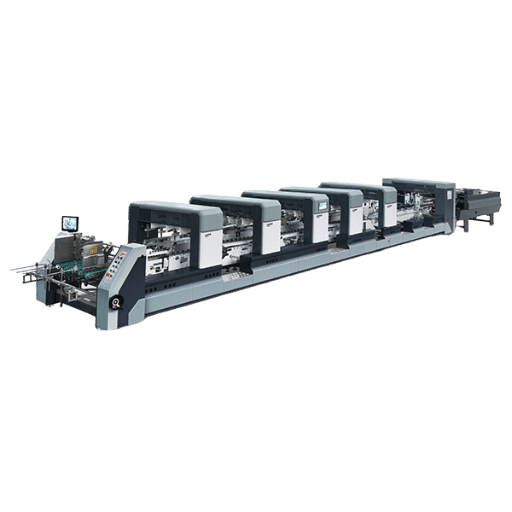
Folder gluer machines are differentiated by the box folder geometry and box style they can produce in one pass. Matching machine type to box style is the single most important specification decision — a straight-line machine cannot produce a crash-lock carton, and a six-corner machine producing straight-line work is overspecified and costly to changeover.
| Type | Box style | Working width | Speed (m/min) | Industry fit |
|---|---|---|---|---|
| Straight-line | Tuck-end, single-glue-flap | 650 – 1,450 mm | 200 – 450 | Pharma, cosmetics, dry food |
| Lock-bottom | Auto-bottom retail cartons | 650 – 1,100 mm | 150 – 350 | Apparel, gift, retail |
| 4-corner | Tray-style, two-pre-fold corners | 800 – 1,600 mm | 100 – 250 | Food trays, electronics |
| 6-corner | Heavy tray, beverage carrier | 1,100 – 2,200 mm | 80 – 200 | Beverage, e-commerce protective |
| Crash-lock | Snap-flat shipping carton | 650 – 1,800 mm | 100 – 300 | E-commerce, express logistics |
| Pre-folded specialty | Stereo box, complex-die | 800 – 3,200 mm | 60 – 180 | Premium retail, display |
Within those six functional types, a second hardware split applies: folding-carton machines are narrower and higher-speed, tuned for paperboard up to about 600 g/m² and producing four-corner and six-corner boxes at full line speed, while corrugate-capable machines are wider, run at slower speeds, and add stronger compression rollers to handle B/C-flute board. A third class — stereo-box machines — handles complex pre-folded display and gift packaging that no straight-line machine can complete.
For international box-style classification, the FEFCO Code issued by the European Federation of Corrugated Board Manufacturers is the standard reference — useful when matching customer-side box style codes to machine capability during a procurement RFQ.
What are the three types of folding machines?
In the folding-carton trade, the three top-level machine classes are: (1) straight-line folder gluers for single-glue-flap cartons; (2) crash-lock folder gluers for snap-flat shipping boxes that feature heavily in e-commerce; and (3) 4/6-corner folder gluers for tray-style and beverage-carrier work. Older industry books sometimes still call the same three categories “single-point”, “lock-bottom”, and “tray-style” — different nomenclature, same hardware split.
How to Choose: A Decision Framework for Buyers
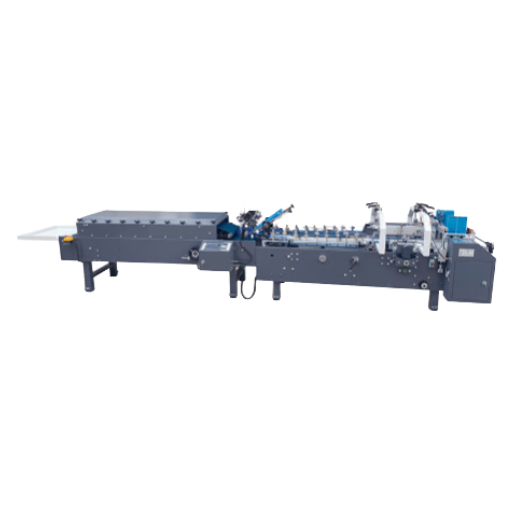
Most folder gluer purchase mistakes are not caused by buying the wrong brand. They are caused by selecting a machine class that does not match the actual box mix, or that is over-specified for current throughput. This selection guide uses two passes: a three-level decision tree to narrow the class, then an eight-criteria scoring matrix to rank the shortlist.
Pass 1 — Three-Level Decision Tree
- First, box style. Will more than 30% of your annual volume require crash-lock, 4-corner, or 6-corner box styles? If yes, a straight-line-only machine is out — regardless of price. If no, the straight-line class is the most cost-effective design.
- Next, throughput. Sum your peak-month demand in cartons per shift. Under 60,000 cartons/shift, semi-automatic machines remain economically defensible. Above 60,000, only full automation keeps unit cost stable.
- Next, changeover frequency. How many SKU/box-style changeovers per shift? Two or fewer per shift means changeover speed is a secondary criterion. Three or more — common in short-run, SKU-complex production — moves changeover speed into the top three buying criteria.
Pass 2 — Eight-Criteria Scoring Matrix
Rank each shortlisted machine 1 – 5 on the eight factors below. Factors with the highest weighting in your specific operation should be settled before machines go head-to-head, not during the comparison.
Folder Gluer Selection Matrix — 8 Criteria
- Maximum box size — does it fit your largest current SKU plus a 15% margin for future growth?
- Peak throughput at your dominant box style — vendor-quoted m/min must be cross-checked against your actual style mix; speed can fall 30 – 40% on 6-corner work versus straight-line.
- Box style range — what is the ratio of “single press of a button to changeover” styles versus styles requiring manual re-tooling?
- Automation tier — vision QC, glue inspection, automatic feeder load, and one-click format recall are material differentiators above the entry tier.
- Changeover speed, measured in setup minutes per format change, ideally observed with your operator running the machine during a factory acceptance test (not the vendor demonstrator).
- Footprint — overall length matters more than width on most plant floors; in-line stacker-strapper attachments add 2 – 4 m to the rear.
- Integration readiness, in particular whether the machine supports upstream printing/die-cutting line synchronization and downstream packing handoff.
- After-sales coverage — service response time, spare-parts availability, and operator training scope in your country.
The question is not which machine scores highest overall — it is which machine scores highest on the criteria that matter most for your specific carton mix. A high-speed straight-line specialist scoring 5/5 on throughput but 1/5 on box-style range is the wrong purchase for a converter whose growth strategy hinges on winning more crash-lock work.
Folder Gluer Machine Cost: Pricing Tiers, Used Market, and ROI
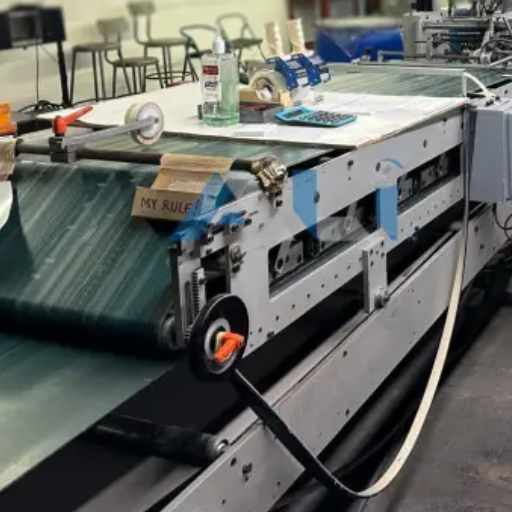
Folder gluer machine pricing spans almost two orders of magnitude. Searching for “automatic folder gluer” yields entry-level Chinese carton machines at USD 13,000 – 16,000 and highest-configuration units at a price above USD 1 million. Both ends are real offerings; what matters in sourcing is which tier delivers your throughput requirements and SKU distribution.
Three Pricing Tiers (USD, 2026 reference ranges)
| Tier | Price band | Typical capability | Best fit |
|---|---|---|---|
| Basic / Semi-automatic | $13K – $80K | Straight-line + lock-bottom; 100 – 200 m/min; 2 – 3 operators | Small converters, low-mix work, regional contract jobs |
| Mid-range / Fully automatic | $80K – $350K | Straight-line, lock-bottom, 4-corner; 250 – 350 m/min; vision QC standard; 1 operator + supervisor | Most folding-carton converters above 60K cartons/shift |
| High-end / Servo-driven | $350K – $1M+ | Full box-style range; 350 – 450 m/min; 30K cartons/hour on optimal style; 1-click changeover | High-mix, premium-graphics, large multi-line plants |
Price ranges collated Q1 2026 from manufacturer-published machinery specifications and trade-platform listings. Prices are a function of steel prices and currency exchange rates; list prices quoted may not reflect current market realities.
New vs. Used: A Live Secondary Market
A prevalent presumption is that the used folder gluer market is shortage-constrained. The evidence says otherwise. Machineseeker, Surplus Record, and other industrial trade portals list in excess of 670 used folder gluers at any time, including refurbished Bobst, Heidelberg / MK Masterwork, and DGM machines aged from 5 to 25 years. For a converter requiring a second-line capacity jump not a flagship machine, a refurbished medium-range machine offered at about 50 – 60% of the cost of a new unit is often the right economic choice- so long as the vendor can furnish maintenance logs and recent production samples.
How much does a folder-gluer cost — in ROI terms?
Purchase price for a folder-gluer is rarely the biggest line item over a plant’s 12 – 20 year life. Operator cost savings from automation, peak-time throughput acceleration, and the time-value of changeover downtime each individually surpass the depreciated dollar value in most plants. A converter replacing six manual gluers (combined annual labor ~$240,000 at a $40,000 fully-loaded rate per employee) with a single mid-range automatic machine often recovers the investment within 18 – 30 months. Capital cost is the smallest variable in the equation; throughput optimization during peak season and SKU changeover frequency dominate unit cost over the machine lifecycle.
🪝 The 60/30/10 Capacity-Cost-Changeover Heuristic
In 2026 procurement, allocate evaluation weight on shortlisted folder gluers as follows:
- 60% — Capacity match to your dominant box style at your dominant throughput level. Misallocated capacity packs a larger lifetime cost punch than any other criterion used to rank machines.
- 30% — Total cost of ownership (acquisition + spares + adhesive consumption + downtime cost). Service response time in your country is the single most underestimated variable in cost-of-ownership math.
- 10% — Pure top-line speed. Maximum vendor-quoted m/min is the single most overweighted criterion in industry RFQs and the first place buyers overpay for capability they cannot use.
The framing is counter-intuitive: pure-speed scoring misallocates risk in 2026’s short-run, high-changeover context. A converter running 12 changeovers per shift has more to gain from a 5-minute changeover at 280 m/min than from a 25-minute changeover at 450 m/min. Buyers stuck on top-line speed routinely overpay for spec they only see in the vendor demo. For most converters above 60K cartons/shift, an automated online folder gluer line with mid-tier speed and integrated changeover automation will outperform a higher-speed standalone unit on real annual unit cost.
Operations, Workforce, and Common Problems on the Line
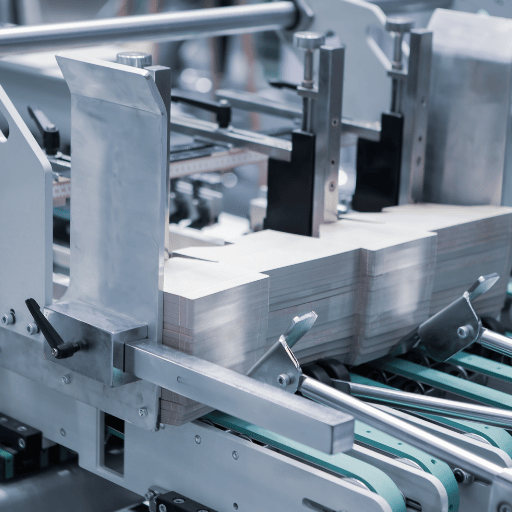
Once an automatic folder gluer machine is installed, day-to-day operations look very different from a manual gluing line. Labor models collapse from a six-to-ten-person manual crew to one experienced operator plus a supervisor, with the operator’s role shifting from physical labor to setup, supervision, and quality control. Setup remains the most labor-intensive task in modern folder-gluer operations — usually about two hours per box format on standard machines, dropping toward 10 – 15 minutes on top-tier fully automatic folder gluer machines with one-click format recall.
How many operators are required for a folder-gluer?
Semi-automatic folder gluers normally require two or three operators per shift — one at the feeder, one at the delivery, and a third covering glue refill and quality control. Fully automatic machines reduce that to one operator plus a supervisor shared across multiple lines. Once setup is complete, the operator’s day-to-day role shifts from manual feeding to overseeing production — a workforce profile change that does not change the overall headcount math during initial training.
“Setup is the most important and most time-consuming task in our day. Once the machine is dialed in, the operator simply oversees production – but if the first dozen sheets are not perfect, you fight that adjustment for the rest of the run. The machines reward operators who learned manual folder-gluer work first; muscle memory for paperboard behavior translates directly into faster setup.”
— Synthesized industry voice, drawn from a senior folder-gluer operator profile with 25+ years on packaging lines
Top 5 Common Problems — and the QC Features That Catch Each
| Issue | Field-reported root cause | QC feature that catches it |
|---|---|---|
| Skewed feed | Warped stack; suction-cup wear | Vision feed alignment sensor |
| Glue blob / missing glue | Nozzle clog; glue tank fill below 80% of rubber wheel | UV / IR glue line inspection |
| Weak crease / cracking | Low-humidity environment; aged board | Reject station after press dwell |
| Mis-folded corner | Belt-to-line-speed ratio drift | Final-fold camera inspection |
| Stack jam at delivery | Glue not yet cured; delivery belt overloaded | Counter-eject + auto stop interlock |
Two of the issues in the table above draw heavily from real practitioner reports rather than vendor documentation. Operators on PrintPlanet describe folder rollers gumming up with cured glue residue and requiring scheduled disassembly and cleaning — a maintenance demand that is non-negotiable on any line running PVA glue eight hours per shift. Carton flap cracking in low-humidity winter conditions is a separate field issue, solved less by machine adjustment and more by reverse-folding short test runs and by asking the paper supplier to adjust mill moisture upstream.
Daily / Weekly / Monthly Maintenance
- ✔ Daily: Clean glue applicator nozzles; verify glue tank fill at 80% of rubber wheel level; wipe folding belts; sample 10 glued boxes per shift for crease and flap inspection.
- ✔ Weekly: Disassemble and degrease folder rollers; inspect feeder suction cups; calibrate vision QC sensors against a known-good carton.
- ✔ Monthly: Belt tension check; servo encoder log review; spare-parts inventory audit (most-failed parts: feed cups, glue nozzle inserts, belt tensioners); confirm packaging equipment alignment with the upstream printing line.
Industries Using Folder Gluer Machines

Folder gluer machines serve the carton converters supplying every manufacturing sector that ships product in a box. The industry × box-style fit varies enough that the machine class question almost always traces back to which end customers a converter primarily serves.
| Industry | Dominant box style | Typical throughput requirement |
|---|---|---|
| Pharmaceutical | Straight-line tuck-end | High volume, narrow SKU range |
| Food & beverage | Lock-bottom + 4-corner trays | Mixed, seasonal peaks |
| Cosmetics | Pre-folded specialty / stereo | Premium graphics, smaller runs |
| E-commerce / express logistics | Crash-lock + 4/6-corner | High volume, high SKU complexity |
| Electronics | 4-corner protective trays | Moderate volume, tight tolerances |
Converters weighted toward pharma and dry food can select a high-speed straight-line machine and skip the cost of crash lock capability. Those growing into e-commerce serving Amazon-style fulfillment need crash-lock and 4/6-corner machinery as an entry condition, not a future upgrade. Envelope and folded-mailer work, while adjacent, runs on different finishing equipment and is rarely served by the same machine.
Top Manufacturers and the Brand Landscape

The folder gluer manufacturer landscape breaks into three regional camps: well-established European brands competing on engineering reputation and after-sales depth; Japanese and German-Chinese joint ventures competing on automation tier; and Asian manufacturers competing on price and integrated-line flexibility.
| Manufacturer | Region | Typical specialty | Price tier |
|---|---|---|---|
| Bobst | Switzerland | Full range; flagship Expertfold / Novafold | High-end |
| Mitsubishi EVOL | Japan | Flexo folder gluers for corrugated | High-end |
| Heidelberg / MK Masterwork (Diana Smart) | Germany / China JV | Folding-carton specialists; Diana Smart 55/80/115 | High-end |
| Ward / Koenig & Bauer | USA / Germany | Flexo folder gluers | High-end |
| Moll / Brausse | Germany / Asia | Mid-range folding-carton | Mid-range |
| DGM (SmartFold Servo X) | India / Asia | Servo-driven crash-lock specialists | Mid-range |
| J&L / regional Asian builders | China / SE Asia | Integrated print–fold–glue lines and entry-tier carton models | Basic – Mid |
Outside the top-tier European builders, regional Asian manufacturers have closed much of the automation gap and now compete on integrated-line packaging solution scope and total manufacturing-cost transparency rather than on individual machine speed alone. Buyers serving 30+ export markets usually prioritize spare-parts logistics and remote-diagnostic support — both of which favor manufacturers with established service depots in the buyer’s region. Cenwan Machine’s automated online folder gluer solutions, for example, are positioned around fast format changeover and after-sales spare-parts coverage across 40+ countries — the integrated-line plus service-depth profile most commonly requested by converters expanding regional footprint.
2026 Industry Outlook — What’s Changing in Folder Gluer Technology

The folder gluer machinery category is growing rapidly, but unevenly across machine tiers and buyer types. Four current forces drive most procurement decisions in the next 18 months.
$678.4M
Global folder gluer market, 2025 (GMI)
6.8% CAGR
Forecast through 2033
$172B+
Folding-carton end market, 2026 (Smithers)
3 – 5 min
Best-in-class changeover (2026)
1. Automation and Industry 4.0 — Vision QC and One-Click Changeover
Features that once differentiated high-end machines are now standard at the mid-tier. One-click format recall, vision-driven glue line inspection, and automatic feeder reload no longer distinguish a premium-tier machine — they constitute the threshold at or below which mid-tier machines lose RFQs. If you are evaluating a mid-tier machine “at a good price” without these features, the price is competitive because the feature set is one cycle behind.
2. Short-Run, SKU-Complex Production
The single sharpest 2026 shift is the collapse of changeover time as a competitive metric. Industry leaders such as ONEZIM and Bobst Novafold now deliver 3 – 5 minute repeat-production changeovers, an order of magnitude faster than the 30 – 60 minute changeover that was the 2018-era expectation. When a converter operates 12 or more SKUs per shift, the constraint is no longer run speed — it is the changeover line.
3. Sustainability — Water-Based Adhesives, Energy Efficiency
Water-based PVA adhesives have largely replaced solvent systems for folding-carton work, and energy-efficient drive trains (servo motors replacing pneumatic actuators on pre-folders and presses) are standard above the entry tier. Buyers should expect — and ask vendors to quantify — the kWh-per-thousand-cartons figure in any 2026 procurement RFQ.
4. E-commerce-Driven Demand for Crash-Lock and 4/6-Corner
The fastest-growing carton segments — crash-lock and 4/6-corner — are demand-pulled by e-commerce fulfillment requirements rather than retail shelf graphics. Towards Packaging projects the folding-carton end market growing from approximately $198.55 billion in 2026 toward $320 billion by 2035, a CAGR of around 5.46%. The crash-lock segment is growing materially faster than the overall market, and converters not currently equipped to produce crash-lock will lose share over the next five years to those that are.
Buyer recommendation for 2026: if your procurement window is within the next 12 months, treat vision QC + one-click changeover as baseline machine spec, treat sub-15-minute changeover as a buying criterion (not a “nice to have”), and confirm crash-lock + 4/6-corner capability — even if your current SKU mix does not yet require them.
Automatic Folder Gluer Machine Buyer Specification Sheet
Before requesting a quote, turn the product mix into measurable inputs. A supplier cannot select an automatic folder gluer machine from a target speed alone; blank dimensions, board behavior, box style and changeover frequency determine the real configuration.
| Quote input | What to send | Why it changes the machine |
|---|---|---|
| Carton range | Minimum and maximum blank size, board caliper and three representative dielines. | Defines working width, feeder stability and folding-carrier range. |
| Box styles | Share the run mix for straight-line, crash-lock, 4/6-corner and specialty cartons. | Determines hooks, turning devices, glue points and whether one model can cover the mix. |
| Production target | Good cartons per hour by job, not only rated belt speed. | Separates useful throughput from a headline maximum speed. |
| Changeovers | Jobs per shift, average batch size and repeat-order percentage. | Shows whether servo positioning and recipe memory will pay back. |
| Glue and inspection | Cold glue/hot melt needs, glue verification, barcode or camera inspection. | Sets the applicator, sensors, rejection and quality-control package. |
| Service boundary | Installation country, operator skill level, spare-parts target and response expectations. | Changes training, commissioning and recommended spare package. |
For mixed short runs, compare automatic recipe recall with a lower-cost semi-automatic setup. Then use the automatic folder gluer model selector to narrow the configuration before requesting a formal quote.
Frequently Asked Questions
Q: What is the price range of an automatic folder gluer machine?
View Answer
Entry-level Chinese semi-automatic carton folder gluers start around USD 13,000 – 16,000. Mid-range fully-automatic machines fall between $80,000 and $350,000. Top-tier servo machines from Bobst, Heidelberg / MK Masterwork and similar tier-1 brands range from $350,000 to over $1 million depending on width, automation tier, and box-style range. Reference figures are Q1 2026 and fluctuate with steel prices and exchange rates.
Q: What’s the difference between flexo and straight-line folder gluers?
View Answer
A flexo folder gluer (FFG) integrates printing, slotting, die-cutting, and folder-gluing into one continuous corrugated-board line, used mainly for high-volume shipping cartons with one or two flood colors. A standalone straight-line folder gluer accepts already-printed and die-cut paperboard blanks and only handles the folding and gluing — it is the dominant configuration for folding-carton work where graphics quality requires a separate offset or fine-flexo press upstream.
Q: Can one folder gluer handle both cardboard and corrugated boxes?
View Answer
Some wide-format machines are dual-rated, but most production lines specify either a folding-carton machine (paperboard up to ~600 g/m²) or a corrugate-capable (B/C-flute) machine — not both — because the compression rollers, belt tension, and feeder geometry differ. Running corrugate work on an undersized folding-carton machine accelerates roller wear and pushes the reject rate up. If your work mix splits more than 70/30 across the two substrates, two purpose-tuned machines almost always beat one dual-rated machine on annual unit cost.
Q: How long does a typical order changeover take on a modern automatic folder gluer?
View Answer
Standard fully-automatic machines run 30 – 60-minute changeovers between unrelated formats, and roughly 15 – 30 minutes for repeat production. Top-tier servo machines with one-click format recall now realize 3 – 5 minute changeovers — a tenfold compression compared to 2018 expectations. For converters running 12+ SKUs per shift, this one specification can outweigh raw run-speed in total annual unit cost.
Q: Is it better to buy new or used?
View Answer
The used folder gluer market is far more active than first-time buyers usually assume. Major industrial trade platforms list more than 670 used folder gluers at any given time, including refurbished tier-1 brand machines. For a second-line capacity bump, a refurbished machine at 40 – 60% of new list price is often the financially correct choice. For a flagship line that anchors a converter’s competitive offer, new is usually the right answer — uptime and warranty coverage matter more than capital expenditure.
Q: What’s the typical lifespan of an automatic folder gluer?
View Answer
Well-maintained automatic folder gluer machines from tier-1 manufacturers usually run 12 – 20 years before retirement, with 8 – 12 years a common mid-life refurbishment point. Chinese entry-tier machines usually reach 8 – 12 years before major component replacement becomes uneconomic. Lifespan depends far more on maintenance discipline than on initial price tier.
Q: Are automatic folder gluer machines suitable for small businesses?
View Answer
Below roughly 20,000 cartons per day on a stable SKU mix, manual or semi-automatic gluing remains economically defensible. Above that threshold, an entry-tier automatic folder gluer in the $13K – $80K band often pays back within 18 – 30 months on labor savings alone, before throughput gains are factored in. Small converters benefit most from semi-auto machines that one operator can run with minimal training; the full-auto tier is overspecified until volume can support dedicated supervision.
About This Analysis
This automatic folder gluer machine guide draws on publicly available 2025 – 2026 market data from Global Market Insights, Smithers, UltraMech, and Towards Packaging, cross-referenced with field reports from carton converters and folder-gluer operators on PrintPlanet and adjacent industry forums. Reviewed by the Cenwan Machine engineering team — 10+ years of folder gluer engineering experience across 40+ export markets, with particular focus on automated online folder gluer line configuration and after-sales spare-parts logistics.
References & Sources
- Folder Gluer Machine Market Analysis 2025 — Global Market Insights
- Folding Carton Market Forecasts — Smithers
- FEFCO Code — International Corrugated Box Style Classification — European Federation of Corrugated Board Manufacturers
- Folding Cartons Market Sizing 2026 – 2035 — Towards Packaging
- Used Folder Gluer Live Listings — Machineseeker industrial trade platform
Related Articles
- 4/6 corner automatic folder gluer machine — capabilities and configuration options
- Automated online folder gluer line — Cenwan Machine product overview
- Carton folder gluer manufacturer — engineering, after-sales, and 40+ country spare-parts coverage
- Folder gluer machine product range — comparing machine classes for high-speed packaging lines