Get in touch with Cenwan Machine Company


![Folder Gluer Parts: Components, Wear & Replacement [2026]](https://cenwanpack.com/wp-content/uploads/2026/05/0-1.png)
Folder gluer parts are the mechanical, electrical, pneumatic, and consumable elements that convert a flat die-cut blank into a finished carton at full press speed. A folder gluer can make good cartons for twenty years — but the key is knowing which part to replace before it fails, not after. Below, we map each part category, the wear cycle that dictates when to replace it, how a production symptom points back to the failing part, and how to source a replacement without waiting out the OEM’s 16-week lead time.
Quick Specs: Folder Gluer Parts at a Glance
| Part categories | 4 — mechanical, electrical, pneumatic, wearing |
| Most-replaced part | Conveyor & feed belts |
| Typical belt service life | 2–18 months, by material and duty |
| OEM spare-parts lead time | 12–16+ weeks on many models |
| Aftermarket lead time | 1–4 weeks for stocked equivalents |
| Part price band | $3 to $20,000 by component class |
Use the sections below as a reference. If you are responsible for maintenance or procurement on a folding carton or corrugated line, go straight to symptom-based troubleshooting or the sourcing comparison.
What Is a Folder Gluer Part? Mapping the Machine’s Wear Points
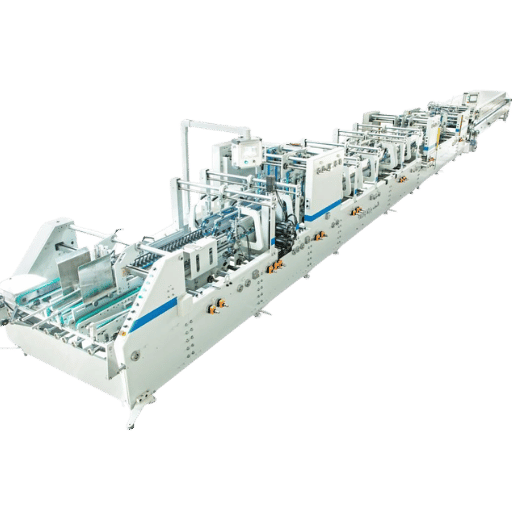
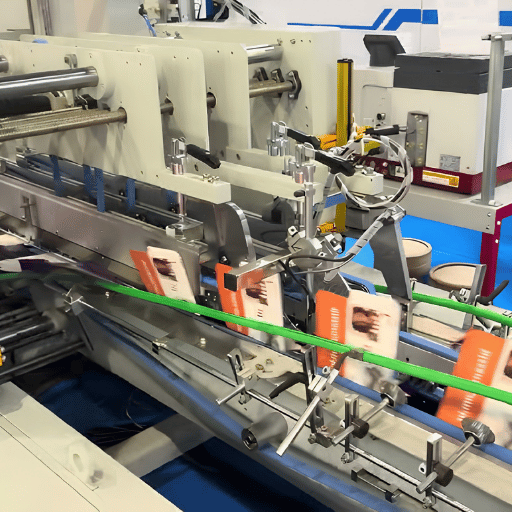
A folder gluer part is any component that wears, consumes, or controls inside the machine while it folds and glues a carton blank. To work out which parts matter, it helps to picture the machine as six sections the blank travels through in order — each one a place where parts wear at a different rate:
- Feeder — separates and meters blanks into the line. Wear points: feed belts, suckers, friction wheels.
- Pre-folder — breaks the crease lines. Wear points: pre-folder hooks, pressing wheels.
- Folding section — folds the panels along the scored lines. Wear points: folding belts, guide rails, hooks.
- Transport/transfer — moves the blank between stations. Wear points: transmission rollers, drive chains, bearings.
- Glue unit — applies cold or hot melt adhesive. Wear points: glue wheels, nozzles, pumps, filters, hoses.
- Delivery/press — compresses the glued joint and stacks output. Wear points: pressing belts, delivery rollers.
Why does this map matter? Because a single failed component is rarely the real problem. It is the gap between the moment a part starts to become unreliable and the moment a replacement reaches your dock that stops a line. Knowing where each part lives, and how fast it wears, is the first step in any parts strategy. For a full walkthrough of the machine itself, see our guide to the automatic folder gluer machine and its components.
Two of these sections — the folding section and the delivery/press — are also the highest-risk areas for operators. Folder gluers run at speed with moving belts, rollers, and nip points, so machine guarding is not an optional safety feature. Under OSHA standard 1910.212, the U.S. Occupational Safety and Health Administration requires that “one or more methods of machine guarding shall be provided to protect the operator and other employees in the machine area from hazards.” And it is enforced: in 2025, OSHA cited a U.S. paper-converting plant with repeat and serious machine-guarding violations carrying roughly $280,000 in proposed penalties. When you replace a guard, an interlock switch, or a light curtain, treat it as a safety part, not a convenience part.
💡 Key takeaway
Before you order anything, find the part in one of the six sections. The section tells you the duty cycle, and the duty cycle tells you how fast it will wear again.
The Four Part Categories: Mechanical, Electrical, Pneumatic & Wearing

All folder gluer parts fall into one of four categories, and each category wears on its own amortization schedule. Organize your spare parts inventory this way — by category, not by panic — and that is what keeps mean time between failures steady. Buying piece by piece after a breakdown is the most expensive way to run a packaging machine.
| Category | Typical parts | Wear behaviour |
|---|---|---|
| Mechanical | Bearings, transmission belts, drive chains, gears, guide rails, sliders, transmission rollers, sprockets, pre-folder hooks, pressing wheels | Gradual fatigue; fails slowly, then suddenly |
| Electrical | Servo and AC motors, frequency converters, PLC modules, HMI panels, limit switches, photo-eye and proximity sensors, contactors | Often runs to failure; sensitive to dust and heat |
| Pneumatic | Solenoid valves, double-acting cylinders, push-in fittings, air hoses, pressure regulators, FRL units, silencers | Seal-driven; degrades with cycle count and contamination |
| Wearing | Conveyor and feed belts, guiding strips, glue wheels, hot melt nozzles, doctor blades, filters | Designed to be consumed; replaced on a schedule |
What actually changes how you buy is the line between wearing parts and everything else. Wearing parts are engineered to be sacrificed — they absorb the friction, heat, and adhesive contact so the more expensive mechanical and electrical components do not have to. So they should never surprise you. Mechanical parts fail on fatigue curves you can predict from cycle counts. Electrical parts are the hardest to forecast, which is exactly why a spare PLC module or servo drive on the shelf is worth its carrying cost on a 24/7 line.
“We choose not to replace worn glue pots, pumps, and hoses on failure — they are replaced on a preventive schedule. Every operator we have supported over the last decade learned the same lesson the same way: the first failure is always the most expensive.”
If you operate a mixed fleet, build a multi-brand folder gluer parts and service program around these four categories rather than around a single supplier’s catalog — it is the difference between a stocking plan and a wish list.
Folder Gluer Belts: NBR vs Polyamide vs Polyester
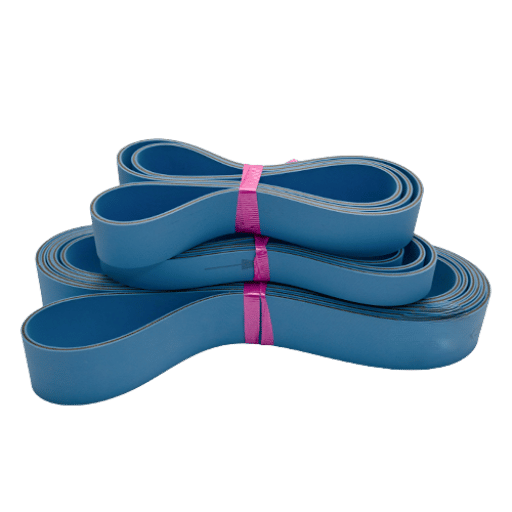
The conveyor and feed belt assembly is, by a wide margin, the most frequently replaced wearing part on any folder gluer line. Choosing the right belt is a balance of abrasion resistance, dimensional stability, grip on coated stock, and replacement cost. Three materials cover almost every carton and corrugated application.
| Belt material | Operating temp | Rated service life | Best for |
|---|---|---|---|
| NBR (nitrile rubber) | −20 °C to 100 °C | 6–12 months, high duty | Glue-heavy carton lines, hot melt zones — highest grip on coated/glossy stock |
| Polyamide (PA) | −30 °C to 120 °C | 12–18 months, high duty | High-speed corrugated and folding carton runs — longest life, strong dimensional stability |
| Polyester (PET) | −20 °C to 90 °C | 9–15 months, high duty | Standard cardboard packaging, mixed stock, adhesive-free splice schedules |
Belt service-life figures are drawn from Cenwan field data on steady high-duty folder gluer installations.
NBR gives the best grip but wears faster against UV and adhesive contamination. Polyamide delivers the longest service life on high-speed lines, but it is more sensitive to bending fatigue when small-diameter pulleys are used — match the belt material to the pulley geometry, not just to your line speed. Polyester sits in the middle and handles shops that run both corrugated and coated-board stock. One caution applies to all three: under heavy abrasive 24/7 corrugated duty, a feed belt’s effective service life can drop into the 2–6 month range regardless of material, because corrugated dust accelerates abrasion. Plan your stock against your real duty, not the rated figure.
What thickness folder gluer belt do I need?
For most carton lines, a 3 mm polyamide belt is the standard high-speed choice — it holds tension and resists stretch at production speed. Switch to NBR for high-grip glue zones, and to polyester for adhesive-free splice programs or mixed stock. Thickness is set by the machine model and pulley diameter, so confirm it against your machine’s belt specification before ordering: a belt too thick for the pulley will crack at the splice, and a belt too thin will track poorly and slip. When in doubt, send your machine model and a photo of the worn belt to your supplier rather than guessing. A full breakdown of widths, splice methods, and per-model fitment is in the folder gluer belt selection details, and corrugated-specific belt behaviour is covered in our guide to corrugated folder gluer lines.
Wear Cycles & Preventive Replacement Intervals

Knowing the interval at which a part wears out is what separates a preventive replacement schedule from firefighting. The intervals below reflect field experience on continuously running folder gluer lines — treat them as a starting point and tighten them for abrasive corrugated stock or multi-shift operation.
| Part | Replacement interval | Recommended on-site stock |
|---|---|---|
| Feed & folding belts | 2–12 months | 2 complete sets |
| Transmission & guide rollers | 3–6 months | 4–6 of each main type |
| Glue wheels & hot melt nozzles | 1–3 months | 6–10 nozzles |
| Glue filters | Monthly | 6 units |
| Photo-eye / proximity sensors | 3–6 months (run to failure) | 3 of each type |
| Glue pumps | ~12 months | 1 spare |
| Guide rails / pressing wheels | ~6 months | 2 of each |
Intervals aggregated from Cenwan field service data; actual life varies with line speed, shift count, and stock type.
Consider a pattern we see often: a pressing wheel that has worn 0.5 mm out of round still produces folds that look fine for a shift, then crosses a threshold and spoils thousands of cartons in a day or two before an operator notices. That is the signature of a wearing part — it fails gradually, then suddenly. The cost of the wheel is trivial; the cost of the rejected cartons and the unplanned stop is not. That is the entire economic case for preventive replacement.
📐 Engineering Note
Tie replacement to a documented PM (preventive maintenance) routine, not to a calendar reminder alone. Daily: clean belts and wipe glue nozzles. Weekly: check belt tension and alignment, lubricate moving parts. Monthly: replace glue filters, inspect electrical boards, log wear patterns. At every PM, torque-check the mechanical fasteners on the folding and delivery sections to the machine builder’s spec — a loose pressing-wheel mount mimics a worn wheel and sends operators chasing the wrong part. Building the log this way also satisfies the spirit of a quality system such as ISO 9001, where traceable maintenance records are expected.
To turn these intervals into an annual budget for your specific line speed and shift count, run the numbers through the folder gluer wear-cycle calculator rather than estimating from memory.
Troubleshooting: Reading a Symptom Back to the Failing Part
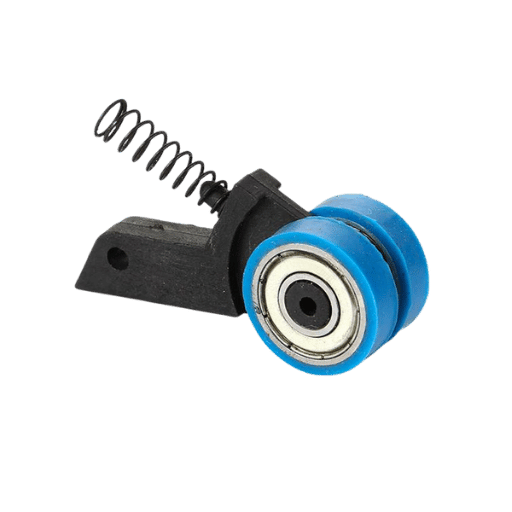
When a line starts producing poor-quality cartons, the quickest route to a fix is to work backward from the symptom to the most likely part. The table below is a first-pass diagnosis — it will not replace an experienced operator, but it will stop the guesswork and point a maintenance team at the right section of the machine.
| Symptom | Most likely cause | First action |
|---|---|---|
| Glue flap separates / weak joint | Worn glue wheel or clogged nozzle; insufficient pressing force; stock coating rejecting the adhesive | Inspect nozzle and glue wheel; verify pressing pressure and dwell; confirm glue type matches the stock |
| Skewed or off-size carton | Feeder misalignment; worn feed belt; uneven folding-section pressure | Recalibrate the feeder; check feed-belt wear and tension |
| Crease cracking or poor fold | Incorrect creasing depth; folding against paper grain; uneven pressure across pressing wheels | Adjust creasing depth; inspect pressing wheels for uneven wear |
| Repeated jams / blank pile-up | Worn conveyor belts or rollers; mismatched conveyor vs. folding speed; uneven stock thickness | Replace worn belts/rollers; re-sync section speeds |
| Intermittent stops, no fault logic | Dirty or failing photo-eye/proximity sensor; loose wiring | Clean the sensor lens; test continuity; swap in a known-good sensor |
One diagnostic mistake costs more shifts than any other: treating glue flap separation as a “more glue” problem. When boxes pop open on a coated or high-gloss stock, the cause is usually that a water-based adhesive cannot penetrate the coating — not that the nozzle is starved. Adding glue makes the carton messier without making the bond stronger. Fixing it means a stock-compatible adhesive or a roughened bonding zone. This is also why your belt and glue-wheel choices in the section above are tied to the stock you run — the parts and the material are one system.
⚠️ Important
Worn belts and rollers cause two symptoms that look unrelated — skewed cartons and repeated jams. If you see both at once, suspect the transport section before you touch the feeder. For the staged folding logic behind these symptoms, see our straight line folder gluer process guide.
Parts by OEM Brand: Bobst, Signature, DGM & Cross-Referencing
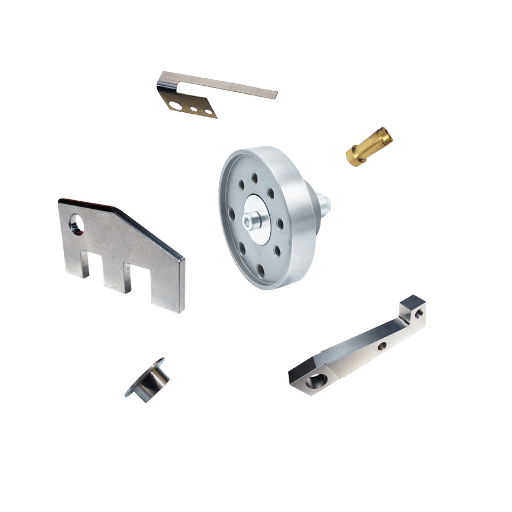
Folder gluers are built by a relatively small set of original equipment manufacturers — Bobst, Signature, DGM, Jagenberg, BWP-Ward, Mitsubishi, Moll Brothers, Rolam, and J&L among them. Each uses its own part numbers, and that is the single biggest source of friction when sourcing a replacement: knowing what OEM part number you have, and what an acceptable equivalent is.
Cross-referencing is the process of matching an OEM part number to a dimensionally and functionally equivalent part — same fit, same material grade, same tolerance. A credible cross-reference is built from the machine model, the OEM number, and a verified application note, not from a guess. Across nine OEM brands, that adds up to hundreds of part-number correspondences for the commonly requested wear and mechanical components. You can match a number across brands with an OEM cross-reference tool rather than working from a paper catalog.
How do I identify a part number without a parts manual?
You do not need the manual. Every machine carries enough identity to source a part if you collect the right information. Send a supplier the following, and a competent parts team will return a confirmed match — usually within 24 hours, whether or not you place an order:
- ✔
Machine brand and model — for example, Bobst Expertfold or Signature Elite - ✔
Serial number — it pins down the production revision - ✔
A clear photo of the worn part from two angles - ✔
Where the part mounts on the machine — which of the six sections, and its neighbours - ✔
Any cast or stamped numbers on the old part, even partial ones
That photo matters more than buyers expect. A part’s geometry, mounting pattern, and wear signature carry most of the identifying information; the number simply confirms it. This is why “no parts manual” is rarely a real obstacle for an experienced parts desk.
Where to Buy: OEM vs Generic Aftermarket vs Multi-Brand Supplier
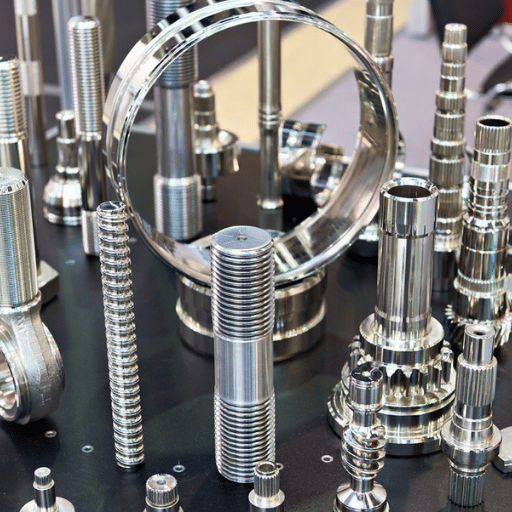
There are three ways to buy a folder gluer part, and the right one depends on total cost of ownership — not the number on the quote. “Save up to 50% on parts” is a familiar aftermarket headline, and it is incomplete. In reality, a spare part carries four cost components in motion.
The Four Hidden Costs of a Cheap Spare Part
- Unit price — the only number on the quote, and the least important.
- Lead-time exposure — every week the part is in transit is a week of downtime risk on a running line.
- Warranty gap — a part with a 0–3 month warranty transfers failure risk straight back to you.
- Short service life — a part that lasts 60% as long is not 40% cheaper; it is 67% more frequent.
Any part that arrives two months late, or fails at half its expected life, was never a saving. Here is how the three sourcing channels compare across the dimensions that decide landed cost.
| Dimension | OEM direct | Generic aftermarket | Multi-brand supplier |
|---|---|---|---|
| Lead time | 12–16+ weeks | 2–4 weeks (one brand only) | 1–4 weeks across brands |
| Compatibility risk | Lowest — exact match | Higher — fit issues common | Low — pre-order compatibility check |
| Warranty | ~12 months | Often 0–3 months | ~12 months typical |
| Service life | Full design life | Often 60–80% of OEM | 90–100% of OEM design |
| Multi-brand coverage | Single brand | Usually single brand | Multiple OEM brands, one quote |
Lead-time and warranty bands reflect current industry sourcing practice and Cenwan service data; always confirm warranty terms in writing on every quote.
✔ When OEM direct wins
- Safety-critical or precision parts where an exact match is non-negotiable
- A machine still under OEM warranty
- You can absorb the lead time with existing stock
⚠ Where generic aftermarket falls short
- Short or absent warranty shifts failure risk to you
- Single-brand scope forces a separate supplier per machine
- Material grade may not be verified against OEM spec
For a mixed fleet, the consolidation argument is decisive. One food-and-cosmetics carton producer we worked with had five separate parts suppliers — one per machine brand — each with its own minimum order, paperwork, and shipping schedule. Consolidating to a single multi-brand source cut the administrative load and freed maintenance staff to spend time on the floor instead of on purchase orders. Unit prices barely moved; the operating overhead did. If you run more than two machine brands, comparing multi-brand sourcing options is usually worth a single afternoon of analysis.
What is the difference between OEM, OEM-quality, and aftermarket parts?
OEM parts come from the original equipment manufacturer at a premium price and the longest lead time. OEM-quality (also called OEM-equivalent) parts are built to OEM dimensions and material standards by an independent maker — the fit and durability target the original, at a lower price and shorter lead time. Generic aftermarket parts do the job but often run on lower-grade material or wider tolerances, so durability and interchangeability vary more. The practical rule: use OEM or verified OEM-quality for anything that affects fold accuracy or safety, and reserve generic parts for low-consequence consumables.
How to Read a Parts Quote: Cost Drivers, MOQ & Lead Time
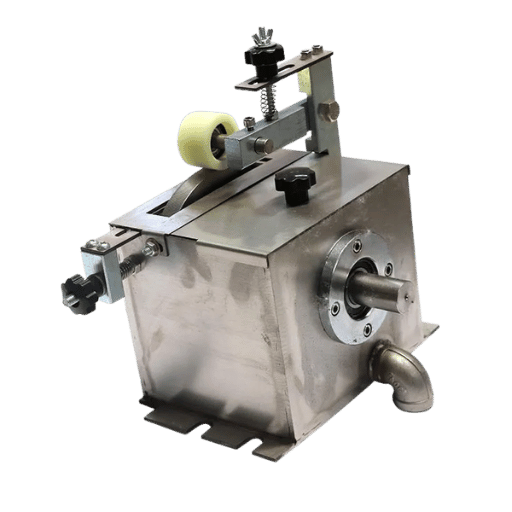
Two quotes for the “same” part are rarely comparable on price alone. To find the supplier with the lowest landed cost, read four variables on every quote — unit price, minimum order quantity, lead time, and shipping terms. Comparing unit prices without the other three is the surest way to pick the wrong supplier.
Four factors drive the unit price itself:
- Component class — the dominant factor. A consumable nozzle and a servo drive are not in the same price universe; folder gluer parts span roughly $3 to $20,000 by class.
- Customization — a custom-machined part costs more than a catalog-stock equivalent and carries its own minimum order.
- Volume — a single-unit emergency order and an annual stocking order are priced differently per unit.
- Certification scope — CE, ISO, or material-certificate documentation requirements add cost but also add traceability.
On lead time and MOQ: most catalog parts carry a one-piece minimum order, while custom-machined parts may need special tooling and a small minimum. Stocked parts typically ship in 1–3 weeks; made-to-order parts run 2–4 weeks, with air freight available to compress an emergency. Always get the warranty term and the shipping incoterm (DDP, DAP, EXW, FOB) in writing — a price without a delivery term is not a real price.
💡 Pro Tip
Split your sourcing by part behaviour. Keep the most failure-prone consumables — belts, nozzles, filters, sensors — stocked on-site, and rely on a fast aftermarket supplier for the long tail of mechanical and electrical parts you cannot justify shelving. This two-track approach minimizes both downtime and carrying cost, and it scales down cleanly for compact lines such as a small box folder gluer setup.
What’s Changing in Folder Gluer Parts Sourcing in 2026
The parts side of the folding carton industry is shifting in three concrete ways, and each one should change how a plant plans for 2026.
Lead times are structurally longer than they were — and that is now permanent. OEM spare parts that once shipped in days now take many weeks on numerous models. In 2024, the World Economic Forum reported that access to critical spare parts has become materially more difficult across manufacturing, raising interest in digital spare parts and distributed production as a hedge. For a 24/7 carton line, the practical response is to treat lead time as a planning input, not a surprise — and to qualify a fast secondary source before you need one.
Getting this wrong costs more every year. In a 2025 ABB study of 3,600 industrial decision-makers, 83% said unplanned downtime costs at least $10,000 per hour, with 76% estimating up to $500,000 per hour; 44% face equipment interruptions at least monthly. Siemens’ True Cost of Downtime 2024 research, reported by the Institute for Supply Management, found that unscheduled downtime consumes roughly 11% of annual revenue. That same ABB data carries a quieter point: one-third of manufacturers had not modernized motor-driven systems in two years — meaning the dominant cost driver is not the price of a part, but the deferred-replacement gap.
Predictive maintenance is reaching the converting floor. Industry trend reporting for 2026 points to IIoT sensors and condition-based maintenance moving from theory into mainstream corrugated and folding carton operations, alongside cross-reference tools and wear-cycle calculators that turn parts planning into a data exercise. Spare-parts logistics itself is forecast to grow at roughly 5% annually into the early 2030s — a sign that more manufacturers are formalizing parts strategy rather than improvising it.
If you are planning a 2026 maintenance budget, the action is straightforward: move from reactive ordering to a documented preventive plan, qualify a multi-brand parts source now, and start logging wear data this quarter so next year’s budget is built on your line’s real numbers rather than estimates.
OEM Folder Gluer Parts Quote-Prep Checklist
A quote is only as accurate as the identification data behind it. Send this package once so the supplier can confirm fit, lead time and shipping without a long email chain.
| Required item | Acceptable evidence | Supplier decision enabled |
|---|---|---|
| Machine identity | Brand, model, serial number, year and production width. | Selects the correct machine generation and parts family. |
| Part identity | OEM number, manual page, installed position and quantity. | Creates a direct or cross-reference starting point. |
| Photos | Overall part, connector or joint, mounting interface and any printed code. | Catches version differences that a part name cannot show. |
| Dimensions | Critical length, width, thickness, bore, pitch or connector pinout. | Confirms fit before the order leaves stock. |
| Operating symptom | Wear, noise, heat, slip, intermittent fault or damage pattern. | Checks whether the requested part is the likely cause. |
| Commercial boundary | Required-by date, destination, shipment preference and acceptable alternative. | Separates stock replacement, expedited sourcing and planned maintenance. |
Start with the OEM cross-reference tool. Lead time should be quoted as stock, production and transit separately.
Folder Gluer Parts FAQ
Q: Do replacement folder gluer parts come with a warranty?
View Answer
It depends on the source. OEM parts typically carry about a 12-month warranty, and reputable multi-brand suppliers often match that. Generic aftermarket parts frequently carry only a 0–3 month warranty or none at all — which quietly shifts failure risk back to you. Always get the warranty term in writing before you compare prices.
Q: Can I buy folder gluer parts in bulk to lower per-unit cost?
View Answer
Yes. Annual stocking orders, multi-unit consolidation, and master service agreements all unlock volume pricing. Buying a year of consumables in one planned order is consistently cheaper per unit than a series of reactive emergency purchases — and it removes the rush-shipping premium that emergencies carry.
Q: Do suppliers ship folder gluer parts globally with DDP and DAP terms?
View Answer
Established parts suppliers ship worldwide under DDP (delivered duty paid), DAP (delivered at place), EXW, and FOB terms. DDP is the most predictable for buyers because the landed price is fixed at the time of order. Air freight is standard for express needs; sea freight suits planned stocking quantities.
Q: How often should conveyor belts and glue wheels be replaced?
View Answer
As a planning baseline, feed and folding belts run 2–12 months depending on material and duty, and glue wheels and hot melt nozzles run 1–3 months. Inspect both weekly and replace on a preventive cycle rather than at failure. Heavy abrasive corrugated stock shortens every interval, so tighten the schedule for dusty, high-speed lines.
Q: Are aftermarket folder gluer parts safe for high-speed corrugated lines?
View Answer
Verified OEM-quality parts — built to OEM dimensions and material grade — are safe on high-speed lines and routinely deliver 90–100% of OEM service life. Unverified generic parts are the risk: wider tolerances and lower-grade material can cause fit problems and early failure. The safeguard is a pre-order compatibility check and documented material certification, not the OEM label alone.
Q: What causes folder gluer belts to wear out prematurely?
View Answer
Usually it traces to corrugated dust and adhesive contamination accelerating abrasion, incorrect tension, a belt running over too small a pulley diameter for its material, or misaligned tracking. A belt material mismatched to the stock — for example NBR’s UV sensitivity in the wrong zone — also shortens life. Clean belts daily and check tension and alignment weekly to reach the rated service life.
Q: Can a part be identified from just a photo and the machine serial number?
View Answer
Usually, yes. A clear photo from two angles, the machine brand, model, and serial number, and a note on where the part mounts give an experienced parts desk enough to confirm a match — often within 24 hours, with no parts manual required. Any cast or stamped numbers on the old part speed it up further.
Need a part identified or a compatibility check?
Send your machine model, serial number, and a photo of the worn part. Cenwan Machine cross-references components across nine OEM folder gluer brands and ships OEM-quality replacements in 1–4 weeks — backed by a 12-month warranty and a free pre-order compatibility check.
About This Guide
This guide draws on Cenwan Machine’s decade of folder gluer parts service across more than 40 countries, including field data on belt and consumable wear and cross-referencing across nine OEM brands. Wear intervals and lead-time ranges are field figures, not published standards — your results will vary with line speed, shift count, and stock type. Where exact numbers depend on your machine, we have said so rather than guessing.
References & Sources
- OSHA Standard 1910.212 — General Requirements for All Machines — U.S. Occupational Safety and Health Administration
- Converting Manufacturer Cited After Machine-Guarding Incident — Occupational Health & Safety
- The Monthly Metric: Unscheduled Downtime (Siemens True Cost of Downtime 2024) — Institute for Supply Management
- Industrial Downtime Costs Up to $500,000 per Hour — ABB Motion Services global study, 2025
- Digital Spare Parts: Manufacturing’s Solution to Supply Chain Woes — World Economic Forum
- ISO 9001 — Quality Management Systems — International Organization for Standardization
Related Articles
- Automatic Folder Gluer Machines Explained — Types, Components & Costs
- What Is a Corrugated Folder Gluer? A Plant Manager’s Guide
- What Is a Straight Line Folder Gluer? Process & Productivity
- Small Box Folder Gluer Machine Guide — Width, Glue & Speed
- Folder Gluer Parts & Service — Multi-Brand OEM-Quality Replacement Components
Reviewed by the Cenwan Machine engineering team — folder gluer manufacturing and multi-brand parts service since 2014.