Get in touch with Cenwan Machine Company


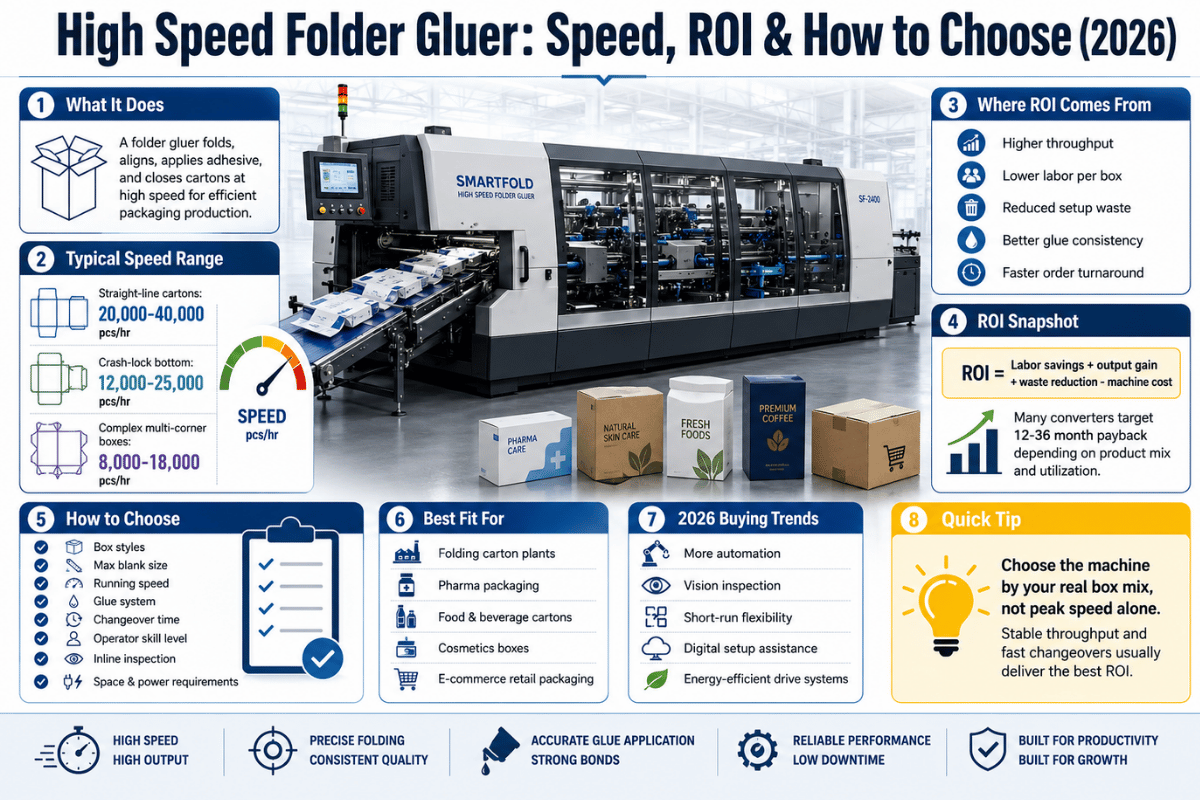
A high-speed folder gluer (the machine that turns flat blanks into folding cartons and corrugated boxes) is typically advertised at, say, 300–450 meters per minute, several times the pace of an entry-level model. What the spec sheet advertises, though, usually differs from the speed you actually get on the shop floor. Here’s what you need to know to read those numbers, judge whether the jump to a faster line is worthwhile, and actually understand a sales quote.
Quick Specs: High-Speed Folder Gluer
| Typical rated speed | ~300–450 m/min (web speed) |
| Realistic running speed | Often 50–70% of rated, after makeready, changeover & feeding losses |
| Output basis | m/min (web) and cartons/hour — they diverge by box length |
| Box styles handled | Straight-line, crash-lock bottom, 4- and 6-corner |
| Glue systems | Cold (PVA) emulsion or hot melt |
| Typical crew | 1–2 operators with automated feeding/packing |
What Counts as a “High-Speed” Folder Gluer?
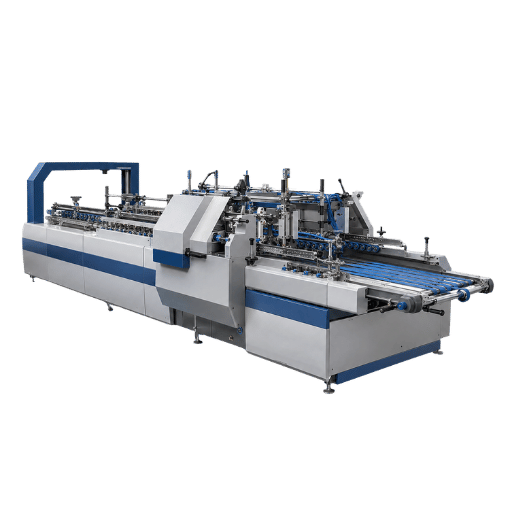
in the packaging trade high speed is basically everything above around 300 m/min or even higher and a speed specification for any of the machines really means just that – the linear web speed at which blanks pass through the folder gluer whether it’s a folding carton folder gluer or a corrugated folder gluer , or even a form, fill and seal. Speed really translates to output because a folder gluer take a flat die-cut box blank, glues it, then folds it and finally compresses it all in one uninterrupted workflow.
| Tier | Typical web speed | Best fit |
|---|---|---|
| Entry / small automatic | up to ~40 m/min | Short runs, samples, low volume |
| Standard / professional | ~100–200 m/min | Mixed jobs, mid-volume converters |
| High-speed | ~300–450 m/min | Long runs, high-volume carton plants |
| Peak / servo | ~450 m/min and up | Continuous, automated postpress lines |
How fast is a high-speed folder gluer?
High speed folder gluers tend to operate from 300 to 450m/min on web speed, though some advanced, servo driven, peak-performing models can hit even higher rates. In terms of finished cartons/hour, that can translate into hundreds of thousands of cartons per hour – downstream, filling equipment generally ranges from 30,000 up to about 200,000 cartons/hour so that it can keep up. Of course, cartons per hour is largely dependent on the length and style of your carton, so it’s possible to have two folder gluer models with identical m/min ratings that produce vastly different cartons per hour. Always work with a vendor to receive cartons per hour output estimates based on your particular box size and format.
💡 Key takeaway
‘High-speed’ means roughly 300 m/min and up — but the number that matters for your box is finished cartons per hour, not the headline web speed.
What Actually Determines Folder Gluer Speed
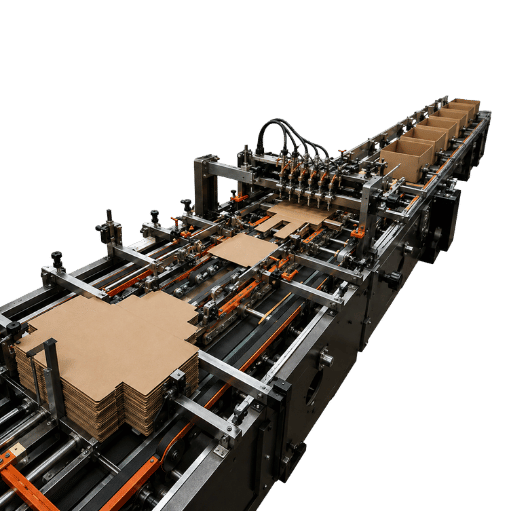
Two machines with the same nameplate speed can deliver wildly different output, since that rated figure assumes ideal operating conditions. Five levers limit the actual yield you obtain, and most of them have nothing to do with the motor’s top speed.
The five speed levers
- Board grade and caliper- the thicker corrugated and high-gsm folding-carton board will bend slower and require a greater compression dwell than thinner cartonboard.
- Box style complexity – the more you fold this box and add glue lines, the more stations that the blank has to travel through without any snags.
- Glue system – hot melt can set instantly enabling higher speeds and handling of part; cold PVA forms an improved fiber tear bond which requires longer compression times and more even glue application.
- Feeder/ blank quality – warped, dusty, or inefficient die-cut blanks can lead to misfeeds and a misfeed at 400 m/min will stop the line.
- register and set up – section alignment and gauge setting determines whether you can hold top speed without the rear end stepping out.
This is where experienced setters earn their pay, on some lines, hook depth has to be set precisely with a calibrated gauge, or instead of clean, square boxes your reject bins fill up with skewed waste. A fast drive is the easy part; whether the rest of the line let you use that speed is the real question.
📐 Engineering Note
Glue open time needs to fit within the compression section at line speed. If you’re using a hot melt, let’s say with a sub-second set time, and your blank is moving at 400 m/min (roughly 6.7 m/sec) your compression belts need to hold the joint through the entire set time – which works out to be a few meters of belt. Drive it beyond that and the joint pops, no matter what your feeder speed. Don’t let one item drive the other in terms of set, compression and target speed.
Rated Speed vs. Real Production Speed
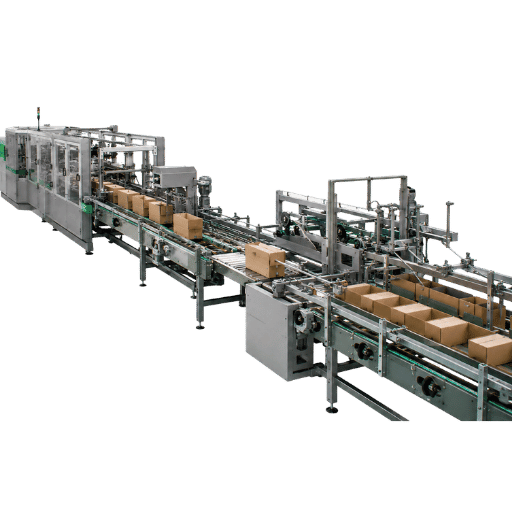
Here’s the value everyone leave out of the quote: The rated speed is the ceiling. It’s measured under ideal conditions – one very long run, a fully tuned machine, and perfect material. Your actual output will be the ceiling multiplied by OEE factor – in other words, how much of the shift you’re actually producing good product.
The main issue when you produce a number of small, diverse SKUs is that changeovers eat up much of that potential, so a 400 m/min machine may well achieve only 200-250 m/min across an entire shift. This is the reason that more often than not, simply buying the faster machine results in no additional boxes out the door.
“The top speed of the machine helps close the sale, but the part you live with every shift are the speed and quality of the changeovers, along with feeder stability. We’ve actually seen the ‘slower’ machine outrun the faster one because changeover and setup time are half as much”.
The Real-Speed Rule
Calculate your planned output not around rated speed but effective speed. A working estimate is:
Effective output = rated speed × OEE factor (commonly 0.5–0.7 for varied short runs, higher for steady long runs).
So if a manufacturer gives you a quote for 400 m/min and you’ve a range of short runs, you should base your output plans around 200-280 m/min, until you’ve demonstrated faster performance on your own jobs. After that, consider how you’re going to address that OEE factor – changeover time and clean feeding will often boost productivity even more than a higher rated speed.
High-Speed vs. Standard Folder Gluers: When the Upgrade Pays
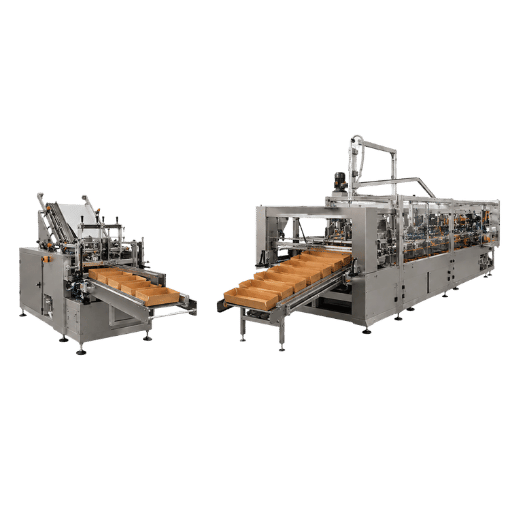
The key decision isn’t typically, “is faster better?” but rather, “Does my production mix really justify the additional speed?” A high speed folder gluer has benefits if you do mostly high volume and stable product. However, with many short runs, the benefit is much harder to capture. In the table below you’ll find the common trade-offs.
| Factor | Standard / automatic | High-speed |
|---|---|---|
| Web speed | ~100–200 m/min | ~300–450 m/min |
| Ideal run length | Short to mid | Mid to long, repeatable |
| Changeover sensitivity | Lower impact on output | High — frequent setups erase the speed gain |
| Labor per carton | Higher | Lower with auto feed/pack |
| Best-fit volume | Lower annual volume, varied SKUs | High annual volume, fewer SKUs |
Quick decision guide
- If you’ve high volume, long production runs with minimal SKU variation, the payback from a higher-speed system is realized in pure throughput and lower labor cost.
- If you do a mix of short runs with some high volume, high-speed only makes sense if you make significant investments in quick-changeover tooling.
- For facilities with a constant flux of small orders, a well-set up automatic folder gluer with rapid changeovers usually outweighs the benefits of an faster machine you can’t consistently keep running.
If your order volumes really fit into the highest tier of production needs, we offer a range of high-speed folder gluers designed to operate precisely at those speeds and throughput levels for the very long run required to yield a strong ROI.
Box Styles & Speed: What Runs Fast, What Slows You Down
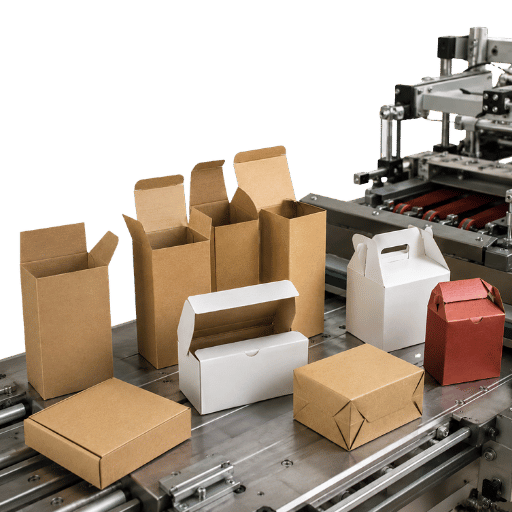
One of the biggest unspoken speed variables is box geometry. Each fold and glue line represents a touchpoint that the blank has to negotiate at speed without skew, and this means that simpler styles are faster. FEFCO code (the international standard used to classify corrugated box designs) works as a kind of shorthand here – a plain regular slotted case (FEFCO 0201) is a much simpler device to process than a crash-lock base carton (FEFCO 0713).
| Box style | Relative speed | Why |
|---|---|---|
| Straight-line (single glue seam) | Fastest | One fold axis, one glue line |
| Crash-lock (auto-bottom) | Moderate | Pre-folding plus locked base assembly |
| 4-corner | Slower | Multiple corner folds and glue points |
| 6-corner | Slowest | Most fold stations and tightest register |
However, complex designs have a payoff further down the production chain – a crash-lock glued base packs into place with a single downwards motion, slashing box assembly time by more than half compared with a taped-up RSC, which is why pack operators do accept a slower gluetime. Match the machine to your dominant style – a plant running predominantly straight-line folder gluer work will have very different speed expectations compared with one focused on a crash-lock bottom folder gluer, or more intricate 4-and 6-corner folder gluer formats. If your products demand something beyond straight-line capabilities – such as display and presentation packaging – a stereo box folder gluer offers geometry few other designs can accommodate.
The ROI of a High-Speed Line
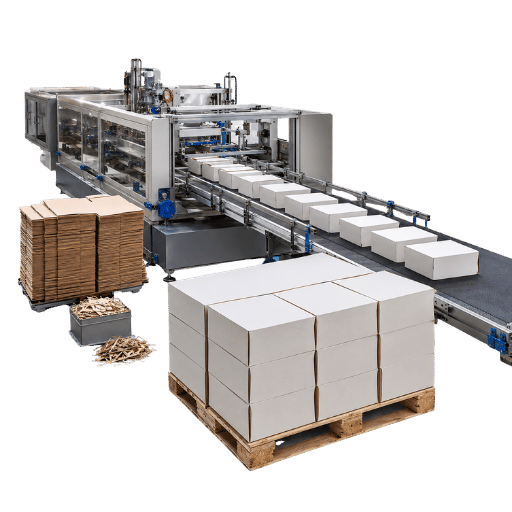
A high-speed folder gluer achieves justification in two fundamental ways: increasing cartons per hour, and reducing the number of hands per carton. On paper, the math is pretty straightforward, although the numbers in your specific circumstances will depend on wage rates, your typical run patterns, and the cost of the equipment – none of which I can reasonably assume that I know.
How to frame the payback
- Throughput gain = (new effective speed − current effective speed) × annual running hours. Use effective, not rated, speed on both sides.
- Labor saving = operators removed by automated feeding and packing × loaded wage × hours.
- Payback period = price premium of the high-speed line ÷ (annual throughput value + labor saving).
How much does a high-speed folder gluer cost?
The price of equipment can vary tremendously depending on working width, degree of automation, the glue system selected, and integrated extras such as inlet spotters and auto-packers, so an arbitrary number on a website can be next to meaningless without the relevant context. Don’t chase down a headline price, make sure any quoted prices reflect your precise box sizes,board types and intended output rate then evaluate based on the cost-per-finished-carton – and changeover times – not on raw speed figures. You can estimate the payback on a faster line with your own running details before you ever contact a salesperson for pricing.
⚠️ Common mistake
Buying the highest number on the machine label you can afford is not a great approach if your blanks,glue control and changeover processes are unable to reliably ‘feed’ that speed. It’s a far better use of capital to invest first in reliable feeding,and speed of setup – these directly correlate to higher real-world output.
How to Choose: A High-Speed Folder Gluer Buying Checklist
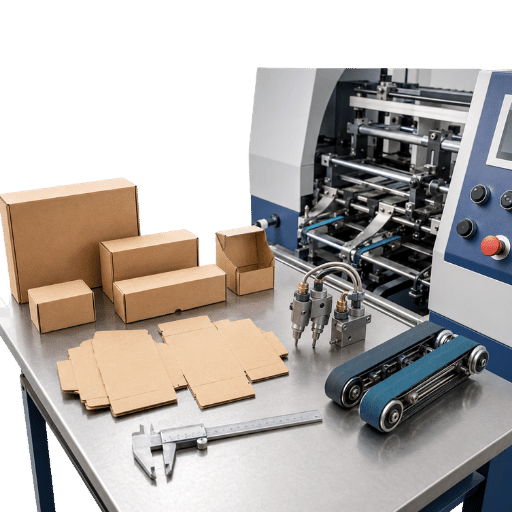
Before you evaluate any tenders, put all your equipment suppliers onto the same comparative evaluation criteria. It’s not the most machines per hour claimed that should be the ultimate objective, but the most machines per shift for *your* boxes that you can achieve. Come to any supplier negotiations with the following on your check list:
- Claimed speed of quoted equipment in both m/min and cartons per hour for your actual box; ensure the supplier provide a realistic assessment of likely actual machine speed.
- Confirmed range of board types (thickness, flute) and box configurations matching your present product list.
- glue application (cold PVA or hot melt) to meet your bond and speed requirements.
- Documented Change Over Time – the engine driving output per shift.
- A downstream packaging capacity that the gluer hasn’t. AND can supply a true count per batch (if one wanted).
- Spare-parts availability, servicing response and training of the operators.
Use a box-style compatibility reference to confirm a machine handle your full range, and a model selector to match your carton mix to the right model before shortlisting. For corrugated-heavy plants, also weigh a dedicated corrugated box gluing machine against a general-purpose line.
Where High-Speed Folder Gluing Is Headed in 2026
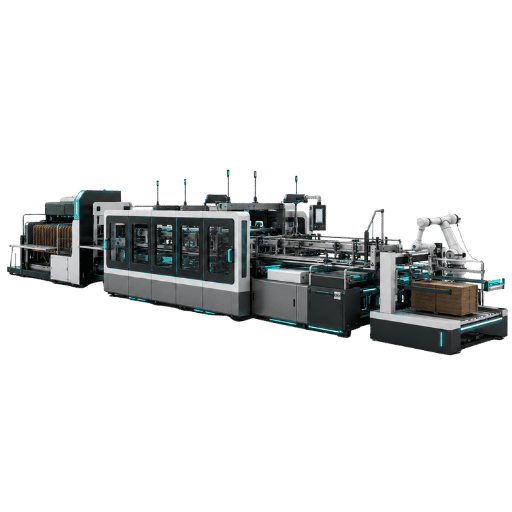
The prevailing market tone is about steady growth, not revolution. Total packaging machinery should average a roughly 5% compound annual growth rate over the next decade, with several analysts putting the global market well above $80 billion by the mid-2030s. For folder gluers specifically, three shifts matter for your next purchase decision.
It’s been creeping downstream of the raw top-speed for while now; you rarely have to buy a faster gluer as there are now so many fast machines being fed by people running to catch up on packing behind them. In 2026 the gains in terms of what it would mean to the factory are to be had integrating and feeding with an auto-packing and robotic line of packers – not going to a bigger headline number.
Actual run length is king. The growth of e-commerce product SKU’s equals an increase of more different styles of boxes in lower quantities. This makes the Machine Builders focus on quick, no-tool die setup and programmable servo machine setup memory – the true factors for increased output efficiency over named speeds in most environments. If you’re specifying a high speed folder gluer for 2026 and beyond, weight changeover speed heavily.
Data is becoming a commodity. OEE Dashboards, condition monitoring are quickly shifting from a “nice-to-have” to a baseline; allowing you to confront the rated-vs.-real issue head-on. Action for 2026 buyers: Have each supplier explain to you how the machine accounts for changeover and downtime, and weigh integration speed and ease of setup more heavily than a more-attractive number at the top of the chart.
Speed-vs-Quality Matrix: When to Slow a High Speed Folder Gluer
Rated speed is not the production target. The correct setpoint is the fastest speed that keeps the carton inside the agreed quality window for an entire batch.
| Defect at higher speed | Likely cause | Corrective check |
|---|---|---|
| Skew or fishtail | Blank enters off-square or folding pressure is uneven. | Reduce speed, stabilize feeder separation and recheck side-guide and belt pressure. |
| Glue gaps | Applicator response or adhesive transfer cannot follow the faster cycle. | Verify nozzle timing, pressure, viscosity and sensor trigger distance. |
| Scuffing or marking | Excess belt pressure, slip or compression at higher surface speed. | Inspect belt condition and lower pressure before raising speed again. |
| Repeated jams | Blank variation, curled board or insufficient spacing between products. | Measure blank flatness and feeder gap; do not treat the jam as a random event. |
Calculate good cartons per hour after rejects and changeovers with the folder gluer throughput estimator.
Frequently Asked Questions
Q: What is a folder gluer machine used for?
View Answer
A single pass of this high-quality press folds, glues and compresses flat die-cut blanks into final cartons and corrugating boxes – the post press finishing process that changes printed sheet into ready-to fill packaging.
Q: What is the difference between a folder gluer and a flexo folder gluer?
View Answer
The standard folder gluer folds and glues plain, pre-printed, die-cut blanks coming to it from an earlier print and cut run. However, a flexo folder gluer is a much bigger inline printing (flexographic), slotting/die-cut and fold-gluing of corrugated board system in one long chain and, is for this reason, the predominant format in high-volume plain case business. In return for its specialization, a flexo folder gluer must run to a substantial degree to pay for itself, whereas a folder gluer has an advantage where various final carton styles,board grades and more varied short-run orders are produced.
Usually, converters will have both in service covering the broad spread of their work.
Q: Can a high-speed folder gluer run short runs efficiently?
View Answer
Yes, but only if changeover is very quick. With short runs setup time is the deciding factor and a high top speed makes no difference. For primarily short runs the best bet is a machine capable of very quick, tool free changeover and setup memory rather than top speed.
Q: What box styles can a folder gluer handle?
View Answer
The most frequent styles are the straight line (single glue seam), crash-lock or auto-bottom boxes, and both 4-corner and 6-corner boxes as well as customized stereo and display styles on the proper machine. The easier box styles move quicker and crash-lock as well as multiple corner boxes slow down due to multiple fold & glue stations the packaging design experiences when travelling the line.
Q: Hot melt or cold glue, which is faster?
View Answer
Hot melts form an instant bond, allow faster production line speeds and offer immediate handling. Cold bonds have much higher tensile strength but can require much longer compression, restricting the achievable line speed. A lot of lines carry two types to pick per job.
Q: How many operators does a high-speed folder gluer need?
View Answer
The reduction in the number of manual handling actions. Because such a high-speed machine will be configured to run automated feeding and inline packaging – an order or two of operators to operate the system compared to five or six on traditional or manual machines – a common annual saving to operating costs through a reduced workforce, and can more often be worth more than the gain made from simply speeding things up.
Comparing high-speed folder gluers for your carton mix?
Why We Wrote This Guide
As a builder of folder gluers across the straight-line, crash-lock, multi-corner, and high-speed range, we hear one question constantly: how fast is a high-speed folder gluer, really? This guide reflects the buyer mistake we see most, chasing nameplate speed instead of usable output, and gives you the questions that separate a solid quote from a glossy one.
References & Sources
- FEFCO CodeEuropean Federation of Corrugated Board Manufacturers (corrugated box style standards)
- Packaging Machinery Market Trends and Size 2026–35Towards Packaging
- Packaging Machinery Market Size & Trends 2026–2036Future Market Insights
- Folding Carton Market OutlookPaperboard Packaging Council (paperbox.org)
![Folder Gluer Parts: Components, Wear & Replacement [2026]](https://cenwanpack.com/wp-content/uploads/2026/05/0-1-150x150.png)