Póngase en contacto con Cenwan Machine Company


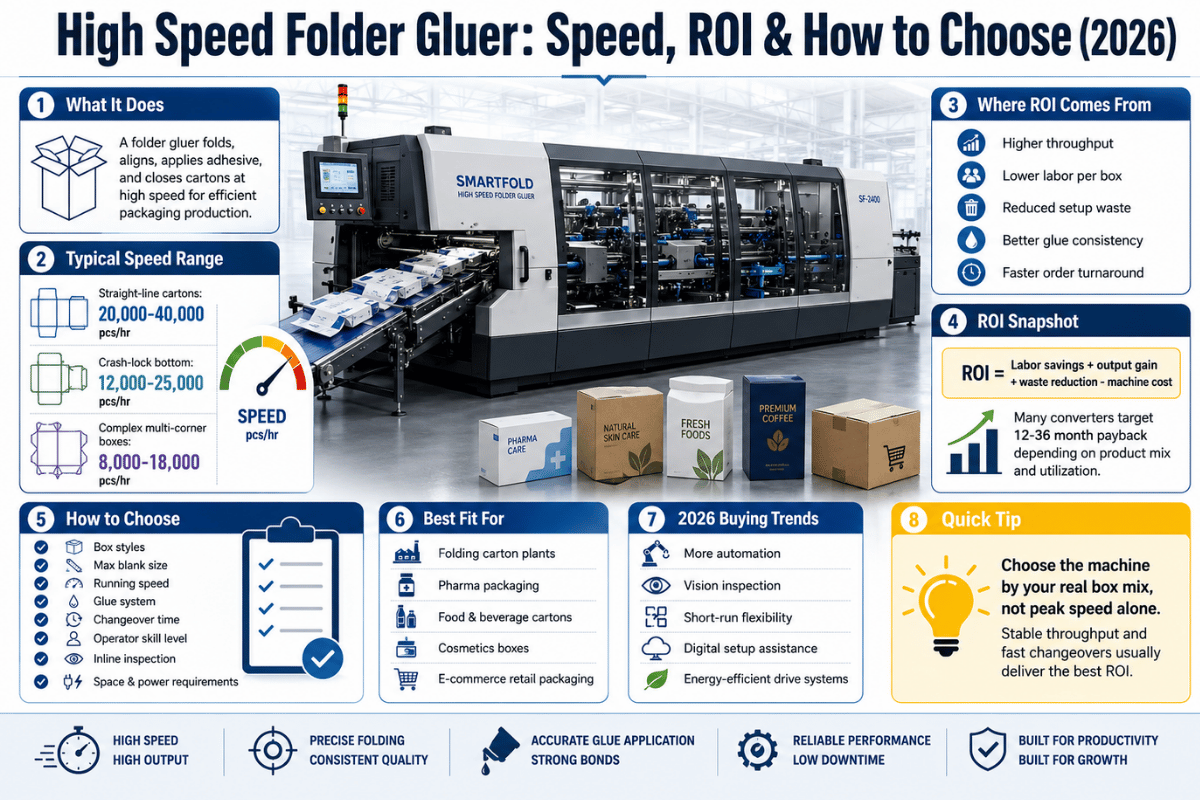
Una plegadora-encoladora de alta velocidad (la máquina que transforma planchas troqueladas en cajas plegables y cajas de cartón ondulado) suele anunciar, por ejemplo, una velocidad de 300–450 metros por minuto, varias veces superior a la de un modelo básico. Sin embargo, la velocidad anunciada en la ficha técnica suele diferir de la que realmente se alcanza en fábrica. Esto es lo que debe saber para interpretar esas cifras, valorar si merece la pena pasar a una línea más rápida y entender de verdad una oferta comercial.
Especificaciones rápidas: plegadora-encoladora de alta velocidad
| Velocidad nominal habitual | ~300–450 m/min (velocidad de banda) |
| Velocidad de producción realista | A menudo, el 50–70 % de la nominal, tras descontar las pérdidas por puesta a punto, cambios de trabajo y alimentación |
| Base de cálculo de la producción | m/min (banda) y cajas/hora: las cifras divergen según la longitud de la caja |
| Formatos de caja procesados | Cajas lineales, de fondo automático y de 4 y 6 puntos |
| Sistemas de encolado | Emulsión fría (PVA) o adhesivo termofusible |
| Equipo habitual | 1–2 operarios con alimentación y embalaje automatizados |
¿Qué se considera una plegadora-encoladora de «alta velocidad»?
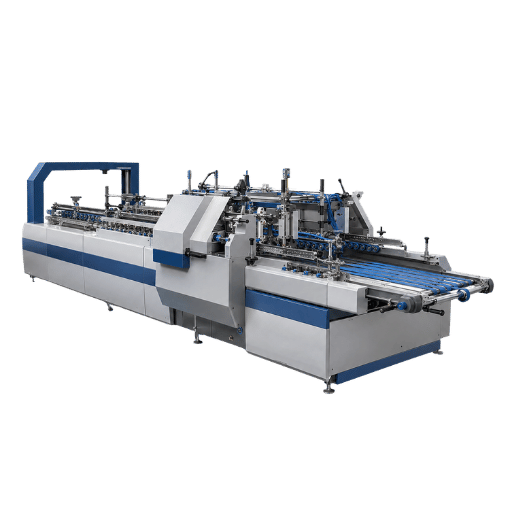
En el sector del embalaje, se suele considerar alta velocidad todo lo que supera aproximadamente los 300 m/min. La especificación de velocidad de cualquiera de estas máquinas se refiere, en realidad, a la velocidad lineal de la banda a la que las planchas pasan por la plegadora-encoladora, ya sea para cajas plegables de cartón, para cartón ondulado o incluso para una máquina formadora, llenadora y selladora. La velocidad se traduce en producción porque la plegadora-encoladora toma una plancha de caja plana y troquelada, la encola, la pliega y, por último, la comprime en un flujo de trabajo continuo.
| Categoría | Velocidad habitual de banda | Aplicación idónea |
|---|---|---|
| Básica / automática pequeña | hasta ~40 m/min | Tiradas cortas, muestras y bajo volumen |
| Estándar / profesional | ~100–200 m/min | Trabajos variados y transformadores de volumen medio |
| Alta velocidad | ~300–450 m/min | Tiradas largas y plantas de cajas de gran volumen |
| Máxima / servomotor | ~450 m/min y más | Líneas de postimpresión continuas y automatizadas |
¿A qué velocidad funciona una plegadora-encoladora de alta velocidad?
Las plegadoras-encoladoras de alta velocidad suelen funcionar a una velocidad de banda de 300 a 450m/min, aunque algunos modelos avanzados, accionados por servomotores y de máximo rendimiento pueden alcanzar velocidades aún mayores. En términos de cajas acabadas por hora, esto puede traducirse en cientos de miles de cajas por hora; los equipos de llenado posteriores suelen funcionar entre 30.000 y unos 200.000 cajas/hora para seguir el ritmo. Por supuesto, las cajas por hora dependen en gran medida de la longitud y el formato de la caja. Por eso, dos modelos de plegadora-encoladora con la misma velocidad nominal en m/min pueden producir cantidades muy distintas de cajas por hora. Pida siempre al proveedor una estimación de producción por hora basada en el tamaño y el formato de sus cajas.
💡 Idea clave
«Alta velocidad» significa aproximadamente 300 m/min o más, pero la cifra importante para su caja es el número de cajas acabadas por hora, no la velocidad de banda destacada.
Qué determina realmente la velocidad de una plegadora-encoladora
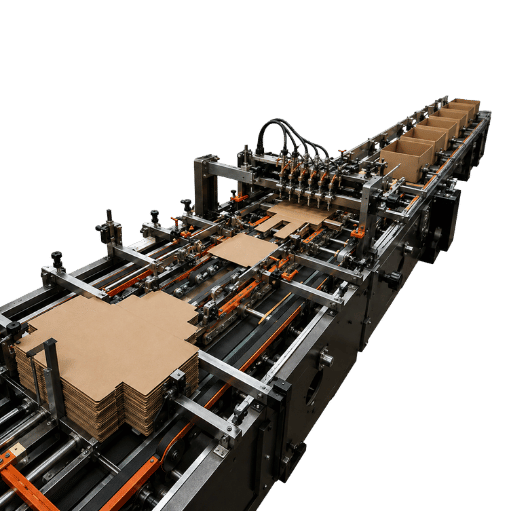
Dos máquinas con la misma velocidad indicada en la placa pueden ofrecer producciones muy distintas, porque esa cifra nominal presupone condiciones de funcionamiento ideales. Hay cinco factores que limitan el rendimiento real, y la mayoría no tienen nada que ver con la velocidad máxima del motor.
Los cinco factores que condicionan la velocidad
- Calidad y calibre del cartón: el cartón ondulado más grueso y el cartón de alto gramaje para cajas plegables se pliegan más despacio y necesitan más tiempo de compresión que un cartoncillo más fino.
- Complejidad del formato de caja: cuantos más pliegues y líneas de encolado tenga la caja, más estaciones debe atravesar la plancha sin engancharse.
- Sistema de encolado: el adhesivo termofusible puede fijarse al instante, lo que permite aumentar la velocidad y manipular la caja antes; el PVA frío forma una unión con mayor desgarro de fibra, pero requiere más tiempo de compresión y una aplicación de cola más uniforme.
- Alimentador y calidad de las planchas: las planchas troqueladas deformadas, polvorientas o mal preparadas pueden provocar fallos de alimentación; uno a 400 m/min detendrá la línea.
- Registro y puesta a punto: la alineación de las secciones y el ajuste de las guías determinan si puede mantener la velocidad máxima sin que la parte trasera se desplace.
Aquí es donde los operarios expertos en puesta a punto demuestran su valía. En algunas líneas, la profundidad de los ganchos debe ajustarse con precisión mediante una galga calibrada; de lo contrario, en vez de obtener cajas limpias y escuadradas, se llenarán los contenedores de rechazo con producto desviado. Conseguir un accionamiento rápido es fácil; la verdadera cuestión es si el resto de la línea permite aprovechar esa velocidad.
📐 Nota de ingeniería
El tiempo abierto de la cola debe ajustarse al tiempo disponible en la sección de compresión a la velocidad de línea. Si utiliza un adhesivo termofusible, por ejemplo, con un tiempo de fijación inferior a un segundo, y la plancha avanza a 400 m/min (aproximadamente 6,7 m/seg), las cintas de compresión deben mantener unida la junta durante todo el tiempo de fijación, lo que requiere varios metros de cinta. Si la línea va más rápido de lo que permite ese tiempo, la junta se abrirá, por mucho que corra el alimentador. No ajuste por separado el tiempo de fijación, la compresión y la velocidad objetivo: deben estar coordinados.
Velocidad nominal frente a velocidad real de producción
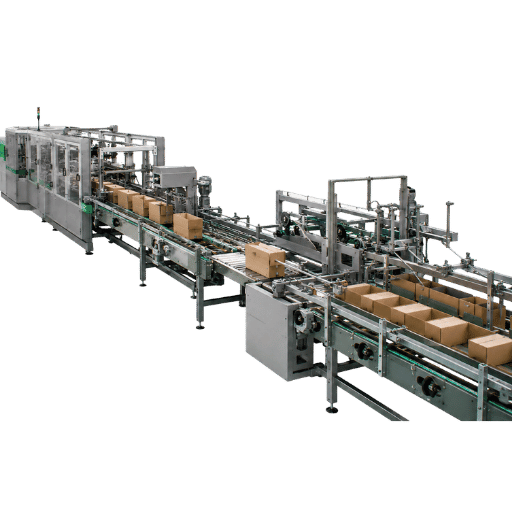
Este es el dato que suele faltar en las ofertas: la velocidad nominal es el límite máximo. Se mide en condiciones ideales: una tirada muy larga, una máquina perfectamente ajustada y un material perfecto. La producción real será la velocidad máxima multiplicada por el factor OEE; es decir, por la parte del turno durante la que realmente se fabrica producto bueno.
El principal problema al producir muchos SKU distintos en tiradas pequeñas es que los cambios de trabajo consumen gran parte de la capacidad potencial. Así, una máquina de 400 m/min puede alcanzar solo 200-250 m/min durante un turno completo. Por eso, comprar una máquina más rápida no suele traducirse en más cajas a la salida.
«La velocidad máxima de la máquina ayuda a cerrar la venta, pero lo que se nota en cada turno es la velocidad y la calidad de los cambios de trabajo, junto con la estabilidad del alimentador. Hemos visto máquinas “más lentas” superar a otras más rápidas porque el tiempo de cambio y puesta a punto se reduce a la mitad».
La regla de la velocidad real
Calcule la producción prevista a partir de la velocidad efectiva, no de la nominal. Como estimación, puede utilizar:
Producción efectiva = velocidad nominal × factor OEE (normalmente 0,5–0,7 en tiradas cortas y variadas; más alto en tiradas largas y estables).
Si un fabricante le ofrece una máquina de 400 m/min y usted trabaja con una variedad de tiradas cortas, calcule una producción de 200-280 m/min hasta que haya demostrado un rendimiento superior con sus propios trabajos. Después, estudie cómo mejorar ese factor OEE: reducir el tiempo de cambio y conseguir una alimentación limpia suele aumentar la productividad más que elevar la velocidad nominal.
Plegadoras-encoladoras de alta velocidad frente a las estándar: cuándo compensa la mejora
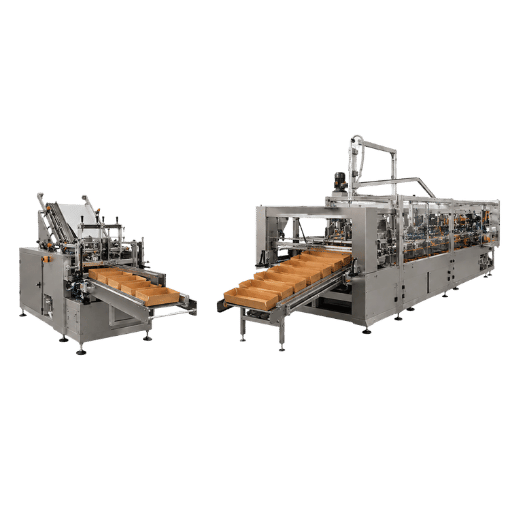
La pregunta clave no suele ser «¿es mejor ir más rápido?», sino «¿justifica realmente mi combinación de trabajos la velocidad adicional?». Una plegadora-encoladora de alta velocidad resulta beneficiosa si trabaja sobre todo con productos estables y de gran volumen. Sin embargo, cuesta mucho más aprovecharla cuando se realizan muchas tiradas cortas. La tabla siguiente muestra las concesiones habituales.
| Factor | Estándar / automática | Alta velocidad |
|---|---|---|
| Velocidad de banda | ~100–200 m/min | ~300–450 m/min |
| Longitud de tirada idónea | Corta a media | Media a larga, repetible |
| Sensibilidad a los cambios de trabajo | Menor impacto en la producción | Alta: los cambios frecuentes anulan la ganancia de velocidad |
| Mano de obra por caja | Mayor | Menor con alimentación y embalaje automáticos |
| Volumen más adecuado | Menor volumen anual, variedad de SKU | Mayor volumen anual, menos SKU |
Guía rápida para decidir
- Si tiene un volumen elevado, tiradas largas y una variación mínima de SKU, un sistema más rápido se amortiza gracias a una mayor producción y a un menor coste de mano de obra.
- Si combina tiradas cortas con algunos trabajos de gran volumen, la alta velocidad solo tiene sentido si invierte considerablemente en herramientas para agilizar los cambios.
- En las instalaciones con un flujo constante de pedidos pequeños, una plegadora-encoladora automática bien ajustada y con cambios rápidos suele ofrecer más ventajas que una máquina más rápida que no puede mantenerse en funcionamiento de forma constante.
Si el volumen de sus pedidos encaja realmente en el nivel más alto de producción, ofrecemos una gama de plegadoras-encoladoras de alta velocidad diseñada para trabajar con precisión a esas velocidades y niveles de producción durante las largas tiradas necesarias para obtener un ROI elevado.
Formatos de caja y velocidad: cuáles se procesan rápido y cuáles ralentizan la línea
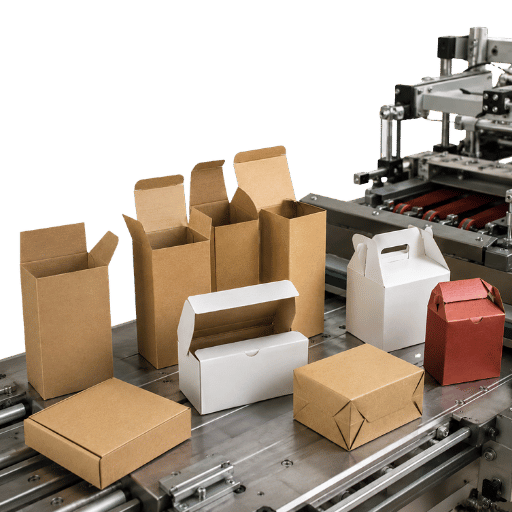
La geometría de la caja es uno de los factores de velocidad menos mencionados. Cada pliegue y línea de encolado es un punto que la plancha debe superar a velocidad sin desviarse; por eso, los formatos más sencillos se procesan más rápido. El código FEFCO (la norma internacional para clasificar diseños de cajas de cartón ondulado) sirve como referencia abreviada: una caja americana de solapas normal (FEFCO 0201) es mucho más sencilla de procesar que una caja con fondo automático (FEFCO 0713).
| Formato de caja | Velocidad relativa | Motivo |
|---|---|---|
| Caja lineal (una junta de encolado) | La más rápida | Un eje de plegado y una línea de encolado |
| Crash-lock (fondo automático) | Media | Preplegado y montaje del fondo con cierre |
| De 4 puntos | Más lenta | Varios pliegues en las esquinas y puntos de encolado |
| De 6 puntos | La más lenta | Más estaciones de plegado y el registro más exigente |
Sin embargo, los diseños complejos ofrecen ventajas en las siguientes fases de producción: el fondo encolado de una caja con fondo automático se monta con un solo movimiento hacia abajo, lo que reduce a más de la mitad el tiempo de montaje frente a una caja americana RSC precintada con cinta. Por eso, los operarios de embalaje aceptan que el encolado sea más lento. Adapte la máquina al formato que más utiliza: una planta que trabaje principalmente con cajas lineales en plegadoras-encoladoras tendrá unas expectativas de velocidad muy distintas a otra centrada en plegadoras-encoladoras para cajas de fondo automático o en formatos más complejos de 4 y 6 puntos. Si sus productos requieren algo más que formatos lineales, como embalajes de exposición y presentación, una plegadora-encoladora para cajas tipo estuche permite trabajar con geometrías que pocos diseños pueden procesar.
El ROI de una línea de alta velocidad
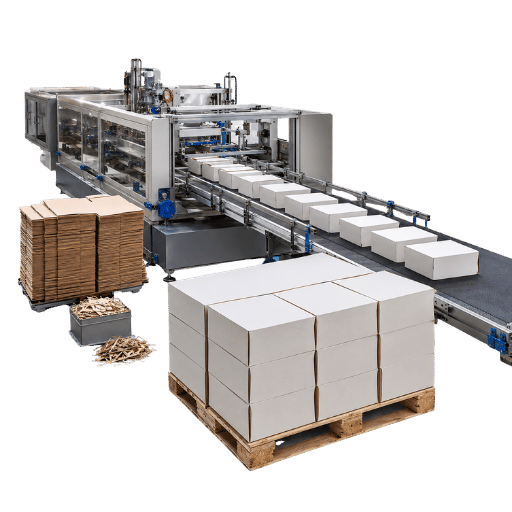
Una plegadora-encoladora de alta velocidad se justifica de dos maneras fundamentales: aumenta las cajas por hora y reduce el número de operarios necesarios por caja. Sobre el papel, los cálculos son bastante sencillos, aunque las cifras concretas dependen de los salarios, los patrones habituales de producción y el coste del equipo; no puedo suponer razonablemente cuáles son en su caso.
Cómo calcular la amortización
- Aumento de producción = (velocidad efectiva nueva − velocidad efectiva actual) × horas de funcionamiento anuales. Utilice la velocidad efectiva, no la nominal, en ambos casos.
- Ahorro en mano de obra = operarios que se pueden prescindir gracias a la alimentación y el embalaje automatizados × salario total × horas.
- Periodo de amortización = sobrecoste de la línea de alta velocidad ÷ (valor anual del aumento de producción + ahorro en mano de obra).
¿Cuánto cuesta una plegadora-encoladora de alta velocidad?
El precio del equipo puede variar enormemente en función de la anchura de trabajo, el grado de automatización, el sistema de encolado elegido y los extras integrados, como los alineadores de entrada y los empaquetadores automáticos. Por eso, una cifra aislada en una web puede carecer casi por completo de significado si no se conoce el contexto. No se fije solo en el precio destacado: asegúrese de que las ofertas se basan en los tamaños exactos de sus cajas, los tipos de cartón y la producción prevista, y valore el coste por caja acabada y los tiempos de cambio, no solo la velocidad nominal. Puede estimar la amortización de una línea más rápida con sus propios datos de producción antes de pedir precio a un comercial.
⚠️ Error frecuente
Comprar la máquina con la velocidad más alta que pueda permitirse no es una buena estrategia si sus planchas, el control de la cola y los procesos de cambio no pueden alimentar esa velocidad de forma fiable. Es mucho más rentable invertir primero en una alimentación fiable y en cambios rápidos, ya que estos factores se traducen directamente en una mayor producción real.
Cómo elegir una plegadora-encoladora de alta velocidad: lista de comprobación de compra
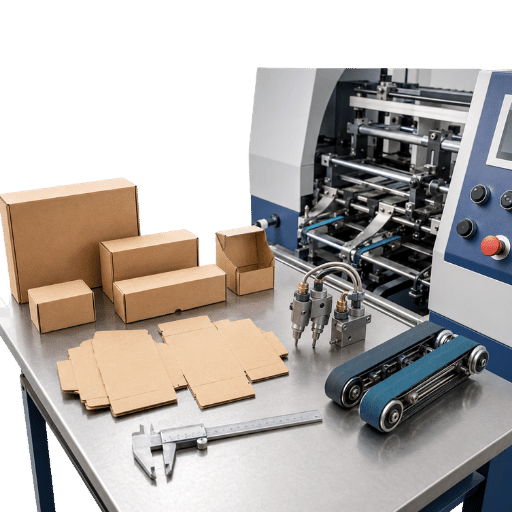
Antes de evaluar ofertas, aplique los mismos criterios comparativos a todos sus proveedores de equipos. El objetivo no es alcanzar el mayor número de máquinas por hora que se anuncie, sino producir el mayor número de cajas por turno para sus formatos. Acuda a las negociaciones con los proveedores con esta lista de comprobación:
- Velocidad anunciada del equipo ofertado, tanto en m/min como en cajas por hora para su caja concreta; asegúrese de que el proveedor ofrece una estimación realista de la velocidad que alcanzará la máquina.
- Gama confirmada de tipos de cartón (grosor y canal) y formatos de caja compatibles con su catálogo de productos actual.
- Aplicación de cola (PVA frío o adhesivo termofusible) adecuada para los requisitos de unión y velocidad.
- Tiempos de cambio documentados: el factor que determina la producción por turno.
- Capacidad de embalaje posterior a la encoladora. Y posibilidad de facilitar un recuento real por lote (si se desea).
- Disponibilidad de repuestos, rapidez de respuesta del servicio técnico y formación de los operarios.
Utilice una referencia de compatibilidad con formatos de caja para confirmar que la máquina procesa toda su gama de productos y un selector de modelos para encontrar el modelo adecuado para su combinación de cajas antes de preseleccionar equipos. Si trabaja principalmente con cartón ondulado, compare también una encoladora de cajas de cartón ondulado específica con una línea de uso general.
Hacia dónde se dirige el encolado de cajas a alta velocidad en 2026
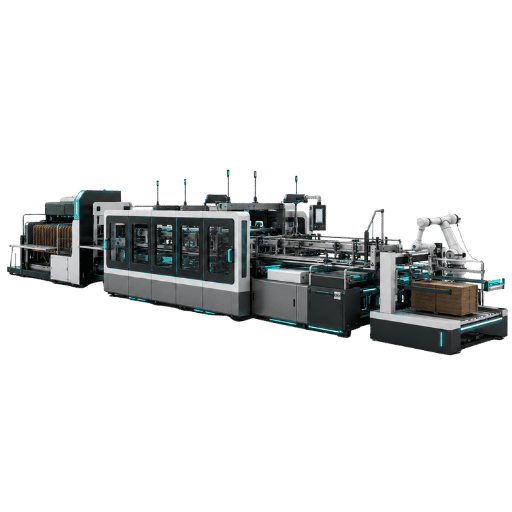
La tendencia predominante del mercado apunta a un crecimiento sostenido, no a una revolución. Se prevé que el conjunto de la maquinaria de embalaje registre una tasa de crecimiento anual compuesto de aproximadamente el 5 % durante la próxima década, y varios analistas sitúan el mercado mundial muy por encima de los $80 billion a mediados de la década de 2030. Para las plegadoras-encoladoras, hay tres cambios importantes para su próxima decisión de compra.
Desde hace tiempo, el cuello de botella se desplaza hacia las fases posteriores, más allá de la velocidad máxima de la máquina: rara vez hace falta comprar una encoladora más rápida, porque muchas máquinas rápidas ya están siendo alimentadas por operarios que intentan seguir el ritmo del embalaje posterior. En 2026, las mejoras para la fábrica vendrán de integrar y alimentar una línea de embalaje automático con empaquetadores robóticos, no de buscar una cifra máxima más alta.
La longitud real de las tiradas es decisiva. El crecimiento del comercio electrónico y de los SKU de producto se traduce en más formatos de caja distintos y en cantidades menores. Esto hace que los fabricantes de maquinaria se centren en la puesta a punto del troquel sin herramientas y en memorias programables de ajustes con servomotores: factores que realmente mejoran la eficiencia de producción frente a las velocidades anunciadas en la mayoría de las plantas. Si está especificando una plegadora-encoladora de alta velocidad para 2026 y los años siguientes, dé mucha importancia a la rapidez de los cambios.
Los datos se están convirtiendo en un bien básico. Los paneles OEE y la supervisión del estado de la máquina están pasando rápidamente de ser un extra deseable a convertirse en un requisito básico, lo que permite abordar directamente la diferencia entre velocidad nominal y real. Consejo para quienes compren en 2026: pida a cada proveedor que explique cómo tiene en cuenta los cambios de trabajo y los tiempos de inactividad, y dé más importancia a la velocidad de integración y a la facilidad de puesta a punto que a una cifra más atractiva en la parte superior de la tabla.
Matriz de velocidad y calidad: cuándo reducir la velocidad de una plegadora-encoladora de alta velocidad
La velocidad nominal no es el objetivo de producción. El ajuste correcto es la velocidad máxima que mantiene la caja dentro de los límites de calidad acordados durante toda una tirada.
| Defecto a mayor velocidad | Causa probable | Comprobación correctiva |
|---|---|---|
| Desvío o efecto cola de pez | La plancha entra torcida o la presión de plegado es irregular. | Reduzca la velocidad, estabilice la separación del alimentador y vuelva a comprobar las guías laterales y la presión de las cintas. |
| Falta de cola | La respuesta del aplicador o la transferencia de adhesivo no siguen el ciclo más rápido. | Compruebe la sincronización de las boquillas, la presión, la viscosidad y la distancia de activación del sensor. |
| Rozaduras o marcas | Presión excesiva de las cintas, deslizamiento o compresión a mayor velocidad superficial. | Revise el estado de las cintas y reduzca la presión antes de volver a aumentar la velocidad. |
| Atascos repetidos | Variación de las planchas, cartón ondulado curvado o separación insuficiente entre productos. | Mida la planitud de las planchas y el espacio de alimentación; no trate el atasco como un hecho aleatorio. |
Calcule las cajas buenas por hora después de descontar los rechazos y los cambios de trabajo con el estimador de producción de la plegadora-encoladora.
Preguntas frecuentes
P: ¿Para qué se utiliza una máquina plegadora-encoladora?
Ver respuesta
En una sola pasada, esta máquina de alta calidad pliega, encola y comprime planchas planas troqueladas para convertirlas en cajas acabadas de cartón y de cartón ondulado: un proceso de acabado de postimpresión que transforma las hojas impresas en embalajes listos para llenar.
P: ¿Qué diferencia hay entre una plegadora-encoladora y una plegadora-encoladora flexográfica?
Ver respuesta
La plegadora-encoladora estándar pliega y encola planchas troqueladas lisas o preimpresas que llegan de un proceso anterior de impresión y troquelado. En cambio, una plegadora-encoladora flexográfica es un sistema mucho mayor que integra la impresión flexográfica, el ranurado, el troquelado, el plegado y el encolado del cartón ondulado en una larga línea. Por eso, es el formato predominante para producir cajas normales en grandes volúmenes. Debido a su especialización, una plegadora-encoladora flexográfica debe trabajar con un volumen considerable para amortizarse; una plegadora-encoladora resulta ventajosa cuando se producen diversos formatos de caja acabada, calidades de cartón y tiradas cortas más variadas.
Lo habitual es que los transformadores tengan ambas máquinas en funcionamiento para cubrir una amplia variedad de trabajos.
P: ¿Puede una plegadora-encoladora de alta velocidad trabajar con eficiencia en tiradas cortas?
Ver respuesta
Sí, pero solo si los cambios de trabajo son muy rápidos. En las tiradas cortas, el tiempo de puesta a punto es decisivo y una velocidad máxima elevada no supone ninguna diferencia. Si trabaja principalmente con tiradas cortas, lo más recomendable es una máquina que permita cambiar de trabajo y realizar la puesta a punto rápidamente, sin herramientas, y que guarde los ajustes en memoria, en vez de priorizar la velocidad máxima.
P: ¿Qué formatos de caja puede procesar una plegadora-encoladora?
Ver respuesta
Los formatos más habituales son las cajas lineales (con una junta de encolado), las cajas con fondo automático, las cajas de 4 y 6 puntos y, con la máquina adecuada, los formatos personalizados tipo estuche y de exposición. Los formatos más sencillos avanzan más rápido. Las cajas con fondo automático y las de varios puntos se ralentizan porque el diseño del embalaje debe pasar por varias estaciones de plegado y encolado a lo largo de la línea.
P: ¿Qué es más rápido: el adhesivo termofusible o la cola fría?
Ver respuesta
Los adhesivos termofusibles forman una unión al instante, permiten velocidades de línea más altas y hacen posible la manipulación inmediata. Las uniones en frío tienen una resistencia a la tracción mucho mayor, pero pueden requerir bastante más tiempo de compresión, lo que limita la velocidad de línea alcanzable. Muchas líneas disponen de ambos tipos para elegir según el trabajo.
P: ¿Cuántos operarios necesita una plegadora-encoladora de alta velocidad?
Ver respuesta
La reducción se debe al menor número de operaciones de manipulación manual. Una máquina de alta velocidad suele configurarse con alimentación automática y embalaje en línea, por lo que basta con uno o dos operarios para manejar el sistema, frente a los cinco o seis de las máquinas tradicionales o manuales. La reducción de plantilla suele generar un ahorro anual en los costes de funcionamiento que, con frecuencia, supera las ganancias obtenidas por aumentar simplemente la velocidad.
¿Está comparando plegadoras-encoladoras de alta velocidad para su combinación de cajas?
Solicite una oferta para una plegadora-encoladora de alta velocidad →Por qué hemos escrito esta guía
Como fabricantes de plegadoras-encoladoras lineales, para cajas con fondo automático, para cajas de cuatro y seis puntos y de alta velocidad, siempre oímos la misma pregunta: ¿a qué velocidad trabaja realmente una plegadora-encoladora de alta velocidad? Esta guía responde al error más habitual de los compradores: perseguir la velocidad nominal en lugar de la producción útil. También plantea las preguntas que permiten distinguir una oferta sólida de otra que solo luce bien.
Referencias y fuentes
- Código FEFCOFederación Europea de Fabricantes de Cartón Ondulado (normas sobre formatos de cajas de cartón ondulado)
- Tendencias y tamaño del mercado de maquinaria de embalaje 2026–35Towards Packaging
- Tamaño y tendencias del mercado de maquinaria de embalaje 2026–2036Future Market Insights
- Perspectivas del mercado de cajas plegablesPaperboard Packaging Council (paperbox.org)