Get in touch with Cenwan Machine Company


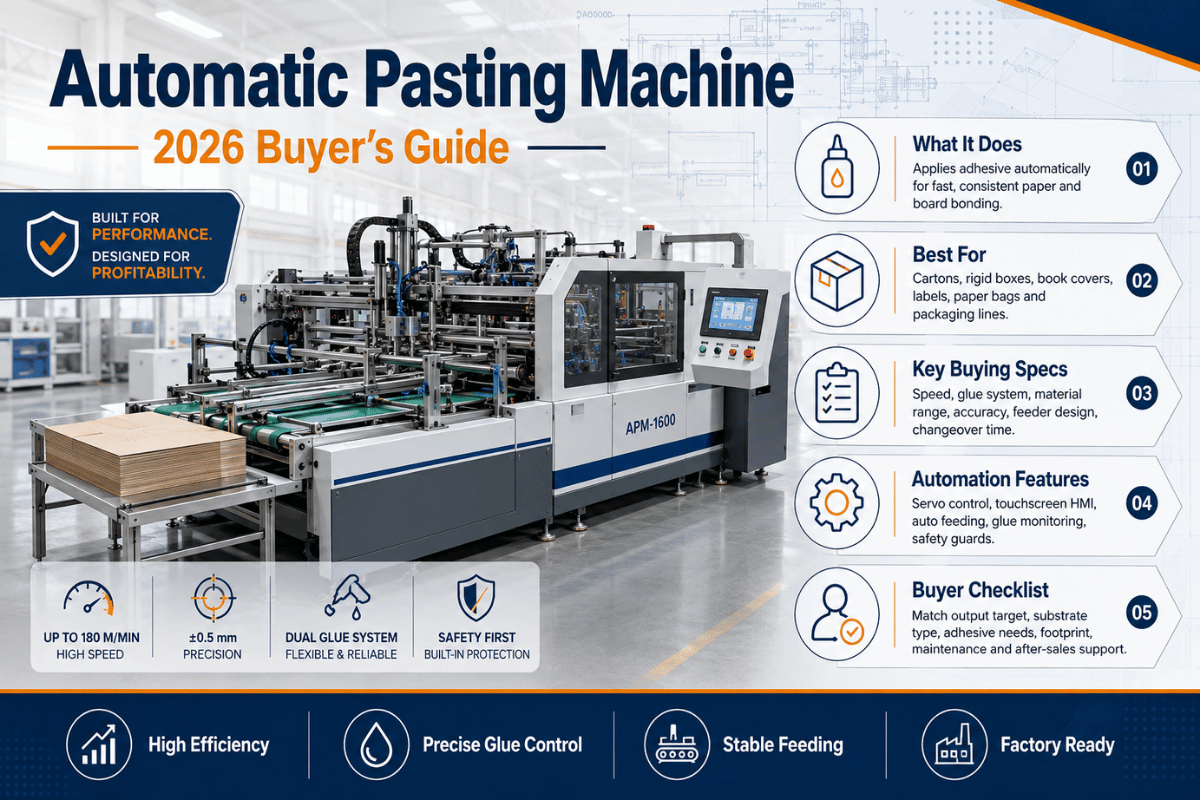
An automatic pasting machine glues the joint of a pre-creased corrugated box blank, folds the panels, and presses the bond closed – continuously, with no operator handling the carton. For a converter still running 6-10 people on a manual gluing line, the attraction is clear: fewer hands, steadier quality, more boxes per shift. What’s genuinely hard is not whether to automate, but which machine to buy, choosing from a glut of data sheet clones and sub-models.
This step by step will help you understand what the kit actually does, how to decipher data sheets without being sold a dummy, costs of ownership, and how to unmask the vendor when you request a quote. It is intended for plant managers and procurement teams who simply want to compare prices, not for anyone who can’t tell a flute from a feeder.
Quick Specs — Typical Automatic Pasting Machine (Corrugated)
| Gluing belt speed | Commonly 150–300 m/min (flagship lines reach 300+) |
| Carton width range | ~290–1650 mm, set by model |
| Board handled | E / F / C / B / AB flute · 3-ply or 5-ply corrugated |
| Glue system | Water-based white latex (PVA); hot melt on some lines |
| Box style | Straight-line (RSC) is standard; crash-lock and 4/6-corner need dedicated models |
| Operators per line | 1–2 per shift, versus 6–10 on a manual line |
What Is an Automatic Pasting Machine?
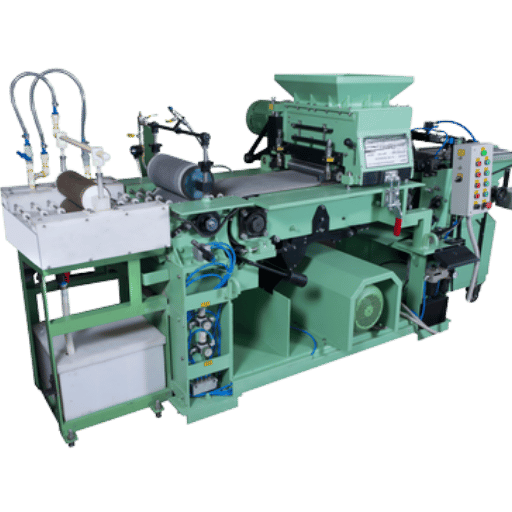
An automatic pasting machine is a continuous-feed machine that turns pre-creased, flat corrugated sheets into finished boxes by applying adhesive to the glue tab and closing up the carton, no manual gluing required. Similarly in corrugated circles, it is sold as an automatic pasting machine for corrugated boxes, a folder gluer, or a carton gluing machine – different names for the core process.
There are four stages to the operation. First, a blank is fed from a stack through a feeder, which can be belt or vacuum driven. Second, the blank is passed over a glue station, which deposits a precise line of adhesive on the glue tab. Third, the table section closes up the box over pre-creased folds. Fourth, a long compression conveyor arm holds the glue joint under pressure long enough for the adhesive to bond before the finished cartons are stacked.
Where most buyers go wrong is the last stage, which is where dwell-time physics come into play. A glue bead does not bond instantly – it needs dwell time under compression. For that reason, an automatic pasting machine has to be a long machine: the compression section must be long enough that, even when you run flat out, each glued joint stays clamped until it holds. Cut the conveyor short to save floor space and you get cartons popping open in the stack, because the bond never finished setting. So conveyor length, not headline belt speed, is what really decides whether your boxes hold.
Automatic Pasting Machine vs. Folder Gluer: Untangling the Names

The single most confusing thing about shopping for this machinery is the vocabulary. “automatic pasting machine,” “folder gluer,” “carton gluer,” “box gluing machine,” and “gluing machine for boxes” are just some of the terms used interchangeably in supplier catalogues, making it near impossible to compare quotes directly. They are not different equipment types; they are different names regionally and for different marketing campaigns.
Here is how the terms actually map:
| Term | What it really means |
|---|---|
| Folder gluer | The umbrella term. Any machine that folds and glues a carton blank. |
| Automatic pasting machine / box gluing machine / carton gluer / sheet pasting machine | Synonyms for a folder gluer, common in corrugated plants and in Asian export catalogues. “Sheet pasting machine” sometimes also refers to a flute laminator, so confirm the function, not just the name. |
| Straight-line folder gluer | A sub-type — handles simple straight-seam boxes (RSC) only. |
| Flexo folder gluer (FFG) | A different machine class — combines printing, slotting, die-cutting and gluing inline. Not the same as a standalone pasting machine. |
The real-world takeaway: when you get two quotes under different names, don’t assume they are different machines. Compare the specifications – box style, width, speed, glue system – not the label. The one distinction genuinely worth holding onto is a flexo folder gluer, which is a full converting line that prints, slots and die-cuts as well as glues, versus a standalone folder gluer machine that only folds and glues. For a deeper breakdown of how the broader category is built, see our companion guide on automatic folder gluer machines.
Manual vs. Semi-Automatic vs. Fully Automatic Pasting
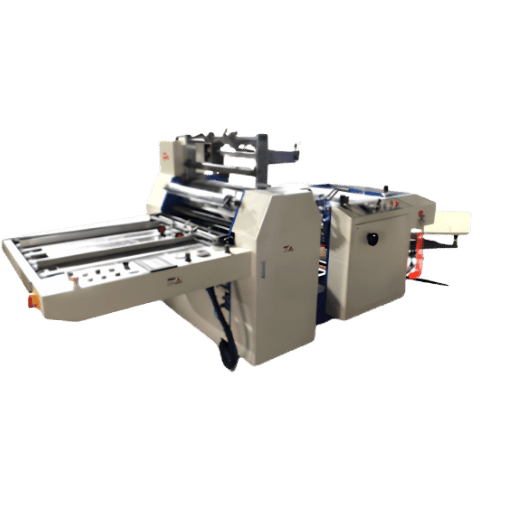
Picking the automation level comes first, and it is not automatic that fully automatic wins. Global Market Insights, in its folder gluer machine report, found that automatic machines held roughly 42.2% of the 2025 market – meaning semi-automatic and manual machines together still accounted for the majority, with the manual segment growing fastest in price-conscious markets. Automation level is a fit decision, not a status decision.
The three tiers differ on throughput, labor, and changeover:
| Dimension | Manual | Semi-Automatic | Fully Automatic |
|---|---|---|---|
| Throughput (small RSC) | ~15–25 boxes/min | ~60–90 boxes/min | 150–200 boxes/min |
| Operators per shift | 6–10 | 2–3 | 1–2 |
| Changeover time | Up to ~2 hours | ~20–40 minutes | Under 15 min with one-touch setup |
| Glue consistency | Varies shift to shift | Operator-dependent | Stable across long runs |
| Best fit | Very low volume, frequent odd jobs | Mid volume, mixed SKUs, tighter budget | High volume, steady RSC runs |
Is a semi-automatic pasting machine worth it?
For many rapidly expanding converters, yes – and skipping it is a common mistake. If your monthly volume does not yet justify a full automatic line, a semi-automatic machine still cuts a manual crew from 6-10 people down to 2-3 and lifts throughput three- to four-fold. Its honest trade-off is that it stays operator-dependent: glue quality follows the skill of whoever runs it, and 4/6-corner or crash-lock geometries usually defeat it. A semi-automatic machine is the right call when volume is real but not yet steady; move to a fully automatic folder gluer once a single SKU runs long enough that changeover stops dominating your day.
Which Corrugated Box Styles and Flutes It Handles
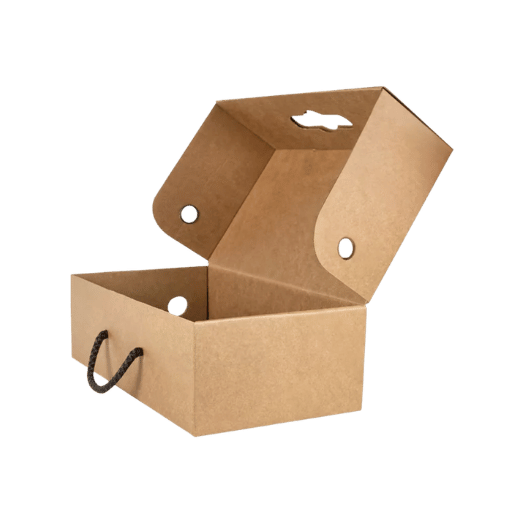
It’s best to check first: does this box design run through? before you compare speeds or prices. Sometimes the most expensive mistake to make in the category is a mismatch, as geometry and board grade are constraints, not preferences.
On box style, most automatic pasting machines are built for straight-line cartons – the regular slotted container (RSC), coded 0201 in the FEFCO system, the international standard for corrugated packaging design maintained by the European Federation of Corrugated Board Manufacturers. The RSC is the highest-volume box style in food, pharma and e-commerce packaging, which is why straight-line machines dominate the market. Crash-lock bottom boxes and 4/6-corner boxes need a different folding architecture, and a straight-line folder gluer physically cannot form them. If your mix includes those styles, you will need a crash-lock bottom folder gluer or a multi-corner model – insist on written confirmation before you sign.
On board grade, the machine must be matched to your flute. Flute is the wavy inner layer of corrugated board, and its height drives both the strength of your box and how the machine grips and glues the blank:
| Flute | Approx. height | Typical use |
|---|---|---|
| A flute | ~4.7–5 mm | Cushioning, fragile goods |
| C flute | ~3.5–4 mm | General shipping cartons |
| B flute | ~2.5–3 mm | Retail and die-cut boxes |
| E flute | ~1.2–1.6 mm | Printed retail packaging |
| F flute | ~0.8–1 mm | Small, high-graphics cartons |
📐 Engineering Note
Flute height changes how much pressure the compression section should apply. Thin E and F flute (under about 1.6 mm) crushes if the pressing rollers are set as if for 5 mm A flute – and a crushed flute loses much of its load-bearing strength, which is a measurable structural property, not a cosmetic one (see the peer-reviewed work on corrugated board box compressive strength in the references). A capable machine lets you adjust the pressing-roller gap and glue-bead position for the board grade in the run. Ask the supplier for the exact flute range, the ply count (3-ply vs 5-ply) and the maximum board thickness – commonly quoted up to about 800 gsm – and confirm both your heaviest and lightest board fall inside it.
Grade-by-grade values for Flute and box style vary somewhat by mill and press builder, there is no single universal standard. Know the brand ranges as working figures, and use verified tools like a FEFCO-flute-and-box-type checker to assess a blank on a specific press.
Speed and Throughput: What “High-Speed” Really Means
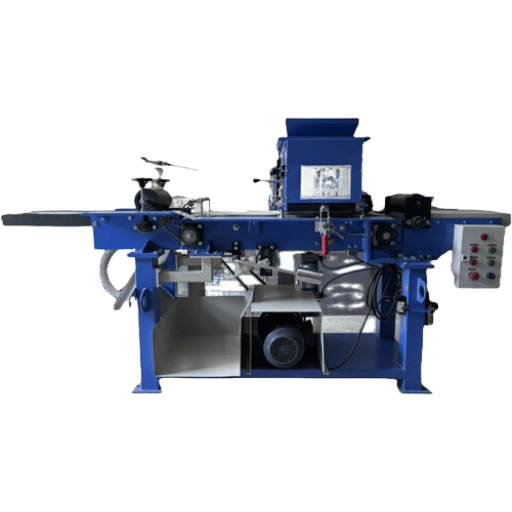
The number your spec sheets so often use as their first entry is speed. 150 m/min, 200 m/min, 300 m/min. It is also the figure that will tell you the least about how many boxes you will send out the door. speed is a belt speed, not a throughput.
Here is the rub. Belt speed is simply the metre-per-minute rate at which the gluing belt moves. Throughput depends on box length, because while a 300 mm box and a 900 mm box can run on your same m/min belt, the longer run will consume three times the length per box, meaning a third as many boxes per minute. Consider a 200 m/min line. It might run 150-200 small RSCs a minute, and perhaps a small percentage of the larger blanks. But if your line is rated 200 m/min, you are really benchmarking it to produced 150-200 small RSCs a minute, at best. Comparing that line to a 300-m/min line in a program with the same job profile is not a throughput comparison, it is a ceiling comparison – in which your box size, grade, and feeder reliability will drag you well below.
What often caps your real throughput is not the headline speed. Take a middle-tier converter that invested in a 300-m/min line, expecting perhaps a 50% improvement over its previous 200-m/min machine. The gain did not materialize on that month’s report. It ran out of stock, was shipping mixed SKUs, and time wasted in changeover doors began to add up. As one operator put it across a commercial-printing forum, a really good folder-gluer set-up “can take 2 hours”. Two hours wasted in changeover against only a 30-minute run means the machine was pecking away at a fifth of the shift, and another 100-m/min in belt speed was not improving that one bit. That report segmenting the market by speed grouping – less than 150, 150-300, and over 300 m/min – because the correct grouping for your job profile is not a 300-m/min press, it’s the biggest one you can afford to buy that still delivers consistently good quality and will not undermine your other investment decisions.
The decision rule: if you run long jobs of one box size, headline speed matters and a high-speed folder gluer earns its price. If you run short, mixed jobs, put the budget into fast changeover and reliable feeding instead – that is where your boxes-per-shift actually come from.
Key Specifications to Evaluate Before You Buy
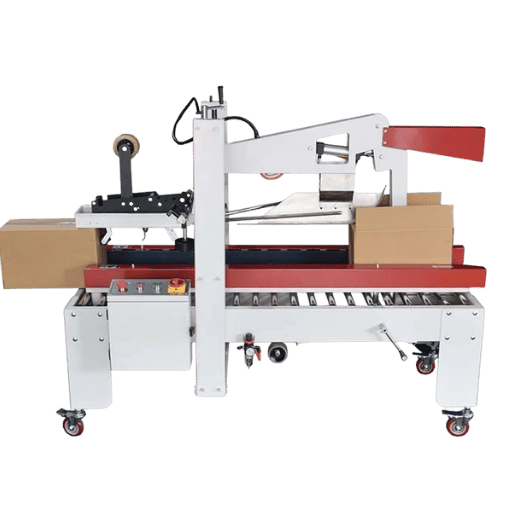
Once box style and flute are decided, comparing spec sheets is reduced to a short list of one or two parameters that actually vary for most models, while most of the rest is the same.
That observation is a useful shortcut in itself – call it the Width-First Rule: size the machine on your largest carton width first, because within a single product family the models typically share the same belt speed, power rating, flute range and board-thickness ceiling, and differ mainly in maximum width. Lock the width and most of the spec sheet stops being a variable.
From there, work this checklist:
- Maximum carton width (the dimensions of your largest blank with room to spare for future SKUs).
- Maximum board thickness range or maximum flute size – both your heaviest and lightest stock should fall within it.
- Motor and drive specs – a named PLC and drive (for example Siemens, Omron, Schneider) are serviceable anywhere; mystery-branded controllers are not.
- Servo versus mechanical setting – servo-set folding and glue positioning are what make sub-15-minute changeover feasible.
- Conveyor and feeding method – suction or belt-fed single-blank feeding, and a compression conveyor long enough to hold the glue bond at full speed.
Glue Systems: White Latex (PVA), Hot Melt, and Cold Glue
The glue system is the spec most often glossed over, and it shapes both bond quality and running cost. Three options dominate corrugated work. Water-based white latex (PVA) is the default on most corrugated pasting machines: it bonds by drying and absorbing into the board, it is low-cost and forgiving, and it suits standard kraft liners well. Hot melt adhesive bonds by cooling fast after application, which gives short set times and high speed – useful on coated or hard-to-bond surfaces – at a higher consumable cost and with a heated applicator to maintain. Cold glue covers other water-based formulations that stay workable longer. Most converters running standard brown boxes are well served by a white latex system; specify hot melt only if your board stock or speed targets genuinely require it. Whichever you choose, glue faults – weak joints, seams letting go – usually trace back to a dirty glue roller or a wrong pump pressure setting, not the adhesive itself, which is why a machine with an easy-to-clean, easy-to-adjust glue unit pays back every day. A purpose-built corrugated box gluing machine exposes those adjustments rather than hiding them.
Cost, ROI, and Payback Period
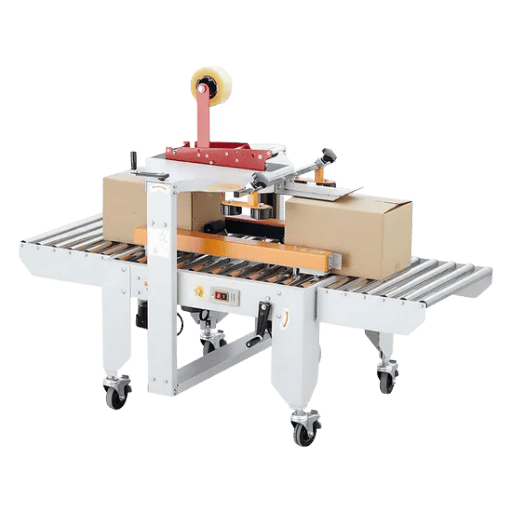
Pricing in this category is quote driven – nearly no builder publishes a firm number, because the configuration changes the number. However, there are will be starting points. The Global Market Insights folder gluer report references industry numbers showing a top-spec used machine running between USD 500,000 and USD 1.5million, and states high initial investment is a key barrier for both small and medium-sized converters. New automatic corrugated lines take a broad band depending on width, speed, and brand tier; regard all published prices as starting points for an RFQ, not a price list.
How much does an automatic pasting machine cost?
Nor is there one – you can set the range. European flagship lines from the biggest OEMs are towards the premium end of the field; mid-premium offering constructed of European and Japanese components – branded drives, bearings, belts – sit at a fraction of the flagship installed cost yet provide similar reliability. As of early 2026, used top-spec lines are ranging around the USD 500k-1.5M figures above; new mid-premium automatic lines again range too widely depending on configuration to quote sensibly here. Better to send your carton size, volume and box designs to three or four suppliers to gain configured quotes; pricing data older than six months will be out of date.
Before any price arrives, you can model the return – and the labor payback case rests on one number:
60–70%
Typical labor cost reduction vs. manual
3–5×
Hourly output gain
12–24 mo
Reported payback period
The figures are simple enough to run on a calculator. Swapping out eight manual gluers for a one- to two-operator line eliminates six full time wages; times your loaded wage rate and that is the annual saving. Divide the installed machine cost by that saving and you have a approximate payback in months – often estimated to be in the 12-24 month bracket, before taking into consideration rework, overtime, and quality claims. ROI estimator software can refine this with your own wage base and production volume; use the above labor-reduction Figures as practical, field-based figures, not historic, theoretical ones.
How to Vet a Manufacturer or Supplier
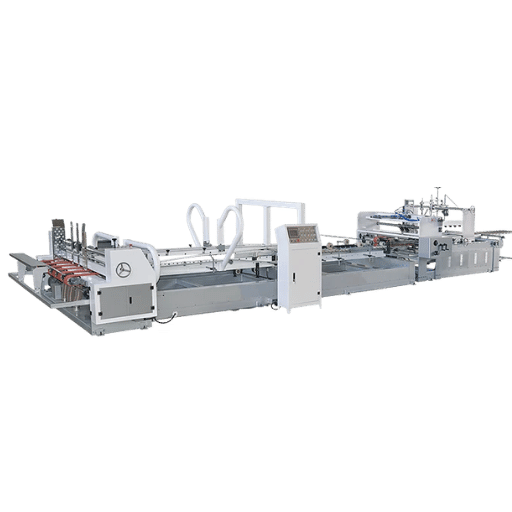
Buying an automatic pasting machine is hard, but not because of the machine – it is telling a legitimate builder from a middleman, and a sound machine from an underspecified one. This category is rife with near-identical listings, and the lowest quote often hides where the cost was clawed back.
⚠️ The “high-speed” trap
A common error is to interpret “high-speed” written up on a low-speed spec as a sign of good value. For underbuilt machines this is just where compromises are made – thinner bearings that misalign under load, an unbranded computer with no local service team able to repair it. Line speed on paper has a low acquisition cost; speed that maintains tolerances through millions of cycles won’t.
“We investigates four methods of drive-bearing fitting, finally settling on shrink-fit – for other methods we found this was the only one that maintained belt speed through millions of box cycles, preventing main drive shaft creep.”
Work through a short vetting checklist before you commit:
- Ask about the brands of the PLC, drives, motor, bearings and feed belts. Branded parts with global coverage are more durable.
- Factory versus trader- confirm if the purchase is direct from the builder or through a reseller. A trader can not support you in the long-term with deep engineering questions.
- Warranty terms- what is covered, for how long and what wear items are excluded.
- Support model- installation, operator training, remote diagnostics and how quickly spare parts ship.
Folder gluer manufacturing is moderately fragmented – Global Market Insights lists Bobst as the leader at around 6% market share, with the top five builders together holding close to a quarter of the market. That leaves most of the field to mid-size builders, where component quality and after-sales support vary widely. Vetting is the work.
Installation, Maintenance, and Spare Parts
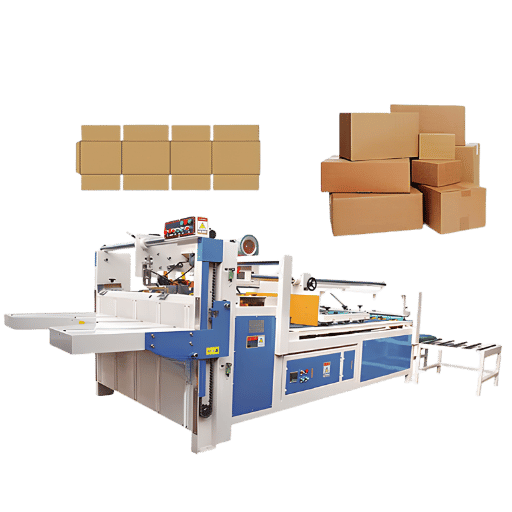
What happens after the proposal is accepted is what determines the actual payback. Three items should be addressed upfront: number one is floor space, number two is the maintenance routine and number three is parts.
A automatic pasting machine is a long machine- 6 meters is pretty common but often the active part of the run is 10 meters or more, again due to the compression conveyor referred to above. The most prevalent mistake when installing one is underestimating that footprint and space needed around it- measure the run take it home and check it before ordering in the machine, not after it arrives. Lead times from deposit to being ready to ship usually take about 30 working days; add freight and on-site commissioning and overall delivery is usually 60-90 days door-to-door for most export orders. Get the delivery schedule in writing, since a slipped delivery date stalls the whole payback clock.
The maintenance routine on a modular machine is unlikely to be a firefight but rather a set of behaviors. A simple preventive maintenance routine can be built around the following: vacuum out the glue rollers and unit when finished to prevent the buildup of dried-glue behind most degumming faults; check belt tension and the correct functioning of the folding-plate on a weekly basis, since sag and fold misalignmen cause box part distortion and dimensional drift; and double check the bearing grease is being topped up and the maker calibrates them to the prescribed frequency. Make sure that becomes part of the operator standard work; reactive maintenance on a high-speed line is always more expensive than the calendar routine.
“The parts you need most in the first year presser feet, guide heads, guiding rollers we keep in stock. Most shipments out of Wenzhou ship within 48 hours of ordering.”
Ask the supplier before you buy which wears parts he stocks and how quickly he ships. Aluminium presser feet, guide heads, correcting rollers, belts and gears- the first-year wears-items; a supplier who stocks them and ships fast is one less broken glue fault to pay for a week of downtime. Confirm the folder gluer spare parts supply chain is real before machine is on your floor, not afterwards.
The Automatic Pasting Machine Market in 2026

Equipment demand keeps growing even though search interest for the terms stays flat. Global Market Insights valued the folder gluer machine market at USD 678.4 million in 2025, projecting USD 722 million in 2026 and USD 1.30 billion by 2035 – a 6.8% compound annual growth rate. North America is the largest region at about 36.5% of revenue, and the United States is the fastest-growing major national market.
There are three forces contributing to that growth, and each has implications for timing a purchase: A drive to automare supports labor cost increases and labor shortages – thesamethat pressures the payback calculus shown in the section above. E-commerce continues to support increased volumes of durable shipping cartons, increasingly complex box styles. Paper and paperboard constitutes close to 25% of municipal solid waste (by weight) in the United States and sustainability is helping drive a number of new developments in the machine itself: lighter recycled board and new eco-friendly cold-glue systems.
One technology caveat worth carrying into 2026: “automatic” set-up still is not “unattended.” Trade coverage of the newest folder gluers notes that even advanced automated set-up still needs an operator to key in the job parameters. Plan your staffing and training around a skilled operator, not around the machine running itself. If you are budgeting a 2026 capital project, lock your box-style and width requirements now and request configured quotes early – a 60-90 day lead time means a machine specified in the first quarter is a machine running by mid-year.
Frequently Asked Questions
Q: What is an automatic pasting machine used for?
View Answer
It folds pre-creased corrugated blanks and glues the joint to produce finished cartons continuously, with no manual gluing station. It is used by box converters and packaging plants supplying food, pharmaceutical, cosmetic, and e-commerce customers.
Q: What is the difference between a pasting machine and a folder gluer?
View Answer
In most catalogues, none – “automatic pasting machine,” “box gluing machine” and “carton gluer” are regional synonyms for a folder gluer. A flexo folder gluer is the one real distinction – it is a full printing-and-converting line rather than a standalone folding-and-gluing machine.
Q: How fast is an automatic pasting machine?
View Answer
Gluing belt speeds typically run 150-300 m/min, with flagship lines just above 300. Real box output is lower and depends on box length – a typical line makes 150-200 small cartons a minute and significantly fewer on larger blanks.
Q: What type of glue does an automatic pasting machine use?
View Answer
Most corrugated pasting machines use water-based white latex (PVA) adhesive, a versatile, low-cost product that bonds well to most standard kraft board. For harder-to-bond materials or shorter set times, hot melt adhesive may be preferred, at a higher consumable cost.
Q: How much maintenance does an automatic pasting machine need?
View Answer
A modular machine needs a light, regular routine: clean the glue unit after each run, check belt tension and folding-plate alignment weekly, and grease the bearings and recalibrate on the maker’s schedule. Most upkeep is single-operator work, and it prevents the glue and alignment faults behind common downtime.
Q: What is the typical lead time to buy one?
View Answer
Typically takes around 30 working days between deposit and start of manufacturing. Export buyer should allow 60-90 days from order to operating line when accounting for shipping, installation, training, and start-up through acceptance test.
Comparing automatic pasting machines for your plant?
Send us your carton dimensions, target volume, box styles and Cenwan Machine will send you a configured CW-W Series proposal built using Siemens, NSK, NITTA parts, so you compare a real spec sheet, not a marketing label.
Why We Wrote This Guide
Cenwan Machine designs and builds folder gluers and automatic pasting machines for corrugated boxes, so this guide reflect what we see specifying CW-W Series lines for converters in food, pharma and e-commerce packaging. We have kept the comparisons general – flute ranges, speed bands, payback math – so the guide help you evaluate any supplier’s quote, not only ours.
References & Sources
- Folder Gluer Machine Market Size, 2026–2035 — Global Market Insights Inc. (Report GMI12143, December 2025)
- FEFCO Code — European Federation of Corrugated Board Manufacturers
- Estimation of the Compressive Strength of Corrugated Board Boxes — PMC, U.S. National Library of Medicine
- Paper and Paperboard: Material-Specific Data — U.S. Environmental Protection Agency
- Box Manufacturing and Fiber Reduction — Final Project Report — U.S. Department of Energy, OSTI
- A Viewpoint on Folder-Gluers — Yesterday and Today (2024) — PostPress Magazine
Related Articles
- Automatic Folder Gluer Machines Explained — types, components and costs
- What Is a Corrugated Folder Gluer? A Plant Manager’s Guide
- What Is a Straight-Line Folder Gluer? Process and productivity checks
- Crash-Lock Bottom Folder Gluer — a complete guide
- 2026 Small Box Folder Gluer Machine Guide — width, glue, speed
Reviewed by the Cenwan Machine engineering team.