Get in touch with Cenwan Machine Company


Folder gluer operations
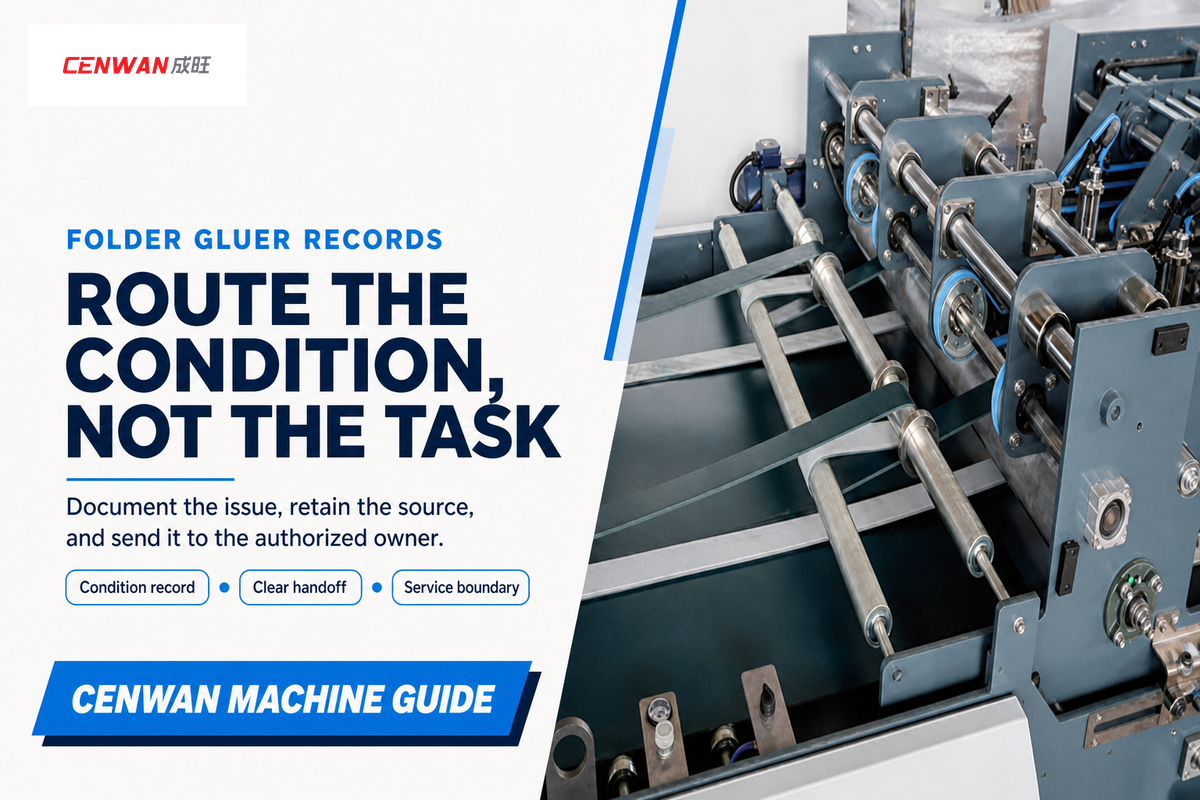
A folder gluer maintenance checklist is a record and handoff tool, not an operating, repair, isolation, electrical, adhesive-handling, or restart procedure. The format captures a reported condition, keeps the machine and job context with it, and sends the question to the person or site process authorized to decide what happens next.
That distinction matters on a folding and gluing line. “Check,” “inspect,” “service,” “clean,” and “troubleshoot” can describe very different work. Depending on the task and exposure, cleaning or lubrication can fall within servicing under the hazardous-energy rule; a running observation can also require a case-specific safety analysis. This article therefore doesn’t tell a reader to approach a machine, enter a guarded or restricted area, run a diagnostic, handle adhesive, test electrical equipment, clean, lubricate, adjust, unjam, or restart equipment. Its format documents a condition already identified through the applicable site process and hands it off.
For machine context, carton-job context, and role background, see our folder gluer operator guide. For replacement and after-sales questions, use the separate folder gluer parts and service route.
Start With a Safe Baseline Before the Checklist
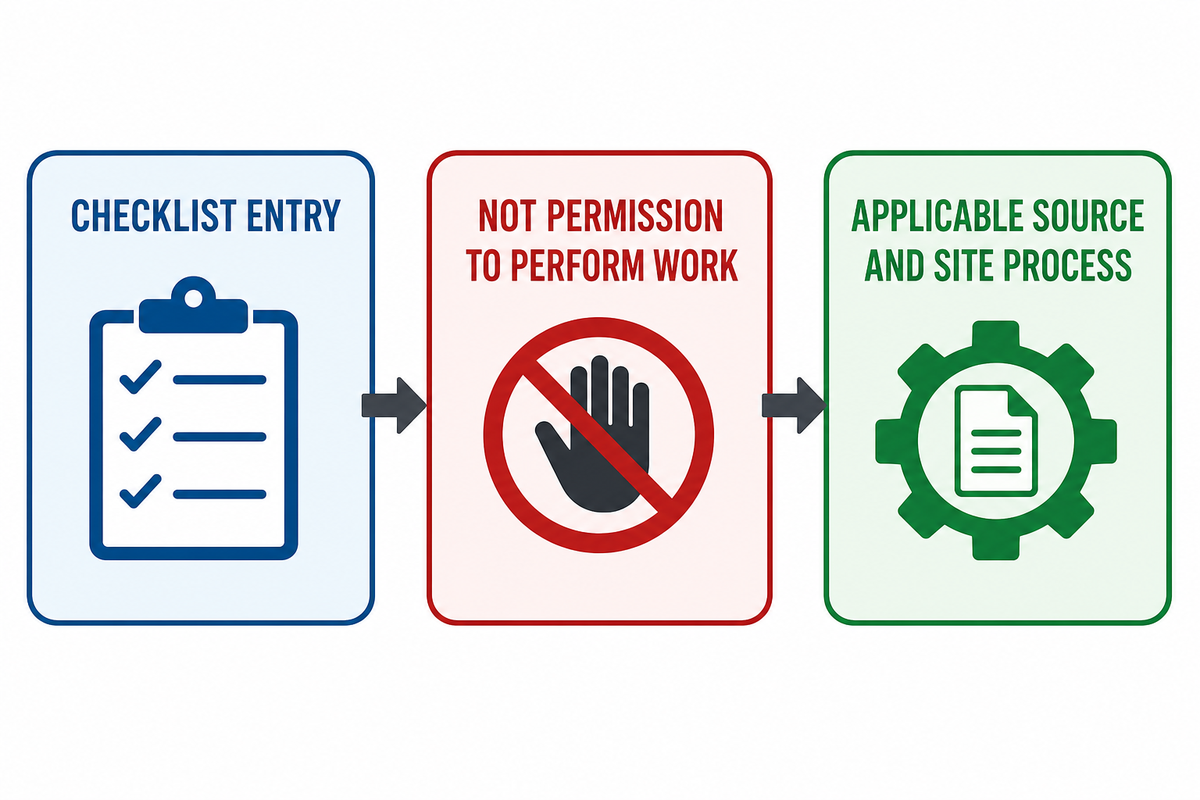
The baseline is intentionally simple: a checklist entry isn’t permission to perform work. Nor is an entry evidence that a protective stop, isolation, lockout/tagout program step, electrical condition, adhesive condition, guarding condition, access decision, personnel coordination, training confirmation, contractor coordination, or restart prerequisite has been resolved.
Because a record doesn’t establish whether an operator faces a normal-production question or a servicing exposure, an ambiguous handoff is a risk. That distinction belongs to the applicable source and site process, not to a generic checklist entry.
OSHA’s hazardous-energy rule covers servicing and maintenance where unexpected energization, start-up, or release of stored energy could injure employees. Its definition of energy source includes electrical, mechanical, hydraulic, pneumatic, chemical, thermal, and other energy. OSHA has also explained that an observation of operating equipment can be servicing in the facts of a particular case. Those boundaries are why this guide stays on the record-and-handoff side of the line rather than offering an on-machine “quick check.” Read 29 CFR 1910.147 and OSHA’s 2007 interpretation for the governing context.
“Every employee performing these inspection tasks must be protected from exposure to hazardous energy.”
At least annuallyOSHA describes this interval for a site energy-control-program periodic inspection, not for this folder gluer checklist.
Shift changesUse the site’s authorized handoff process; this log does not transfer energy-control responsibility.
At the log desk: The most useful first line in a log is often not a diagnosis. One bounded form is “reported condition, location, time, job context, and owner to confirm.” That wording preserves the facts without turning a shift record into a technical conclusion.
The One-Page Checklist: Daily, Weekly, Monthly, and Escalation
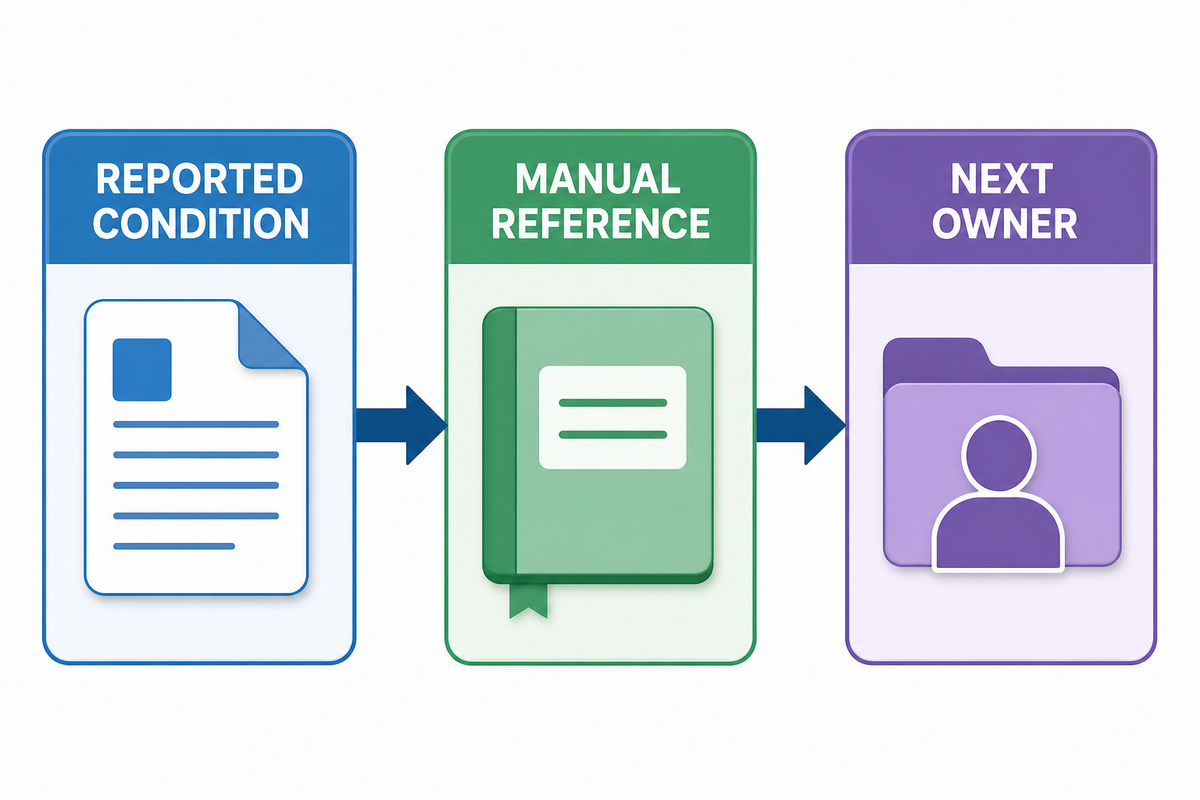
Use the calendar labels as filing buckets, not as instructions for a person to perform a task. “Daily,” “weekly,” and “monthly” here describe when a team may review records and manual-assigned work; the equipment manual, site safety program, and authorized personnel determine any actual maintenance activity and frequency.
Safety boundary: For U.S. hazardous-energy requirements that may govern covered servicing or maintenance, consult OSHA’s lockout/tagout standard; this article does not decide its applicability to a particular task or machine.
Where a calendar label and a manual-assigned service task aren’t the same decision, a schedule mistake is a risk. The table keeps that difference visible for the operator, supervisor, or authorized owner receiving the record.
| Record bucket | What to capture | What this article does not decide | Next owner |
|---|---|---|---|
| Daily | Reported condition, date/time, line or section, carton-job context | Whether anyone may approach, observe, or work on the machine | Site-designated supervisor or process |
| Daily | Manual reference, if the manual assigns a task | Task method, tool, access, or frequency | Manual-authorized maintenance owner |
| Weekly | Repeated entries grouped by condition and location | Root cause or corrective action | Authorized service review |
| Weekly | Open handoffs and missing follow-up records | Whether an open item is safe to defer | Site-designated decision owner |
| Monthly | Repeat-fault pattern, parts reference, and service case reference | Replacement selection or compatibility | Manufacturer/manual or qualified service channel |
| Monthly | Training or process-change record reference, if applicable | Training adequacy or authorization status | Site training and safety process |
| Glue system | Reported glue-system condition and product/manual reference | Adhesive handling, temperature, pressure, or adjustment | Manual and site-approved owner |
| Electrical | Reported electrical concern and panel/location identifier | Testing, diagnosis, or energized work | Authorized electrical process |
| Restricted area | Access concern and affected zone | Entry, guarding, or access authorization | Site safety process |
| Restart request | Who requested review and the related record number | Restart clearance or release of a protective stop | Site-authorized restart process |
Do
Keep the reported condition, exact location, and ownership question together.
Don’t
Use a checklist tick, log entry, or manual reference as authorization to perform a task.
During triage: A short record is easier to route when it doesn’t try to solve several questions at once. “Belt-related condition reported; zone and job recorded; manual/service owner required” is more reliable than a vague “belt checked” note.
Daily Condition Records and Manual-Assigned Task Handoff
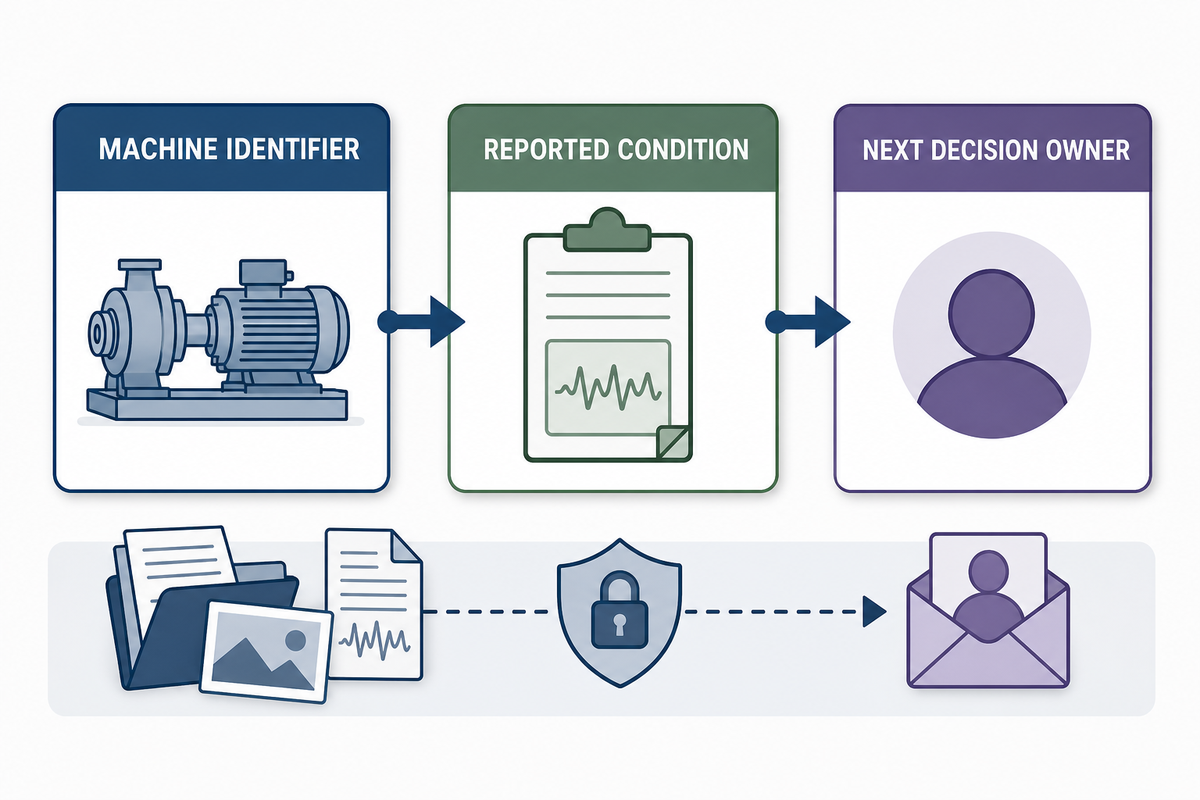
A daily record can preserve what a shift already knows without directing new contact with machinery. Record the machine identifier, production context, reported condition, visible location description supplied through the site’s applicable process, manual reference if one exists, and the name or queue of the next decision owner. Don’t fill a blank with a diagnosis.
In a short daily note, a gap between the reported condition and the next owner is a risk because production context can disappear before a service review. Preserving the source reference limits that ambiguity without turning the note into a diagnosis.
Terms such as belt, roller, sensor, glue nozzle, bearing, folding, and glue application may help a team index a report. They aren’t an instruction to inspect moving parts or inspect the glue nozzles. If a manual assigns a specific maintenance task, the manual, machine configuration, and site controls remain the source for that task. This page only records that the manual reference exists and identifies the person or process that must assess it.
For index labels, copy wording only from a site record, manual, or parts reference. A site may use terms such as carton folder gluer, feeder, glue tank, shaft, paper dust, safety guards, or emergency stop button; this article doesn’t treat any label as a universal component list, diagnosis, or task cue.
Likewise, phrases such as maintenance tips, daily maintenance, monthly maintenance, proper maintenance, and optimal performance appear only as words to route back to the applicable manual or site process. They don’t create a schedule, condition standard, or performance commitment in this generic record.
Other source-bound index labels may include weekly maintenance, daily maintenance checklist, safety features, machine components, carton blanks, folding carton, feeder section, gearbox, suction cups, or costly repairs. A log may preserve a manufacturer’s or packaging industry source phrase, but neither a label nor a warning tells a reader what to do.
The same boundary applies to source phrases such as prevent accidents, calibration, production floor, carton gluing, safety issues, maintenance routine, schedule professional servicing, and high-speed carton. Recording a phrase does not say that it applies, is safe, or supplies a procedure.
Formal handoff boundary: If a handoff involves lockout/tagout protection for covered work, OSHA calls for an orderly transfer of protection between outgoing and incoming employees. This record does not perform that transfer. See OSHA’s shift and personnel changes guidance.
For a broader view of machine categories, see this overview of automatic folder gluer machines. Treat that page as background reading, not as a substitute for the manual for the machine in front of the team.
At shift handoff: Daily records become useful when they retain the job and machine context. A report that simply says “glue issue” loses the details the next owner needs to find the right manual section or service case.
Weekly Exception-Record Review and Manual-Assigned Service Boundary
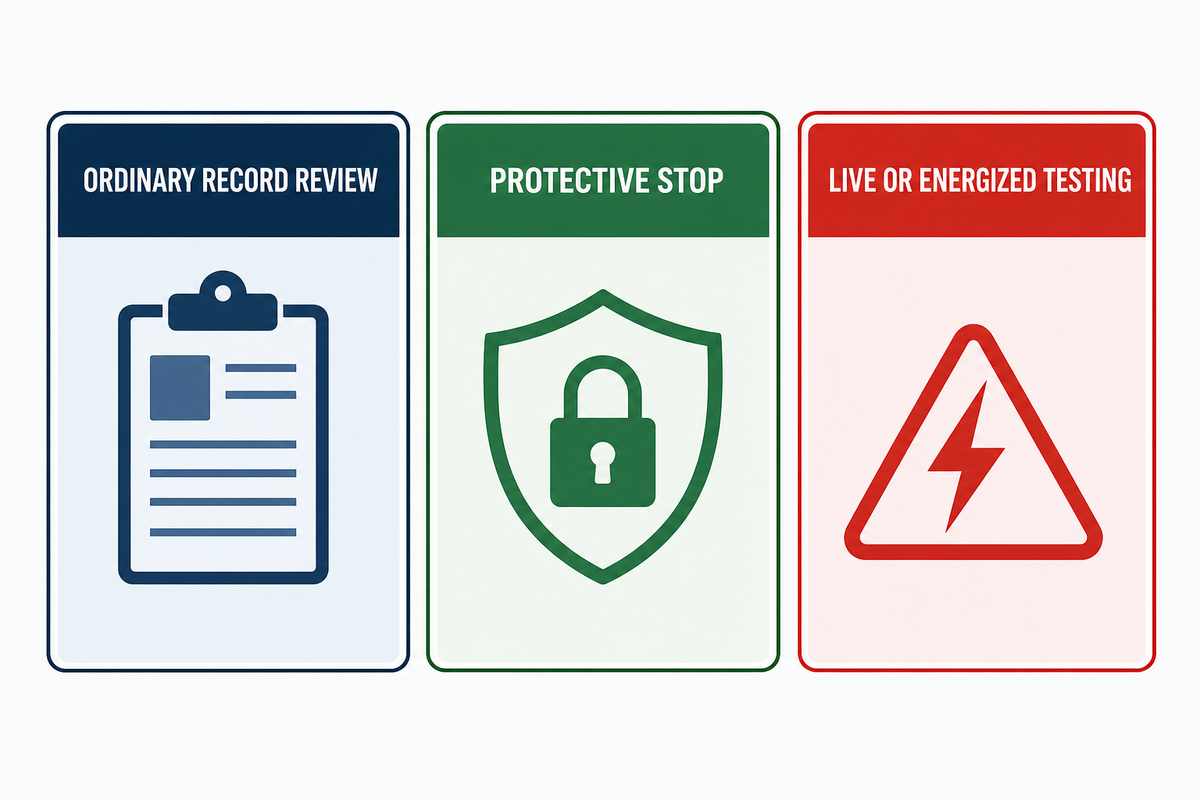
Weekly review is a chance to sort records, not a standing invitation to do service work. Group repeat entries by machine, line section, date, job type, and manual or service reference. Then identify which records still need a site decision, a qualified service review, a manufacturer discussion, or a different internal owner.
With weekly grouping, an unresolved record is a risk because a repeated entry alone doesn’t establish service authority, cause, or completion. The manual reference and named decision owner keep the boundary clear without directing work.
Use careful labels. Ordinary record review means reading the records. Protective stop names an operational status that the site controls. A danger or restricted area is an access boundary. Live or energized testing is outside this article. Lockout/tagout is a site program with its own authorized process. These aren’t interchangeable terms, and the log doesn’t merge them.
OSHA’s printing-press guidance distinguishes normal production from servicing based on the work and exposure. OSHA describes a narrow exception only in specific circumstances; this article doesn’t attempt to decide that exception for any folder gluer task. Review the OSHA printing-press interpretation with the applicable site safety team when that boundary is relevant.
When patterns recur: A recurring entry is a reason to make ownership visible, not proof of a root cause. A manual, a qualified technician, a parts reference, or a site safety review may be the right destination, depending on the actual condition.
Monthly Repeat-Fault and Service-Follow-Up Record Review
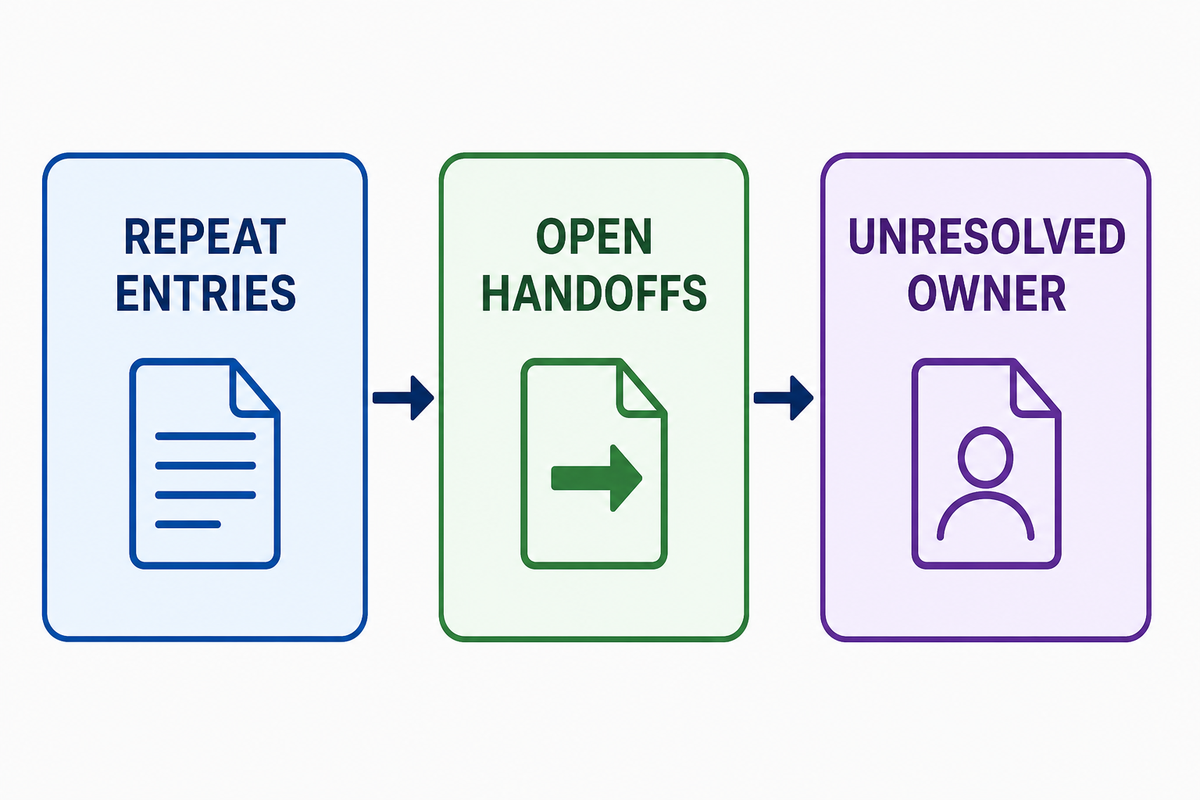
Monthly review can answer limited planning questions: What was reported more than once? Which handoffs are still open? Which records refer to the same machine section? Which parts or service cases need a response? Monthly review shouldn’t convert those answers into a universal maintenance interval, remaining-life estimate, availability promise, or performance forecast.
Where a number appears in a rule, the risk of an overreach is especially clear: OSHA’s 60-day interval applies only within that provision’s scope, so a monthly record review can’t adopt it as a folder-gluer schedule. Such a record should therefore retain its unresolved owner and source reference.
Keep a separate column for process change, training confirmation, and restart-related reference numbers. The record can point to the owner of those items, but it can’t certify that a process change was approved, that someone has been trained, that a maintenance release occurred, or that the machine can be restarted. Where shifts, contractors, or multiple personnel are involved, use the organization’s established handoff and coordination process. OSHA separately addresses shift/personnel changes and outside personnel in its lockout/tagout guidance.
For a general product-category reference, the corrugated folder gluer overview can help distinguish the page topic from a specific machine’s manual. That reference doesn’t establish a maintenance plan for a particular line.
In the monthly view: The value of the record is continuity. An unresolved record can remain visible when a job, shift, operator, or service contact changes.
Glue-System Condition-Record and Escalation Boundaries
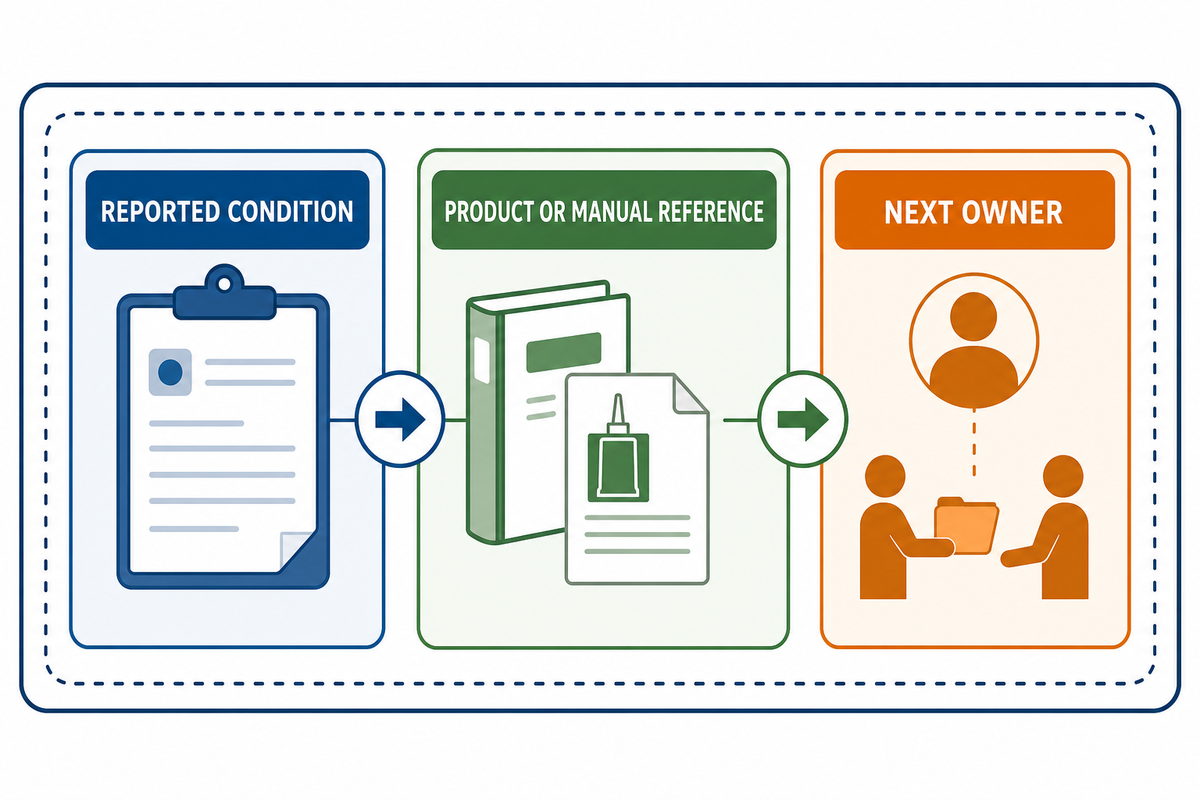
A glue-system record should capture the reported condition, the product or manual reference supplied by the site, the affected machine area identified through the applicable process, and the next owner. It must not introduce a temperature, pressure, nozzle, roller, sensor, or glue-application adjustment.
Adhesive products can introduce their own hazard communication requirements. OSHA’s Hazard Communication Standard applies to hazardous chemicals in the workplace, while an adhesive supplier’s safety data and product instructions remain product-specific. A report may retain the source term “glue buildup” for the authorized owner without describing a cleaning task. This checklist doesn’t replace either source. See OSHA’s Hazard Communication Standard when the site’s approved process requires that review.
| Record category and maintenance term | Safe use in this guide | Boundary |
|---|---|---|
| Inspection | Record that a site process raised an inspection question | No on-machine inspection method |
| Cleaning | Record a cleaning request against the applicable manual/product reference | No cleaning instruction or access decision |
| Lubrication | Record a manual-assigned lubrication reference, if applicable | No lubricant, point, frequency, or application method |
| Sensor | Identify the reported sensor-related condition | No electrical test or adjustment |
| Belt | Identify the reported belt-related condition | No tracking, tension, replacement, or alignment procedure |
| Glue nozzle | Keep the reported glue-nozzle term with its manual reference | No nozzle inspection, cleaning, or setting |
| Emergency stop | Record the event and site reference number | No reset or restart direction |
| Service | Route to the authorized service owner | No diagnosis or repair method |
| Troubleshooting | State that a troubleshooting request was raised | No running diagnostic or guarded-area access |
For glue-system records: Notes are most usable when they preserve the product and machine references already used by the site. That lets the correct owner consult the relevant technical documentation without the log inventing a setting.
When a Reported Condition Requires a Stop Decision
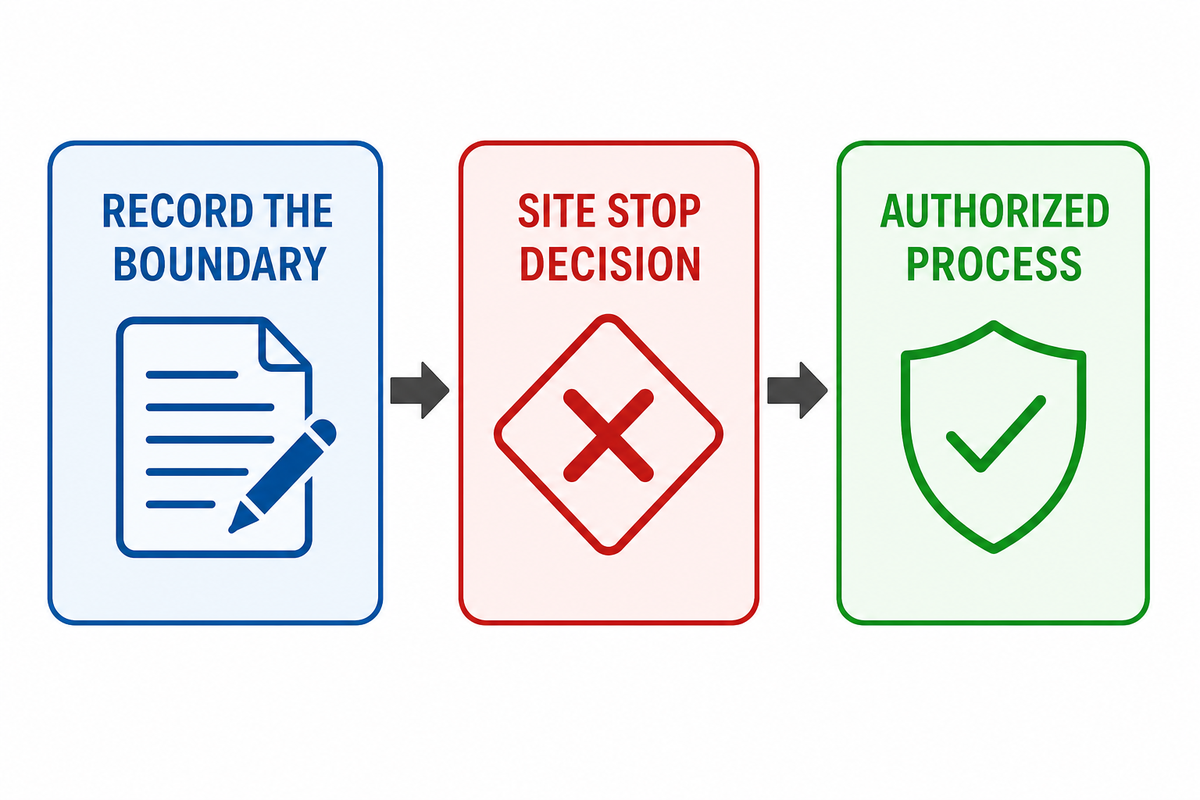
A reported condition requires a site stop decision when it raises questions about access, unexpected start-up, stored energy, moving parts, guarding, electrical work, adhesive exposure, servicing, multiple people, outside service, or restart. The generic checklist records that boundary and routes the issue; it doesn’t decide the stop or next action.
That boundary is grounded in real risk rather than abstract caution. An OSHA inspection record for a flexographic folder-gluer incident describes multiple personnel, moving rollers and conveyor elements, an open restricted pit, and reported miscommunication. The record isn’t a basis for a general performance claim. The record instead supports keeping a generic checklist separate from access control, coordination, and safety decisions. Read the OSHA inspection detail.
Do
Escalate the record to the site’s authorized stop, safety, or service process when the report crosses its defined boundary.
Don’t
Treat a protective stop as an energy-control transfer, a permission to access a zone, or restart clearance.
On escalation: The best entry is specific about the boundary that was reached, such as “restricted-area access question” or “restart decision required,” while leaving the decision to the authorized process.
Build a Maintenance Log for the Next Operational Handoff
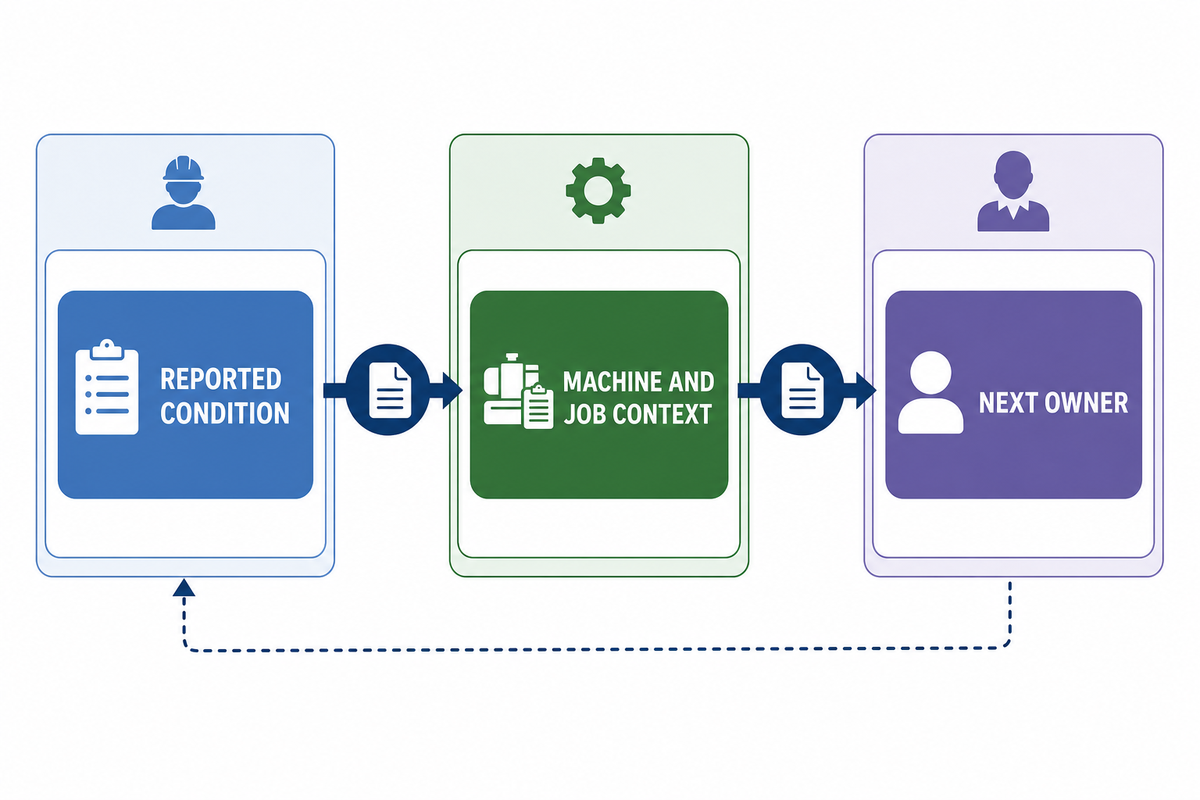
A maintenance log carries a reported condition, its machine and job context, a relevant manual or product reference, status, and next owner across a shift or service handoff. Its purpose is record continuity and decision routing. The log isn’t a task authorization or substitute for controlled site documentation.
4-Field Condition-to-Owner Handoff Matrix
The 4-Field Condition-to-Owner Handoff Matrix separates reported facts from decisions and identifies the next decision owner.
| Reported condition or request | What the log records | What it does not decide | Required next owner |
|---|---|---|---|
| Machine identification | Model/asset reference, line section, date and job context | Applicability of a task | Record owner |
| Folder gluer machine condition | Reporter’s factual description and related reference | Diagnosis or performance cause | Designated review owner |
| Belt, roller, or folding concern | Reported term and affected section | Tracking, alignment, repair, or adjustment | Manual/service owner |
| Glue or glue application concern | Product/manual reference and condition report | Adhesive handling or settings | Approved product/service process |
| Sensor or electrical concern | Location label and reported symptom | Testing or energized work | Authorized electrical process |
| Cleaning or lubrication request | Request, manual reference, and status | Method, product, tool, or access | Manual-authorized owner |
| Guard, pit, or restricted-area concern | Zone reference and escalation time | Entry, bypass, or guarding change | Site safety process |
| Shift, process, or training change | Change reference and receiving owner | Training confirmation or procedure approval | Site management process |
| Outside technician or contractor | Company/contact, scope reference, and site handoff record | Coordination or access authorization | Site coordinator |
| Restart request | Request source and linked decision record | Restart readiness | Authorized restart process |
Formal handoff boundary: The record may identify the receiving owner, but when a handoff involves covered lockout/tagout protection, OSHA treats continuity of protection as a separate transfer. That matrix does not supply that transfer. See OSHA’s shift and personnel changes guidance.
The public r/CommercialPrinting discussion about an auto-glue setup links operator staffing and stacker configuration to the particular setup and job context. That’s an operator-experience observation, not a universal capacity, staffing, or maintenance claim. The thread supports the narrow recordkeeping point: retain machine and job context so the next owner isn’t asked to infer it.
In a handoff: Good records preserve uncertainty. “Service follow-up pending” is more useful and more honest than checking an item off before the service or safety owner has closed it.
When the Checklist Must Hand Off to the Site Safety Process
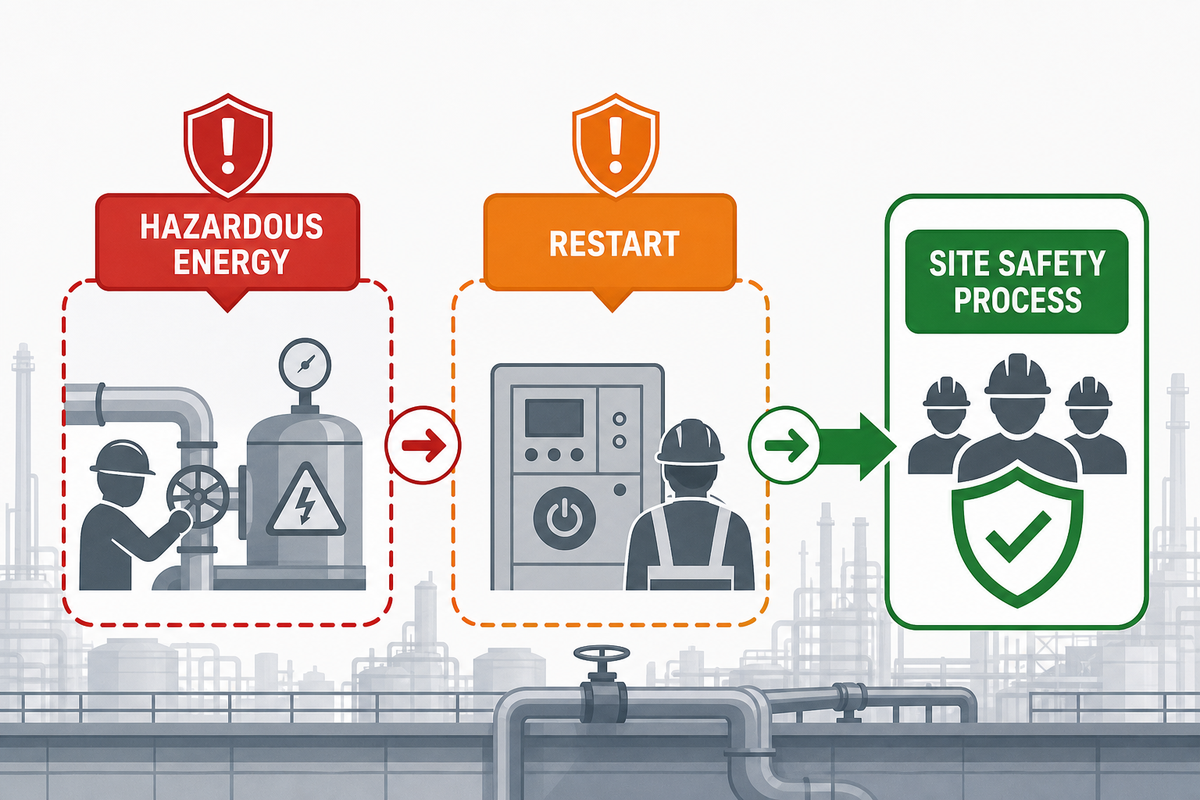
Hand the issue to the site safety process when the record raises hazardous energy, normal-production-versus-servicing classification, a protective stop, restricted-area access, electrical work, adhesive exposure, process change, training, multiple people, outside personnel, or restart. The correct next step depends on the site, machine, manual, and task.
Where the facts indicate covered servicing or maintenance, OSHA’s lockout/tagout standard addresses hazardous energy and machinery servicing. This guide cannot classify a task or substitute for that procedure. See 29 CFR 1910.147.
For an operator-facing record, overreach is a risk because it can’t resolve a site-specific access, qualification, or classification decision. PMMI’s public scope overview is useful context for packaging and converting machinery, while applicability to an installed machine remains a site assessment.
Packaging and converting machinery can also have application-specific safeguarding considerations. PMMI describes ANSI/PMMI B155.1 as a standard for packaging and converting machinery and notes that recent updates address topics including remote or teleoperation, whole-body access, and lifecycle categories. The public overview does not decide which provisions apply to a particular folder gluer, so it is a routing cue rather than a compliance conclusion. See PMMI’s standards overview.
At the safety boundary: “Site safety review required” is a complete handoff label when the facts require a different decision-maker. A daily checklist can’t settle a specialized question.
Trend and Planning Boundary: What Current Keyword Data Cannot Show
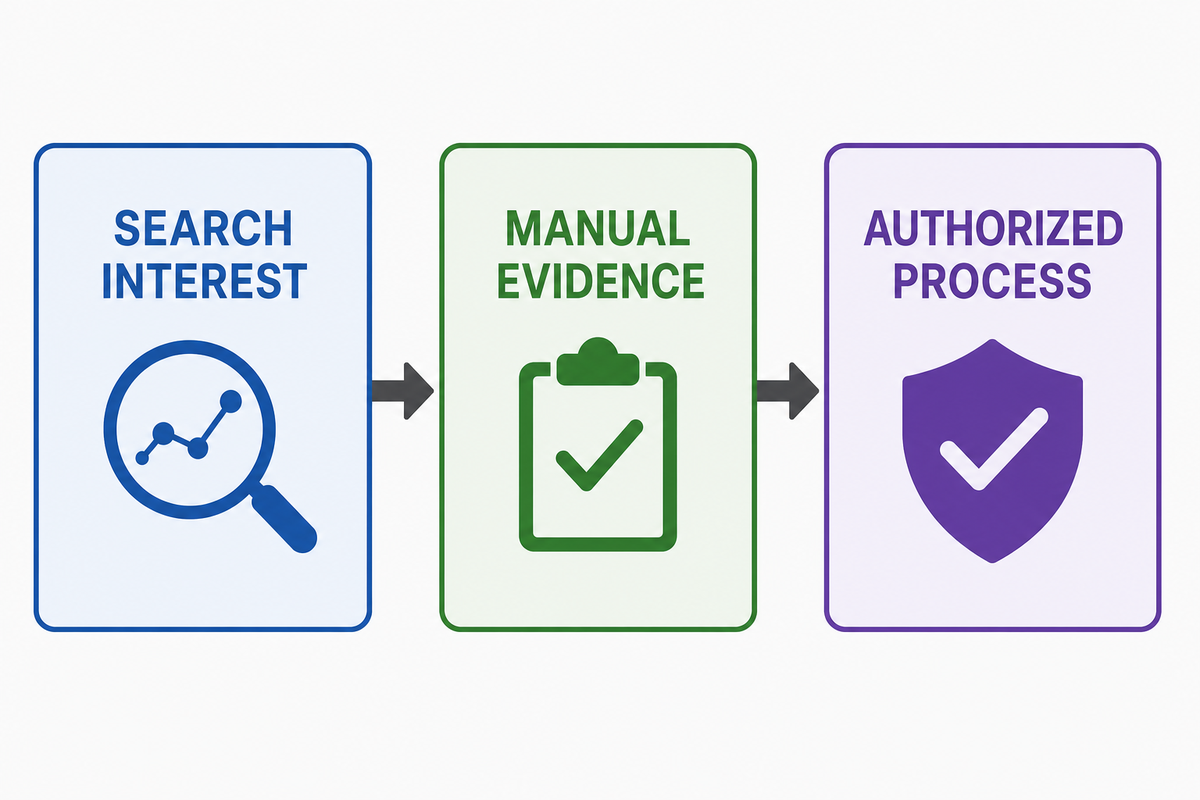
Search interest can show that people look for phrases such as folder gluer maintenance, folder gluer machine, glue system, regular maintenance, downtime, productivity, and lifespan. Keyword data can’t show the correct maintenance interval for a specific machine, predict a breakdown, establish a service-life outcome, or prove that a given action improves productivity. This guide doesn’t make those claims.
When planning begins with a search phrase, an overclaim is a risk because that phrase can’t resolve whether an operator or service owner may use a calendar label. Search-demand wording belongs in planning, while manual evidence and an authorized process decide the underlying task.
The current keyword matrix also contains “folder gluer preventive maintenance,” “folder gluer maintenance schedule,” “folder gluer lubrication maintenance,” “folder gluer troubleshooting maintenance,” “folder gluer cleaning maintenance,” “folder gluer safety checklist,” “folder gluer glue system maintenance,” “folder gluer belt inspection,” and “folder gluer roller alignment.” Those are search-demand phrases, not validated task methods or universal intervals.
Regulatory intervals can’t be borrowed out of their scope either. For example, OSHA’s power-transmission rule includes a maximum 60-day inspection interval for equipment within the scope of that provision. That doesn’t establish a 60-day schedule for any folder gluer part. Review 29 CFR 1910.219 before relying on a regulatory interval.
In planning: Credibility improves when a record shows what’s known, what’s unknown, and who owns the next decision. Reliable planning doesn’t need a fabricated forecast.
When to Use Parts or Service Support
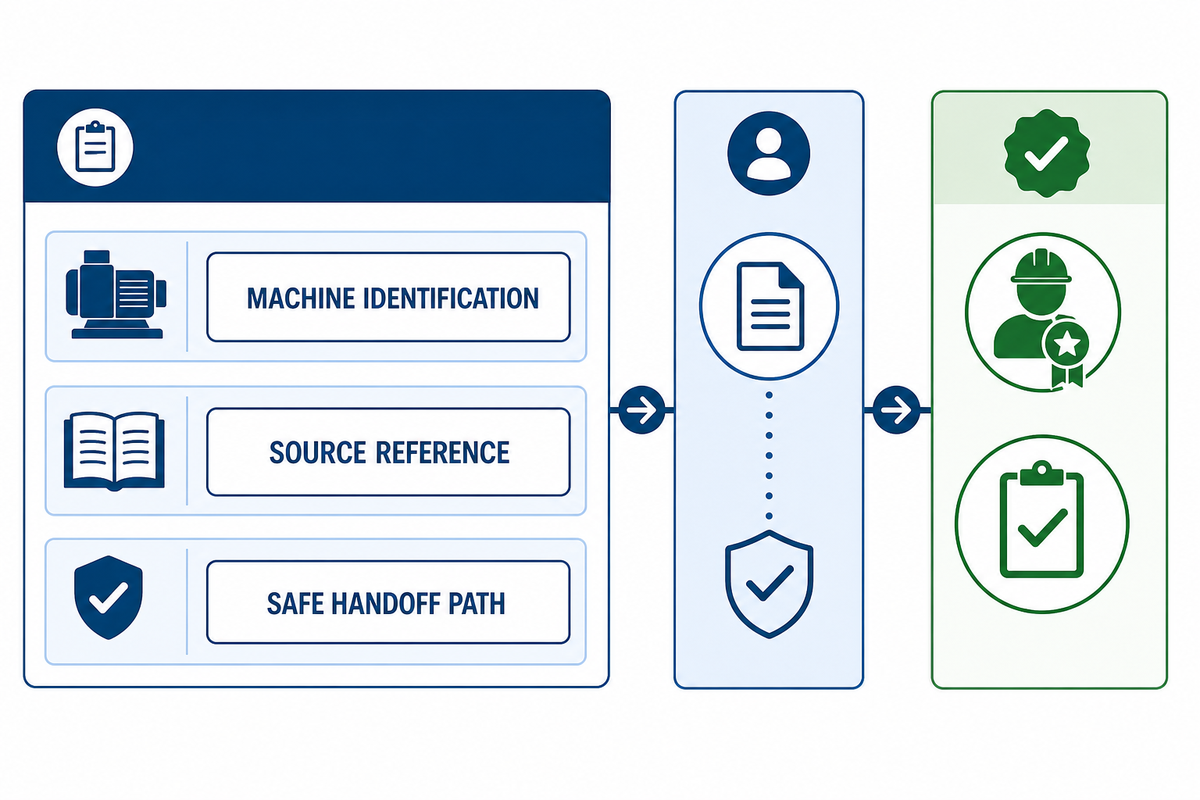
Use parts or service support when the record needs machine-specific interpretation, a verified parts reference, a manual-supported task, or an authorized service decision. Provide the machine identification, the relevant manual or record reference, the reported condition, and the site’s safe handoff path. Don’t request or perform remote-style troubleshooting, a replacement decision, or a restart decision through a generic checklist.
Outside-personnel boundary: If outside personnel will perform work covered by the applicable lockout/tagout standard, OSHA calls for the outside and on-site employers to inform each other of their lockout/tagout procedures. That parts or service request does not perform that coordination. See OSHA’s outside personnel guidance.
Without manual evidence, a part or service mismatch is a risk because an operator can’t use a generic record to decide compatibility, replacement, or restart. The record should preserve the machine identifier and source reference so the authorized owner can make that decision.
For background on parts terminology, see the folder gluer belt support page and the folder gluer parts guide. Those pages are support resources; the equipment manual and authorized owner still control any machine-specific task.
With service requests: A request moves faster when it carries the unresolved question and its source record. The request shouldn’t claim that a part, setting, or repair has been selected before the appropriate owner reviews it.
FAQ
What is included in a maintenance checklist?
For this article, a checklist includes a reported condition, machine and job context, a manual or product reference when available, an owner, an escalation status, and a follow-up record. It separates the record of a report from the site decision about the report. The format also preserves an unresolved owner and the next follow-up reference. It doesn’t include operating, repair, cleaning, lubrication, adjustment, isolation, electrical, adhesive, or restart instructions, and it can’t certify completion of any of those activities.
What are the responsibilities of a folder gluer operator?
Responsibilities are set by the employer, machine manual, training, and applicable site process. For folder gluers, this log can label the owner of unresolved maintenance tasks; it does not define the task, grant access, or confirm completion. This guide supports accurate recording of a reported condition and routing to the authorized owner. Operator authority, access, supervisory decisions, and training confirmation remain site-specific for the particular machine and job context.
How should a folder gluer cleaning task be scheduled?
A folder gluer cleaning task belongs to the machine-specific manual and authorized site process, rather than this generic template. The record captures the request and reference, then sends it to the designated owner; it supplies no cleaning method, access decision, or schedule.
What maintenance checks are essential for folder gluer machines weekly?
A weekly review in this template groups exception records, open handoffs, and manual-assigned task references. Weekly review doesn’t prescribe weekly inspection, lubrication, belt tracking, feeding alignment, glue-nozzle work, sensor work, or any on-machine activity. The relevant manual and site process determine whether any such task exists, who evaluates it, and how its result is documented. The review can also confirm that each open record retains a source reference, named owner, and unresolved status.
How can a team safely use a folder gluer?
Use the machine-specific manual, employer training, and site safety program. Escalate questions involving hazardous energy, guarding, restricted areas, electrical work, adhesive exposure, servicing, multiple people, outside personnel, or restart. A generic web checklist can’t determine those requirements. The team’s record should identify the condition and next owner without implying that it approves access, a task, or a restart. Nothing on this page grants that authority.
What should be recorded after a maintenance check?
Record the date, machine and job context, source reference, reported condition, receiving owner, escalation status, and follow-up record. Keep facts and decisions separate so unresolved questions remain visible. Don’t treat the entry as proof of task completion, training, coordination, isolation, or restart clearance.
References & Sources
- Electronic Code of Federal Regulations: 29 CFR 1910.147, The control of hazardous energy
- OSHA: Control of hazardous energy during inspection tasks, interpretation letter
- OSHA: Lockout/tagout and printing press operations, interpretation
- OSHA: Inspection detail involving a flexographic folder gluer
- OSHA: Lockout/tagout tutorial, shift or personnel changes
- OSHA: Lockout/tagout tutorial, outside personnel
- OSHA: 29 CFR 1910.219, mechanical power-transmission apparatus
- OSHA: Hazard Communication
- PMMI: Standards and regulations for packaging and converting machinery