Get in touch with Cenwan Machine Company


By GW · Updated October 6, 2026
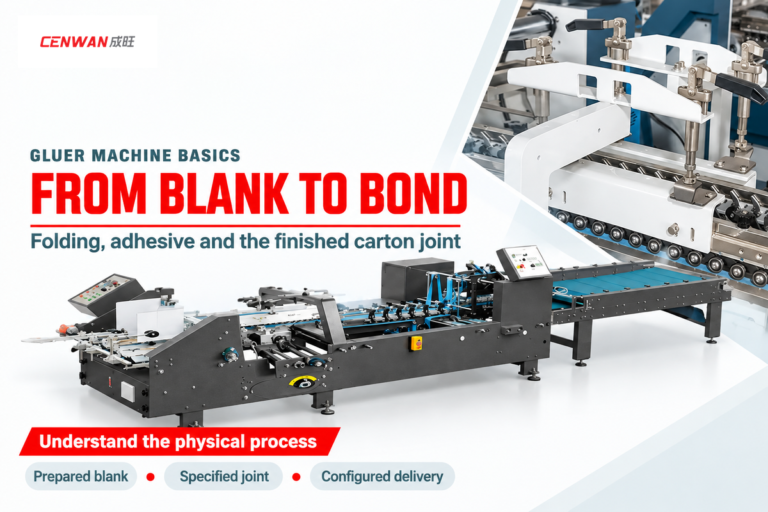
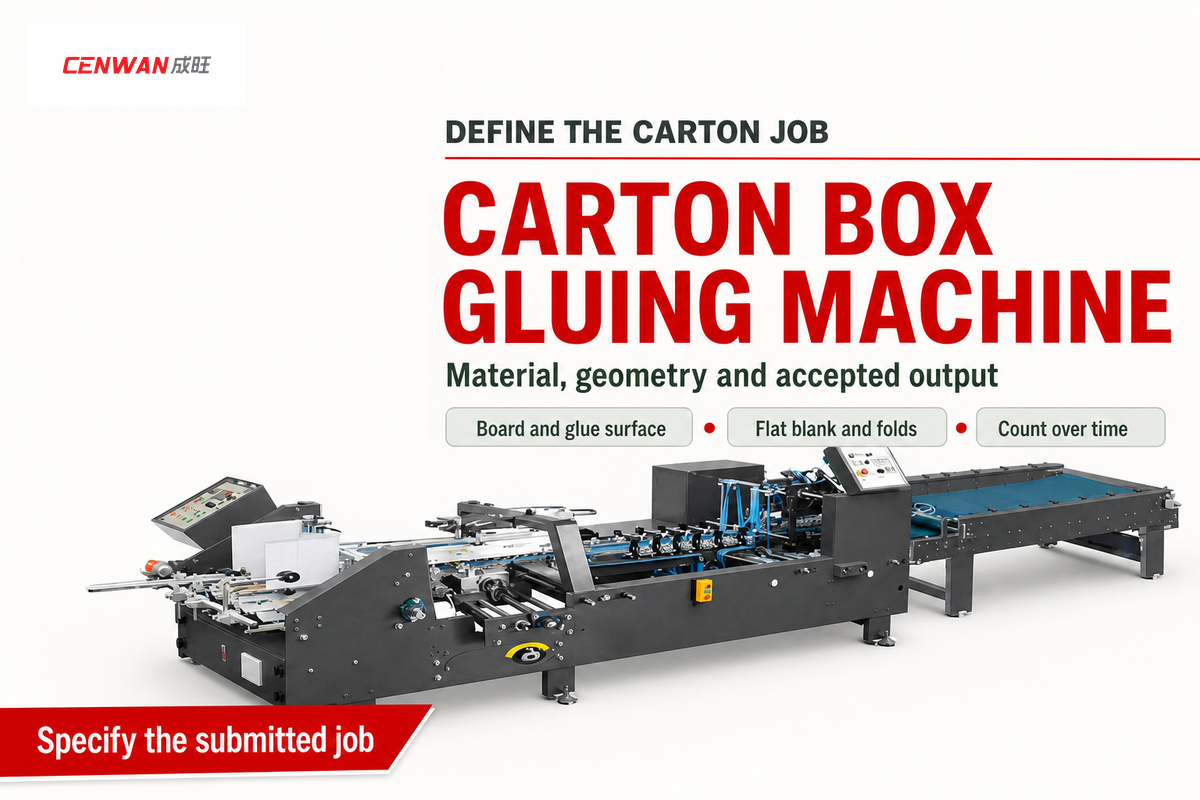
A carton box gluing machine is equipment for folding and gluing prepared carton blanks; its job inputs are the actual board, a flat blank and box style, and accepted output over a stated time. A grade name or maximum speed can’t confirm that combination. Compare evidence for the submitted carton before comparing machine prices.
A cosmetic folding carton and a corrugated shipping box can both be called cardboard boxes, but the materials used, folds and bonding surfaces can be quite different. For packaging industries handling mixed carton work, a useful enquiry makes those differences visible. The rules below connect board descriptions and style-specific format fields to an example of production rate, without implying that catalog ratings are guarantees of production rate.
Quick Specs, what the published numbers mean
- Cenwan lists 200–800 gsm paperboard for its CW-G series; an actual grade and finished sample still need confirmation.
- The CW-G common table labels 400 m/min as maximum line speed under no-load conditions.
- The G880 six-corner width field is 270–880 mm; its straight-line field is 140–880 mm.
- The worked example uses a shared 120-minute elapsed window and hypothetical accepted counts, not a factory test.
Source for supplier fields: Cenwan CW-G specifications. Confirm the model and configuration of what is currently proposed.
Three Inputs Define a Carton Box Gluing Machine Job
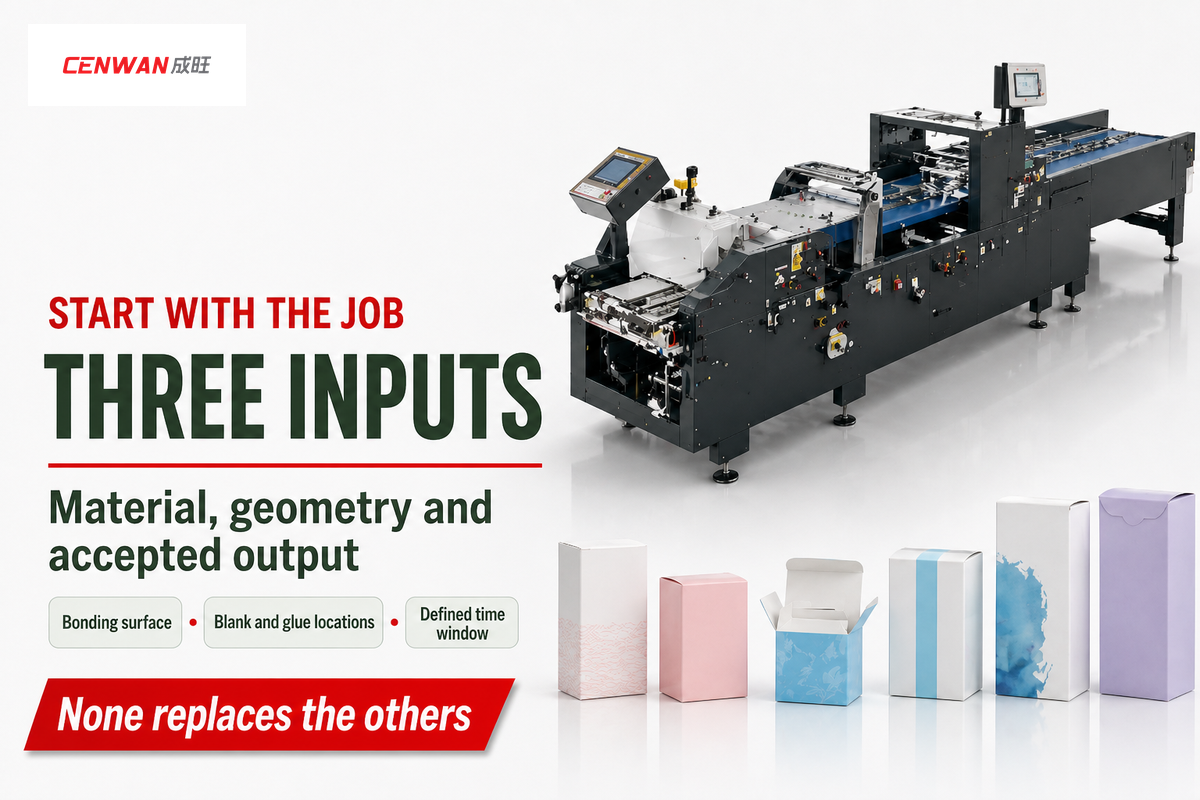
An enquiry for a carton box gluing machine is usable when material, geometry and output are specified together. Board descriptions identify the substrate and bonding surface. Flat drawings identify folds and glue locations. An output specification identifies acceptable cartons within a defined time window. None of those can replace the others.
For a packaging buyer, an “automatic box gluing machine” describes a level of automation rather than the entire job specification. An automatic folder gluer machine processes prepared blanks through the supplied folding and gluing functions; printing and die cutting are separate production stages, unless the proposed line includes them. Box making machine proposals may therefore cover a wider production-stage scope.
- Material: Grade, construction, lot, measured thickness, and actual printed or coated glue surface.
- Geometry: flat blank, crease pattern, feeding direction, glue tabs and finished sample.
- Output: accepted count, agreed defects, start/finish times and stated interruptions.
If only finished length, width, and height are provided, a lot of blank geometry is unresolved. The TAPPI T827 public scope addresses score-to-score measurements of blanks and their relationship to the size of the box when scoring allowances are known. Generally, begin the discussion of specific requirements with the drawing, rather than assume a finished box measurement and translate that to machine format.
Paperboard Grades: SBS, FBB, and Recycled Board
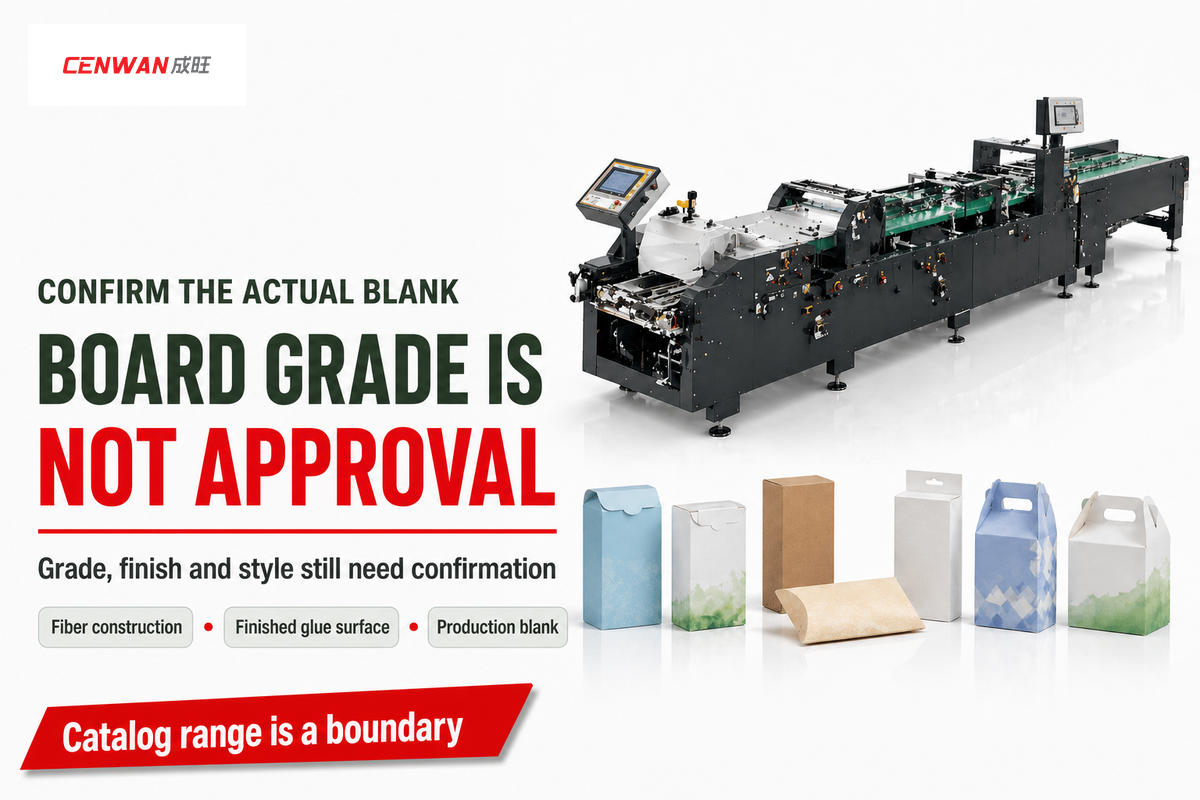
The terminology in the paperboard industry describes paperboard grades; those names alone don’t prove automatic folder gluer compatibility. For instance, differences in folding boxboard, as well as recycled white lined chipboard, can be attributed to differences in fiber layers and construction. Actual grade and finished blank are essential for the supplier to be able to evaluate folding and/or bonding behavior.
In the Iggesund paperboard manual, the names of constituents of paperboard are described. These descriptions don’t guarantee a carton. Recycled board isn’t one uniform construction.
| Board or surface description | What to identify | Evidence to submit | Limitations |
|---|---|---|---|
| SBS / SBB | Bleached chemical-pulp board | Grade sheet and production blank | A white appearance does not prove the glue surface |
| FBB, cream back | Middle and outer-layer construction | Grade, thickness and back surface | Grammage alone does not define stiffness |
| FBB, white back | Actual back-layer specification | Finished printed sample | A similar grade name may hide a different surface |
| WLC, mixed recycled layers | Producer-specific furnish | Lot and grade identification | No universal recycled-board folding result |
| WLC, specified back colour | Back and top-layer finish | Actual mating glue surfaces | Back colour is not adhesive qualification |
| SUB / unbleached board | Unbleached chemical-pulp base | Coating and crease details | Brown base does not establish the finished surface |
| Single-wall corrugated | Two liners and one fluting layer | Flute, liners and measured board | Flute label alone is incomplete |
| Double-wall corrugated | Two fluting layers and liners | Complete construction and blank | Do not transfer a single-wall result |
| Printed, coated or laminated glue area | Exposed surface on both sides of the joint | Final production finish | A raw-board test may not represent the sold carton |
Let’s say you want to purchase SBS for a sample that has a coated glue flap. The material name might answer the fiber question, but what about bond? In the coated-sample example, the surfaces that meet upon folding may not be the same as the surfaces seen in the unprinted sheet.
Cenwan’s published 200-800 gsm CW-G paperboard range forms a catalog boundary for that equipment family. Within the range, a carton still needs grade, finish and style confirmation. The paperboard and corrugated board comparison illustrates why a broad cardboard label isn’t sufficient.
Corrugated Board: Flute and Liner Matter Together
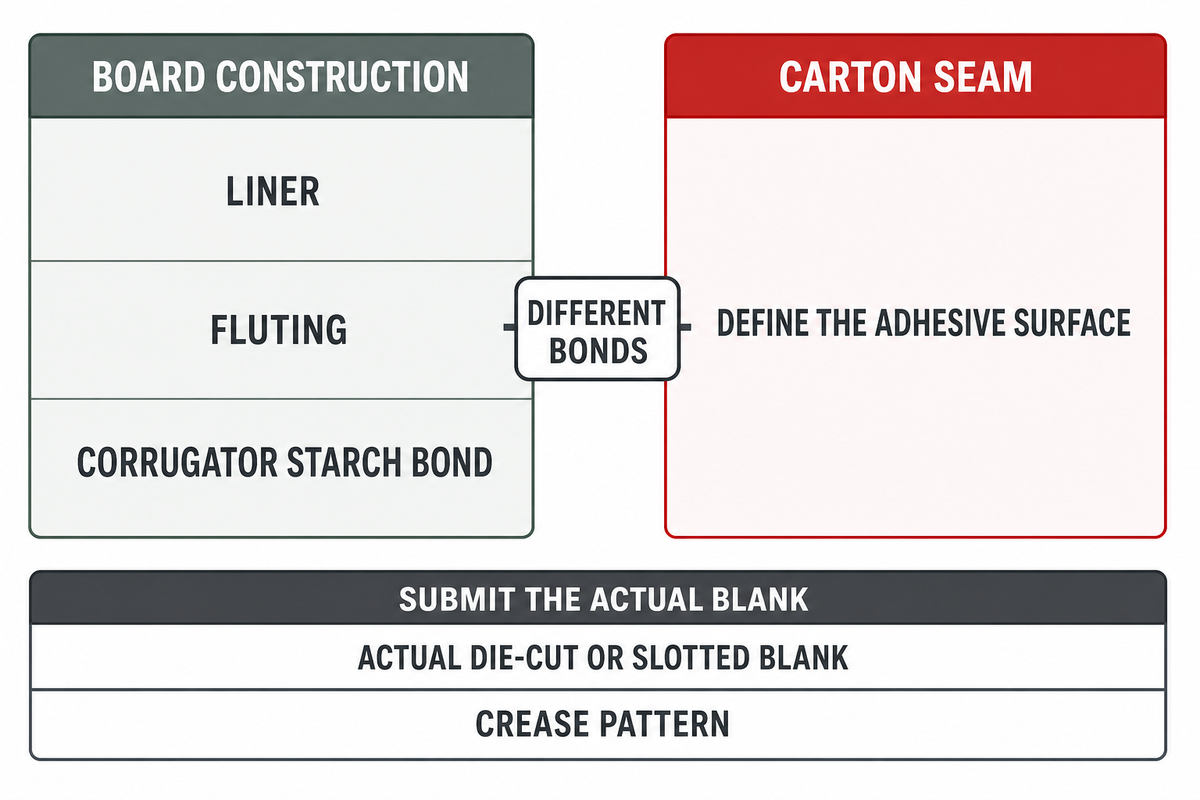
Corrugated board is constructed of flat liners and wavy fluting. The overall construction is important in specifying the corrugated folder gluer machine. Flute designation and liner grade are some of the features of corrugated board. Approval based on “E flute” or “corrugated cardboard” doesn’t define the features of the raw material, and the evidence of the folding process isn’t defined.
FEFCO’s production description distinguishes single-, double- and triple-wall board and the liner/fluting layers. Flute height is measured without the facings and shouldn’t be substituted by measured overall board caliper. The joint made at a corrugator is a starch bond and it’s different from the carton seam made at a folder-gluer.
- Corrugated board has liners and one or more fluting layers, depending on its wall construction. The surface to which the carton adhesive is applied should be defined.
- Provide the actual die-cut or slotted blank and its crease pattern.
- Keep paperboard and corrugated sample results separate in a mixed production plan.
For a hypothetical buyer changing a small paperboard carton to a corrugated mailer, retaining finished dimensions doesn’t remove the risk of a wrong folding specification. The reason is that the flute, creases and folding route have changed. The corrugated folder gluer configurations are the appropriate product discussion for the submitted corrugated carton.
It’s important to understand the limits of what we can predict. Kmita-Fudalej and Czechowski’s 2025 corrugated-board bending study noted that some of the numerical predictions in their study weren’t particularly close to the experimental data. The study is focused on bending of tested constructions, not on the limit of gluer capacity. In this guide, the practical implication is to retain physical evidence and not to treat a board model as a test of production speed.
Caliper, Grammage, and the Actual Glue Surface
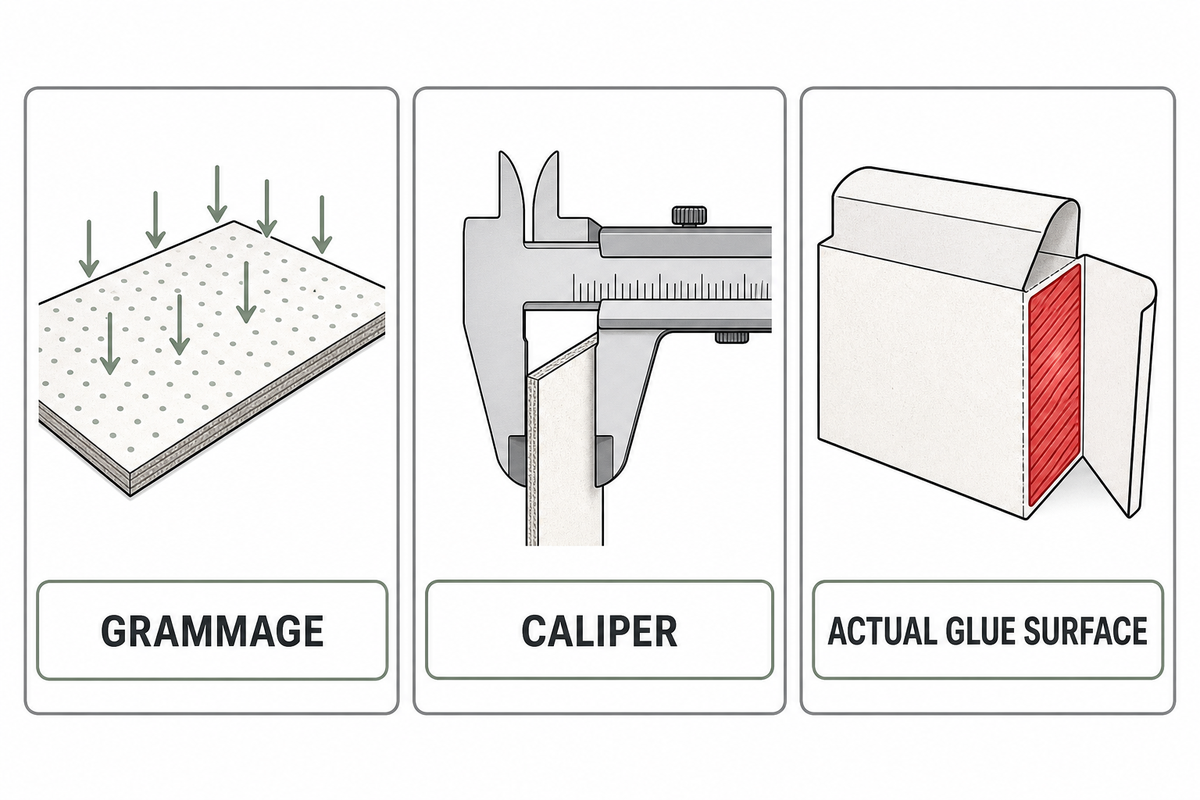
Grammage and caliper answer different questions. Grammage is mass per area, caliper is thickness under a specified measurement method. In evaluating boards, the effectiveness of a bonding surface depends on what the adhesive actually touches. The board weight range can’t indicate a thickness measurement or define the adequacy of the joint.
The public scope of ISO 536:2019 concerns grammage of paper and board. ISO 534:2011 covers specified thickness measurements and expressly excludes corrugated fibreboard. Confirmation in 2025 for ISO 536 and in 2022 for ISO 534 does not create a new edition of either standard.
“This document is not applicable to corrugated fibreboard.”
Engineering Note, keep the measurement basis
Report grammage in gsm and measured caliper in mm with method, sample lot and condition. A 200–800 gsm catalog range supplies no universal mm tolerance. Seek the proposed blank’s allowable dimensional and thickness variation; don’t invent that tolerance from a grade label or an unrelated standard.
Record sample condition, measured temperature and relative humidity when applicable. Production and storage samples shouldn’t be assumed as equivalent, unless documented as such. For the joint, Lanco’s folding-carton adhesive guidance identifies open time and tack as qualification factors. Lanco is an adhesive producer, so use the guideline as attributed process context rather than independent failure rate. For packaging materials, cold glue, hot melt, and a melt glue label don’t verify compatibility by themselves.
The field for 200-800 gsm should be next to the reported evidence, not above. Evaluation of a printed paper carton box should be based on its production finish. Approval of uncoated cardboard paper doesn’t automatically extend to a glue tab with a varnish or laminate.
Box Styles Determine the Folding and Gluing Modules
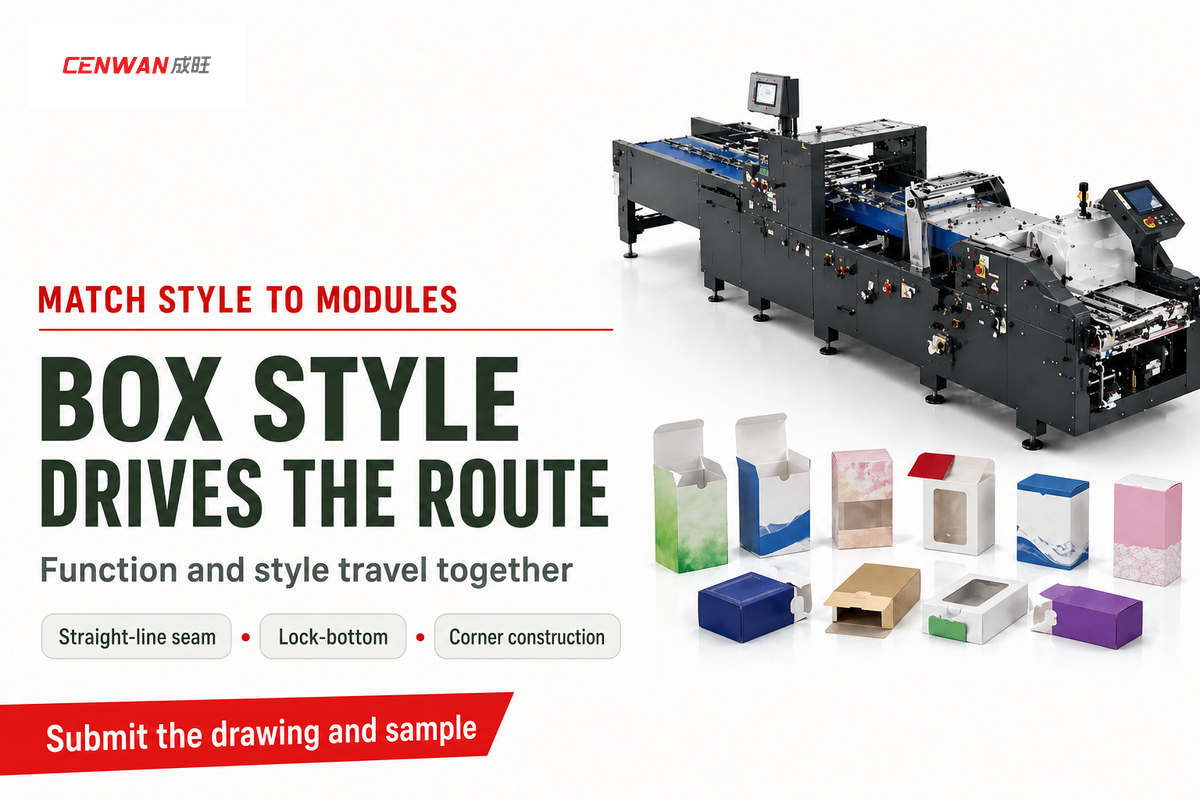
Box styles dictate the functions required of a carton folder gluer for automatic folding and gluing. Straight-line side-seam work is different from glued lock-bottom work. For folding and gluing equipment, a format range has no meaning by itself for running a carton folder gluer; it’s coupled with the required function and style.
The FEFCO design code shows how to describe corrugated designs. The FEFCO code isn’t a machine compatibility certificate. When enquiring about paperboard work, provide the die-cutting drawing and a finished sample, even for folding or ordinary cartons.
| Model | Style | Published width field | Limitations |
|---|---|---|---|
| G650 | Straight-line | 130–650 mm | Not a universal flat-blank feed-width definition |
| G650 | Lock-bottom | 130–650 mm | Confirm the actual folding/gluing route |
| G880 | Straight-line | 140–880 mm | Other format dimensions still apply |
| G880 | Lock-bottom | 140–880 mm | Submitted bottom construction must be checked |
| G880 | Four-corner | 160–880 mm | Confirm corner functions and other dimensions |
| G880 | Six-corner | 270–880 mm | Different minimum from straight-line work |
| G1100 | Straight-line | 140–1100 mm | Not approval of every style up to 1100 mm |
| G1100 | Lock-bottom | 140–1100 mm | Confirm bottom design on the actual sample |
| G1100 | Four-corner | 160–1100 mm | Other width/length and tab fields remain relevant |
| G1100 | Six-corner | 370–1100 mm | Cannot use the 140 mm straight-line minimum |
The CW-G Box Format Selection Matrix shows published ‘box width’ fields, but their orientation and relationship to a flat blank should be verified by the supplier’s drawing.
A hypothetical planner allocating 300 mm work to G1100 illustrates the trap. That width sits inside the straight-line field but below the listed 370 mm six-corner minimum. The right decision depends on which field describes the submitted design. Short-run orders, like greeting cards that require gluing, need to be assessed as a new case rather than acknowledged by a familiar carton name. Use the carton style and module guide for the wider style catalogue before comparing an automatic folder gluer or carton box folder gluer quotation. Orders described as 4 and 6 corner work still need the exact drawing; a paper box label doesn’t supply it.
Blank Size Is More Than the Finished Box Size
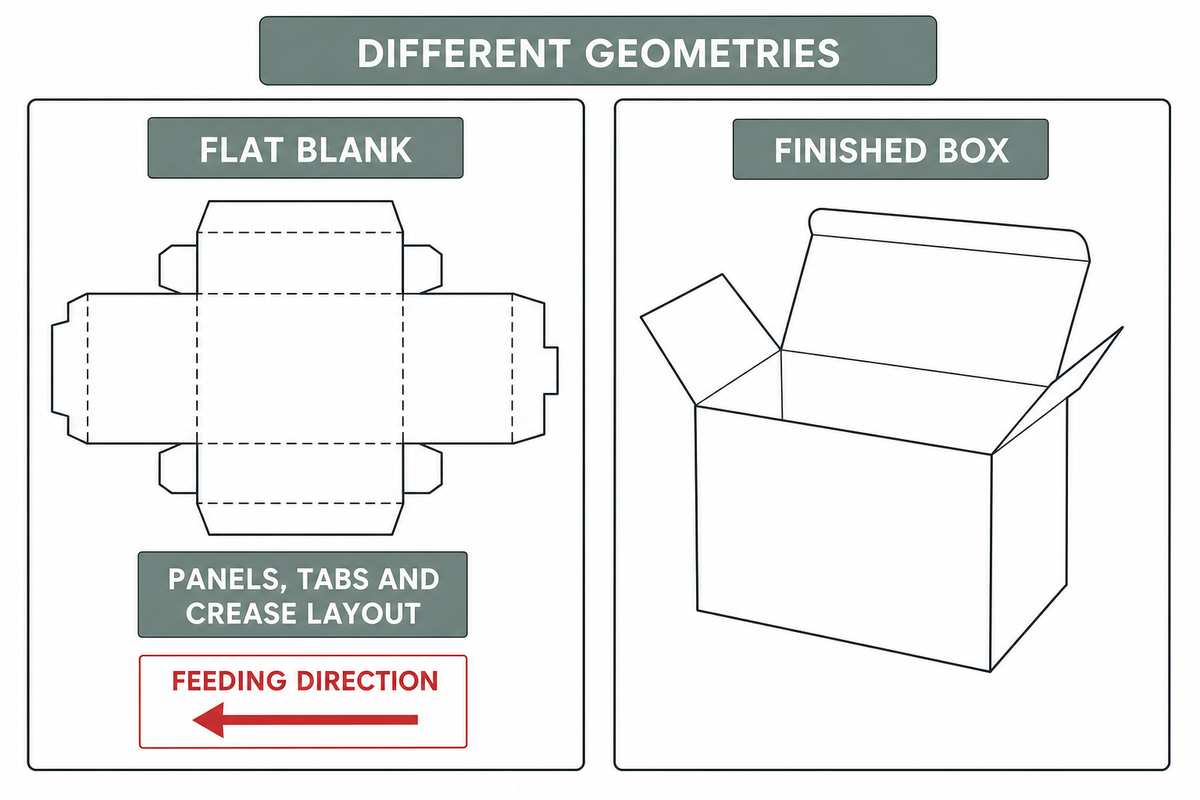
Flat blank dimensions and finished box dimensions indicate different geometries. A blank consists of panels, tabs and crease layout. The machine enquiry has to determine feeding direction and style format fields. Length, width and height alone aren’t sufficient to define the envelope of a folding and gluing machine.
TAPPI/ANSI T827 om-24’s public box-blank dimensioning scope concerns score-to-score measurements for its solid/corrugated fibreboard blank scope. The relationship to box size depends on known scoring allowances. That principle helps distinguish measurements; it does not supply a universal tolerance or a machine-selection formula.
Do
- Mark the feeding direction on the flat blank.
- Identify score centres, tabs and finished dimensions.
- Match each quoted limit to its model and style.
Don’t
- Substitute a finished side length for blank width.
- Apply a straight-line minimum to six-corner work.
- Approve a small box from the nominal model number.
Cenwan also publishes model-specific glue-tab fields: 30–100 mm for G650, 25–120 mm for G880 and 25–150 mm for G1100. Confirm how those fields apply to the submitted drawing; they’re supplier limits rather than universal box dimensions.
The G880 270–880 mm six-corner field and 140–880 mm straight-line field answer different style questions. A small carton near a minimum needs its complete drawing checked, along with the other format dimensions. The model’s largest format number doesn’t indicate how a blank travels through the folder-gluer machine’s feeding section, pre-folding, carton folding and delivery.
Production Speed Rules: Count Good Cartons over Time
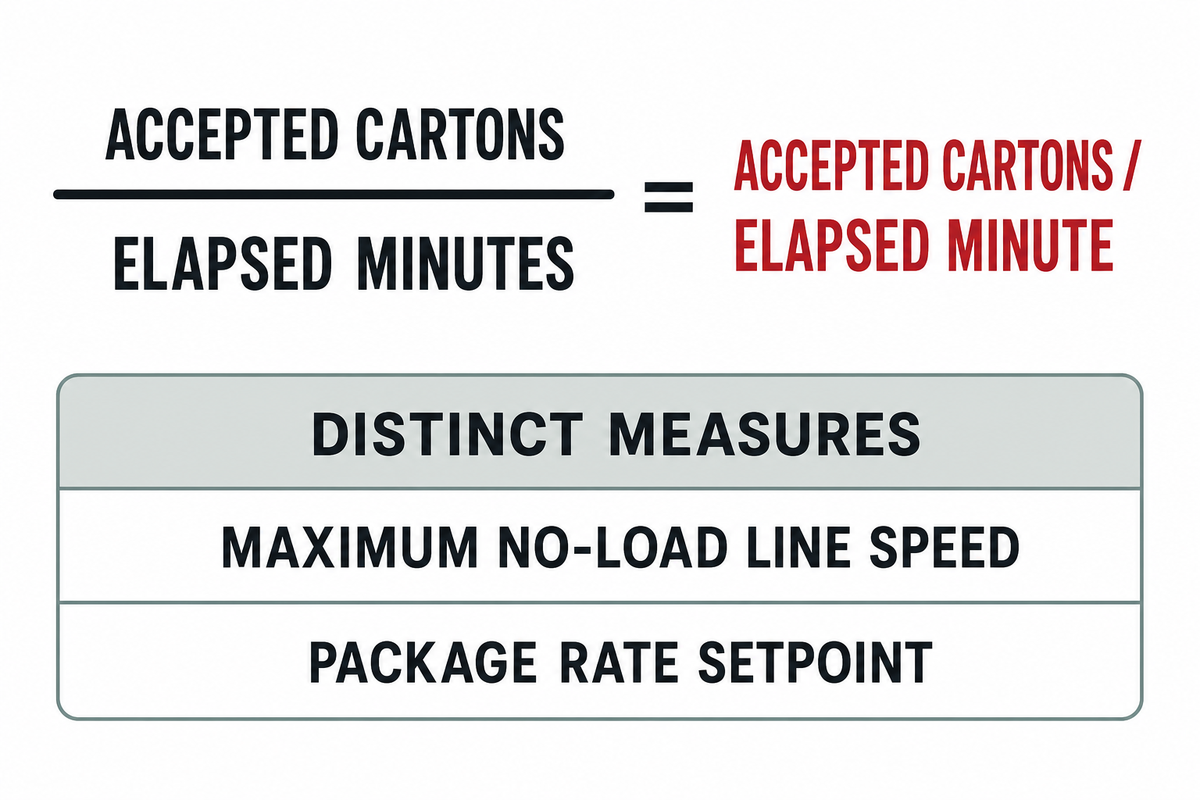
Comparisons of production speed require an accepted carton count and a common reference time base. Maximum no-load linear speed, a package rate setpoint, and an acceptable carton count per elapsed minute are distinct measures. Agree on the counted output and the clock window before comparing the two runs; otherwise a higher displayed speed may be reported for fewer acceptable cartons.
In Cenwan’s CW-G common table, maximum no-load line speed is listed as 400 m/min. Some control systems use a different measure, e.g. PackML machine speed is a primary-packages/min setpoint. Neither field, in and of itself, proves an accepted output for your carton count. Box folding and gluing, glue delivery, compression and downstream handling still belong to the demonstrated job.
The OPC Foundation’s PackML data model separates processed and defective counts, and records the time in seconds since reset. This illustrates the need for a common time and count window. An external data model isn’t evidence that a Cenwan machine implements the tags in that data model.
| Defined quantity | Job A | Job B |
|---|---|---|
| Elapsed job window, including non-running time | 120 minutes | 120 minutes |
| Running time | 80 minutes | 60 minutes |
| Gross rate during running time | 120 cartons/min | 160 cartons/min |
| Gross cartons processed | 9,600 | 9,600 |
| Accepted proportion in this example | 98% | 96% |
| Accepted cartons | 9,408 | 9,216 |
| Accepted rate over elapsed time | 78.4 cartons/min | 76.8 cartons/min |
For this example, accepted cartons = gross running rate × running minutes × accepted proportion. Job A gives 120 × 80 × 0.98 = 9,408. Job B gives 160 × 60 × 0.96 = 9,216. Dividing each result by the same 120 elapsed minutes gives 78.4 and 76.8 accepted cartons/min. The rejection factor is applied once.
For a hypothetical shift planner, the faster running rate of Job B looks attractive until the complete clock window is considered. A financial reviewer deciding which offer is cost-effective requires the output to fulfill orders, while quality staff need the agreed reasons a carton is rejected. Record whether reworked cartons enter the count and prevent double counting. This is a stated job-rate calculation, not a standardized equipment-efficiency indicator or a benchmark for an industry.
Job A accepted 192 more cartons in the hypothetical 120 minute window, in spite of having the lower gross running rate. The supplier trial should disclose the actual blank, acceptance rule, and clock boundaries with its rate. Coverage of wider throughput is provided in the carton speed and quality guide.
Line Integration and the 3-Layer Carton Proof Card
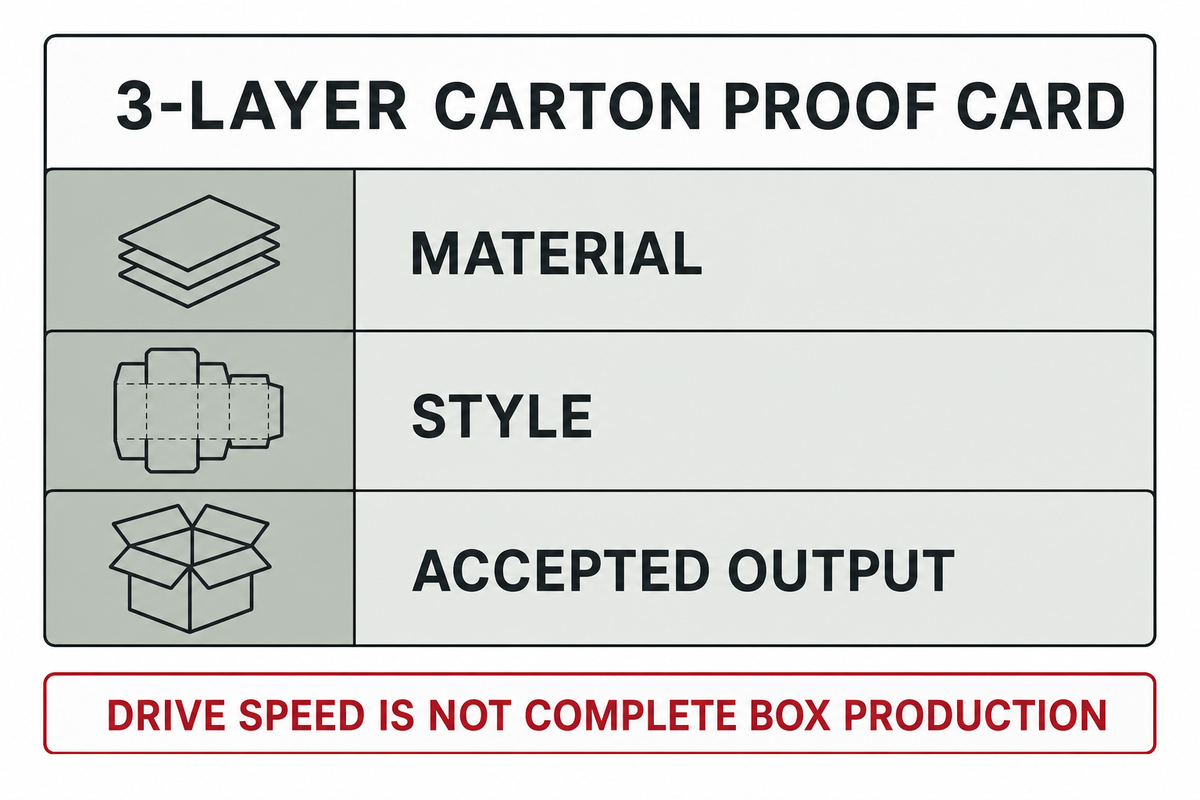
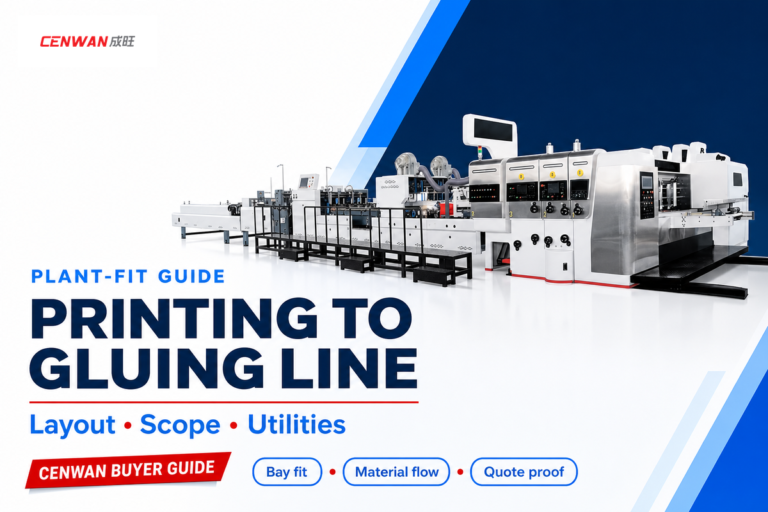
Line integration evidence shows where accepted cartons are counted and what occurs between folding and packing. The measured job can be affected by several factors including feeding, glue application, compression, inspection, and hand off to a packing equipment operator or a stacker. Supplier quotes for the folder gluer equipment should identify these boundaries rather than present drive speed as complete box production.
3-Layer Carton Proof Card
The 3-Layer Carton Proof Card captures evidence of material, style, and accepted output for one carton job.
This card is a narrow piece of evidence. Wider equipment acceptance and the corresponding safeguarding measures are described in the machine selection and site review guide.
RFQ checklist — copy these fields into the carton proof card:
| Parameter | Required record | Why it matters | How to verify |
|---|---|---|---|
| Material layer | Grade, construction, lot, caliper, finish and sample condition | Prevents approval from gsm or flute alone | Match the grade sheet to the finished sample |
| Style layer | Blank drawing, feeding direction, folds and glue areas | Connects style to supplied functions | Supplier marks the applicable drawing and modules |
| Format boundary | Model/style limits and agreed drawing tolerances | Prevents mixing different width definitions | Written confirmation against the submitted blank |
| Output layer | Accepted and rejected counts; elapsed and running times | Makes rate comparisons reproducible | Same clock window and agreed defect rules |
| Line boundary | Feeder, glue system, compression, counting and packing scope | Exposes the hidden bottleneck | State the exact location where accepted cartons are counted |
| Quote boundary | Included modules, utilities and sample-test conditions | Keeps unlike offers from appearing equivalent | Supplier returns the completed job-specific record |
The simple bottleneck map reads: Prepared blanks → feeding → folding/gluing → compression → inspection/counting → packing. If the quoted count is taken before the final packing handoff, say so. Equipment for folding and gluing and a high-speed box line may describe different production-stage boundaries. For a complete box machinery proposal, identify whether flexo or digital printing is upstream and whether the finished packaging products are counted before or after packing. Regarding “easy operation” for this submitted job, ask for clarification rather than assuming. Regarding the servo controls, ask what functions are incorporated. As for the drive arrangement, ask what shafts or drives are incorporated. Those labels don’t demonstrate the production requirements, nor an accepted quality carton.
G650 supplier field of 10 m³/h air consumption at 6 bar is utility planning, not output planning. Published utility figures don’t denote accepted cartons. For company provenance, Cenwan’s company background identifies the supplier for the quote; it doesn’t provide an independent sample evaluation.
What Is Changing in Folder-Gluer Production Planning?
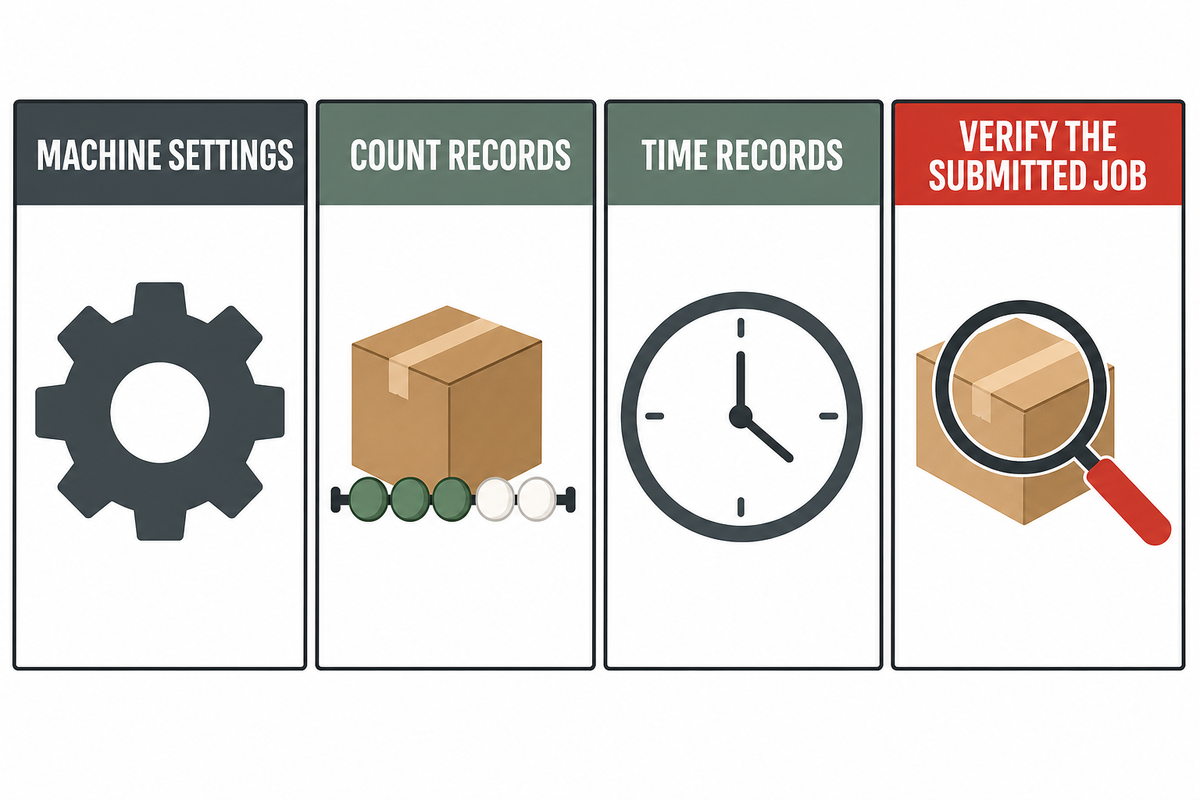
Planning for a folder-gluer benefits from separating machine settings from count and time records. An older announcement of a new development may describe an available technology, but that doesn’t prove installed capability on another supplier’s equipment. Compare the interfaces and records included in the current offer, and verify them on the submitted job.
In a Packaging World’s August 12, 2025 report, Impack and B&R described peripheral automation interfaces and performance data organized by day or shift. The reported system and development work were attributed to those organizations. Announced deployment shouldn’t be shown as completed work for October 2026.
“Our new framework gives our clients flexibility within a standardized environment.”
An inspection system is older than the recent discussion on data interfaces. A 2010 Packaging World report referenced a supplier’s print/barcode inspection system for folding cartons. Print inspection claims don’t guarantee glue-joint strength or finished accepted cartons. Maintain the defined defect category attached to the measured value.
- For queries related to October 2026, confirm what count/time records the proposed system provides.
- Separate an included interface from a future integration plan.
- Carry the same acceptance definitions through the supply chain and packing handoff.
Key takeaway
The CW-G 400 m/min maximum no-load field describes a catalog speed. A comparable carton job requires the actual board, style-specific drawing, and an accepted count over a stated elapsed time.
Frequently Asked Questions
How much does a carton factory machine cost?
Carton factory machine price depends on the production stages and job scope included in the quotation; specify the board, flat blank, carton style and required accepted output before comparing offers.
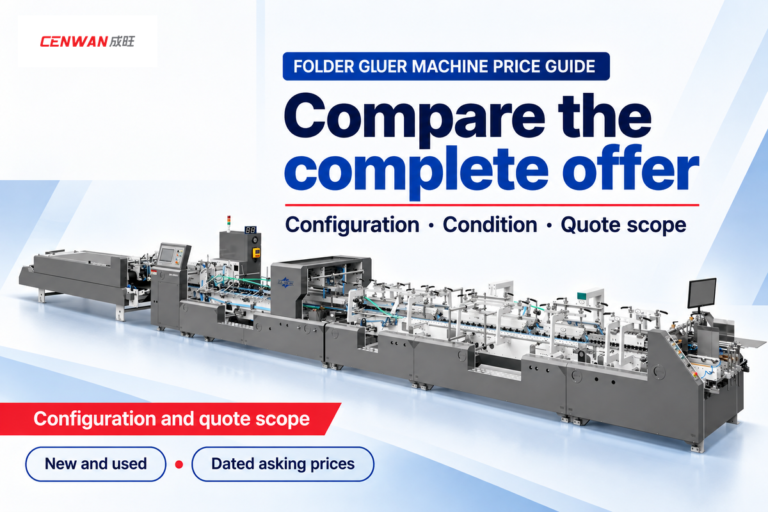
Carton box gluing machine price comparisons require the production stage that’s being quoted to be clear. A folder gluer, for example, can process prepared blanks, while a broader factory proposal may also include printing, die-cutting, counting or packing equipment. Seek a quotation for the required accepted carton output, board grade, flat blanks and carton style. Confirm the supplied modules, utilities, scope of delivery, and sample test conditions before considering two prices as similar.
Where can I find a carton pasting machine for sale?
A carton box gluing machine for sale should identify its process family and model-specific format limits; send the flat blank drawing and finished sample before asking which folding and gluing operations are included.
Start with suppliers that post the process family and a model-specific format range. Machines like a box pasting machine or a carton pasting machine can describe equipment with different folding, glue-application and compression functions. Send the supplier a flat blank drawing and a sample, and ask which operations are included in the proposed configuration. A marketplace listing is a starting point for a discussion on specifications. It doesn’t guarantee the listing supports the required box style, output and/or board.
What is flute in a carton box?
Flute is the wave-shaped paper layer between the liners of corrugated board; its designation belongs alongside liner construction and measured board caliper, because these describe different features of the submitted material.
Flute is the wave shaped paper layer between liners in corrugated board. Flute design affects board construction and thickness and should be provided in a machine enquiry. Solid paperboard folding cartons don’t use corrugated construction. Ask the supplier to evaluate the sample board and crease pattern rather than taking the supplier’s word regarding the job’s feasibility based on cardboard only.
Can one carton box gluing machine run every box style?
Box style determines the appropriate functions and format range for a folding gluing machine; side-seam, glued lock-bottom and four- or six-corner work still need qualification on the actual submitted blank.
No universal claim is justified. Side-seam cartons, lock-bottom cartons, and four- and six-corner work require the right function, format range and qualification on the actual blank.
Does maximum machine speed equal sellable cartons per hour?
Maximum speed alone does not establish accepted carton output over an elapsed production window; compare the accepted count over the same stated time, identifying whether changeovers, stops and rejects are included.
No. Use the accepted carton count divided by a stated time period, and indicate whether changeovers, stops, and rejects are included. Published no-load linear speed describes a different quantity.
Which carton box gluing machine do I need?
For the submitted carton, a suitable folding machine must match the actual board, flat blank, box style and required accepted output; confirm the line handoff and acceptance criteria with the supplier.
Identify the board construction and give the flat blank and finished carton drawing. State the folding and gluing functions. Then state the accepted output required over a shared time basis. Ask each supplier of folding and gluing machinery to confirm that exact combination, including the line handoff and acceptance criteria. If your work includes both paperboard and corrugated cartons, validate each construction and style separately rather than applying one speed figure to the entire production.
Discuss your carton job with Cenwan
Send the board grade, finished sample and flat blank drawing, then state the accepted output and time basis you need. Start with Cenwan’s corrugated folder gluer options or the CW-G small-box specifications for the relevant equipment family.
Related Articles
- Cardboard and corrugated box differences separate material constructions.
- Folder gluer box style guide explores the style catalogue.
- Folder gluer speed and carton quality: the broader folder-gluer rate discussion.
- Box gluing machine selection guide reviews the complete machine enquiry.
References & Sources
- ISO 536:2019, paper and board grammage, public scope and status.
- ISO 534:2011, thickness measurement, public scope and exclusions.
- FEFCO, corrugated board construction and production.
- FEFCO, corrugated design code.
- TAPPI/ANSI T827 om-24, box blank dimensioning, public scope.
- OPC Foundation, PackML v1.01, counts, time and design speed.
- OPC Foundation, PackML v1.01, normalized machine speed.
- Kmita-Fudalej and Czechowski, 2025, corrugated-board bending study.
- Packaging World, August 12, 2025, Impack/B&R automation platform.
- Packaging World, August 10, 2010, print/barcode inspection system.
Supplier figures are attributed catalog fields. The production calculation is hypothetical. No Cenwan factory trial, third-party system implementation or certification is asserted.